Vision

Competition Flashback Q3 2025 – EU and Dutch competition law developments

This is the Competition Flashback Q3 2025 by bureau Brandeis, featuring a selection of the key EU and Dutch competition law developments of the past quarter (see the original version here).

Would you like to receive Competition Flashback by email in the future? You can subscribe to our mailing list here.


Overview Q3 2025


Merger control and FDI

Damages claims for competition law infringements

Cartels and vertical restraints

Abuse of a dominant position

Digital markets (DMA)

Regulated markets

Consumer protection law


Article 24(2) Mw repealed: acquisition by dominant party can constitute abuse of power

Ministry of Economic Affairs, decision of 15 August 2025

The law repealing the second paragraph of Article 24 of the Dutch Competition Act (Mededingingswet, “Mw”) entered into force on 1 September (by decision of 15 August 2025). This provision previously excluded the national prohibition on abuse of a dominant position from being applied to concentrations. This exception to the prohibition of abuse was therefore at odds with the Court of Justice of the European Union’s (“CJEU”) judgment in the Towercast case . That judgment ruled that Article 102 of the Treaty on the Functioning of the European Union (“TFEU”) – the European prohibition on abuse of a dominant position – can indeed apply to concentrations. Article 24(2) Mw prevented this European approach from being applied in purely national situations. The deletion of this paragraph brings the national and European frameworks back into line with each other on this point.

The amendment to the law means that the Netherlands Authority for Consumers and Markets (Autoriteit Consument en Markt, “ACM”) can also retrospectively investigate transactions that were not subject to notification on the basis of the turnover thresholds applicable to merger control, but where the acquiring party may be abusing its dominant position in relation to the transaction. This gives  the ACM an additional tool to assess mergers and acquisitions that potentially raise competition concerns.

back to top


Commission investigates possible misrepresentation KKR acquisition NetCo

European Commission, press release of 24 July 2025

The Commission is investigating whether Kohlberg Kravis Roberts & Co. Inc. (“KKR”) provided misleading or incorrect information during the assessment of its acquisition of NetCo. KKR is a global investment firm that offers alternative asset management, capital market and insurance solutions. NetCo is a newly  founded company consisting of the broadband infrastructure of Telecom Italia S.p.A. (“TIM”), which connects the central office to the street cabinets, and FiberCop S.p.A. (“FiberCop”), a joint venture between TIM and KKR responsible for the network between the street cabinets and the connections to end users’ premises.

On 30 May 2024, the Commission approved the acquisition unconditionally. The Commission did not foresee any problems in the market which it investigated, namely the Italian market for wholesale broadband access services, based, among other things, on KKR’s assertion that FiberCop’s long-term contracts with access seekers such as Fastweb and Iliad would be maintained after the acquisition. The current investigation focuses on whether KKR provided incorrect or misleading information regarding these contracts.

back to top


Merger highlights European Commission


ADNOC / Covestro

On 28 July 2025, the European Commission (“Commission”) announced that it would launch an in-depth investigation into the foreign subsidies with which the state oil company, Abu Dhabi National Oil Company (“ADNOC”), intends to acquire the German chemicals producer Covestro. The Commission has raised preliminary concerns that the unlimited guarantee and committed capital increase from ADNOC may (i) adversely affect competition in the acquisition process and/or post-transaction (ii) adversely affect competition in the market in which the merging parties operate. The Commission will now investigate both aspects further in the second in-depth FSR investigation following a notified concentration. Earlier this year, the first in-depth FSR investigation into the acquisition of PPF Telecom by e& resulted in a conditional approval decision.


Brasserie Nationale/ Boissons Heintz

On 17 July 2025, the Commission announced its conditional approval of the proposed acquisition of Boissons Heintz by Brasserie Nationale. The Luxembourg brewer will acquire control of beverage distributor Boissons Heintz through its subsidiary Munhowen. According to the Commission, the original transaction would raise competition concerns in the Luxembourg market for beverage supply to the hospitality industry. Both companies are the main distributors to this market. The acquisition would sideline competitors and leave too few alternatives for hospitality businesses. The Commission also feared that Brasserie Nationale would give its mineral water brand Lodyss an unfair advantage over other brands.

To address these concerns, the parties offered to divest a majority of Boissons Heintz’s hospitality industry activities. The buyer would acquire all the necessary assets and personnel, as well as the right to use the Boissons Heintz brand name, the webshop and exclusive import contracts. This would pave the way for a new player to enter the market.

The case was examined by the Commission despite the fact that the turnover thresholds of the EU Merger Regulation were not met. At the request of Luxembourg, which does not have its own merger control mechanism, the transaction was referred on the basis of Article 22 of the EU Merger Regulation (see also CF Q3 2024). The Commission will approve the buyer of the divested business in separate proceedings. An independent trustee will monitor compliance with the commitments.

back to top


Limitation period for damages national competition infringements starts when decision becomes final

Court of Justice of the European Union, judgment of 4 September 2025

On 4 September 2025, the CJEU answered preliminary questions concerning the moment when the limitation period for competition law infringements begins to run in light of Article 101 TFEU, the principle of effectiveness and Article 10 of the Private Damages Directive. The case concerns a follow-on damages action brought in March 2023 against Nissan Iberia SA (“Nissan”) by CP, a purchaser of a Nissan vehicle. The claim followed a decision by the Spanish National Commission for Markets and Competition (“CNMC”) of 23 July 2015 (published on 15 September 2015) finding an infringement of competition law. Nissan argued that the claim for damages was time-barred because the one-year Spanish limitation period applicable at the time had already started to run on the date of publication of the CNMC’s decision, regardless of whether that decision was final.

The CJEU emphasised that the principle of effectiveness requires that limitation periods must not render the exercise of the right to compensation impossible or excessively difficult in practice. This means that the limitation period may only start to run after the infringement has ceased and the injured party has become aware of the information indispensable for bringing the action for damages. The CJEU considered that, under Spanish law, a decision of the CNMC against which an appeal has been lodged is not binding on national courts. Therefore, if the validity of the decision is contested, the injured person cannot effectively rely on that decision to substantiate their claim for damages. Allowing the limitation period to start running before the decision becomes final would undermine the possibility of bringing follow-on damages actions and complicate the exercise of the right to damages.

The CJEU found that the alternatives of suspending the limitation period through extrajudicial claims or the court’s power to stay the proceedings are not sufficient to meet the requirements of the principle of effectiveness. Any suspension of the limitation period does not appear to be automatically possible due to the appeal lodged against the CNMC decision, nor is it certain that this suspension will continue until the decision is final. Although the limitation period may be suspended by extrajudicial claims or the initiation of mediation proceedings, these grounds for suspension are independent of the appeal for annulment of the decision, which means that they are not guaranteed to continue sufficiently until the decision becomes final. Furthermore, the civil court’s power to suspend the damages proceedings until the CNMC decision is final is not automatic, as the court has a margin of discretion. Since a request for suspension of the proceedings can only be made after the action for damages has been brought, this implies that the action must be brought before the expiry of the limitation period, as a result of which the possibility of requesting suspension does not comply with Article 101 TFEU and the principle of effectiveness.

The CJEU ruled that it cannot reasonably be expected that the necessary information to bring a claim for damages is available until the decision of the national competition authority has become final. In light of the principle of effectiveness, Article 10(2) of the Private Damages Directive therefore precludes national legislation that allows the limitation period for damages to start running before the decision of a national competition authority has become final.

back to top


CJEU emphasises role national courts in reviewing CAS arbitral awards

Court of Justice of the European Union, judgment of 1 August 2025

On 1 August 2025, the CJEU answered preliminary questions from the Belgian Supreme Court concerning proceedings between the Belgian football club Royal Football Club Seraing (“RFC Seraing”) on the one hand and FIFA, UEFA and the Belgian football association RBFA on the other. This ruling follows a series of earlier judgments on the relationship between sports and European (competition) law, such as the ISU, Superleague, Royal Antwerp and Diarra cases.

This case concerns two financing agreements that RFC Seraing concluded with Doyen Sports in 2015, according to which the economic rights to four players were transferred from RFC Seraing to Doyen Sports in exchange for monetary compensation to RFC Seraing. According to FIFA, this constituted “third-party ownership”, which it had prohibited in its regulations. FIFA therefore imposed sanctions on RFC Seraing: the club was banned from registering players for one year and was fined by FIFA. RFC Seraing appealed through FIFA’s internal committees and ultimately the Court of Arbitration for Sport (“CAS”) as well as the Swiss federal court upheld the sanctions imposed. In the meantime, national proceedings were brought in Belgium, raising the question of the extent to which Belgian courts are bound by the CAS arbitral award and, therefore, the extent to which they had to reassess the compatibility of FIFA’s regulations and sanctions in light of EU law. It is relevant in that respect that neither the CAS nor the Swiss federal court are part of the EU legal order.

In its judgment the CJEU confirms its previous line as set out in particular in the ISU judgment, i.e., that national courts of EU Member States have the right and the duty to thoroughly review CAS thoroughly against the fundamental rules of EU law, including in particular competition law and the provisions on freedom of movement. This is particularly important because arbitration in sports is imposed unilaterally on clubs and athletes without their voluntary consent, in contrast to (purely) commercial arbitration, as is the case for FIFA.

The CJEU holds that national rules which extend the authority of res judicata to such an extent that judicial review of arbitral awards becomes impossible are contrary to EU law. Athletes and clubs are entitled to effective legal protection. This means that national courts must not only be able to review CAS arbitral awards, but also be able to take provisional measures and refer questions for a preliminary ruling, despite the existence of a (final) CAS award.

back to top


CBb confirms cartel fines for tobacco manufacturers

Trade and Industry Appeals Tribunal, ruling of 22 July 2025

On 22 July 2025, the Dutch Trade and Industry Appeals Tribunal (College van Beroep voor het bedrijfsleven,CBb”) declared the appeals lodged by Philip Morris, JT International, British American Tobacco and Van Nelle Tabak against the fines imposed by the ACM to be unfounded. In 2020, the ACM imposed fines totalling more than €82 million on the four cigarette manufacturers for exchanging information about future cigarette pack prices via wholesalers. According to the ACM, by asking wholesalers for future price information from competing manufacturers and/or not objecting to receiving this information, the manufacturers engaged in a concerted practice restricting competition on the Dutch cigarette market by object (also a single continuous infringement).

The CBb confirmed these qualifications and largely upheld the earlier ruling of the District Court of Rotterdam (see also CF Q3 2023). The CBb found that the evidence demonstrated  a long-standing practice of indirect information exchange and that none of the manufacturers had objected to this. In addition, the mutual communication went far beyond what is considered ‘normal market behaviour’ and was not solely motivated by the customers’ own interest in obtaining a better margin. Furthermore, no evidence of subjective intent is required to establish the existence of a concerted practice; it is sufficient that there is deliberate cooperation – which, according to the CBb, ACM has demonstrated. The CBb also confirmed the classification of the exchange of information as a restriction by object and as a single and continuous infringement.

The CBb further held that there was no violation of the rights of defence. Although the lack of access to the other manufacturers’ research data sets is, ‘in itself’, a shortcoming, the ACM adequately remedied this by setting up a data room, according to the CBb. The CBb also found the restrictions imposed on the data room procedure in terms of time, physical and technical aspects and due to the sensitivity of the competition to be lawful.

The CBb also rejected the manufacturers’ argument that the ACM should not have imposed a fine because the infringement was not foreseeable and culpable. Unlike the court, however, the CBb ruled that the ACM was entitled to apply the 2009 Penalty Policy Rules to the entire infringement. This is because, after the amendment of the 2009 Penalty Policy Rules (compared to the 2007 Penalty Code), the manufacturers continued to commit the infringement for a considerable period of time (approximately 60% of the infringement period). The application of the 2009 Penalty Policy Rules therefore does not lead to a violation of the lex mitior principle. The CBb further considers the classification as a serious infringement to be appropriate and sees no reason to further reduce the fines. By reducing the basic fines by 50%, ACM already applied a “substantial reduction”. In addition, the reasonable time limit had not been exceeded. Due to, among other things, the two data room procedures, the scope and complexity of the case have increased significantly, as a result of which exceeding the regular five-and-a-half years for cartel cases should not be considered unreasonable, according to the CBb. With this final ruling, the cartel fines therefore remain in full force.

back to top


Comfort letters Commission for sustainability agreement and the automotive industry

European Commission, guidance letters of 8 and 9 July 2025

On 8 and 9 July 2025, the Commission published two guidance letters concerning, respectively, an agreement in the port sector for the joint purchase of electric container-handling equipment and a cooperation agreement in the automotive industry. These are the first guidance letters since the Commission’s revision of the Notice on informal advice. A guidance letter is informal written advice from the Commission on how EU competition rules may apply in new or complex situations. Companies may request guidance letters, but remain responsible for their own legal assessment. Guidance letters are not legally binding, but they provide valuable direction by indicating how the Commission views a particular cooperation or practice.

The first guidance letter concerns a cooperation between APM Terminals and other port operators on the joint procurement and standardisation of electric straddle and shuttle carriers. This should accelerate the transition from diesel to electric vehicles, reduce costs and improve interoperability. The Commission concludes that the agreement does not raise any issues under Article 101 TFEU, provided, among other things, that competition-sensitive information is restricted and joint purchasing volumes are limited. The guidance is valid for five years and is limited to the European Economic Area (“EEA”).

The second guidance letter concerns the establishment of the Automotive Licensing Negotiation Group (“ALNG”), in which car manufacturers want to jointly negotiate licences for standard-essential patents (such as 4G, 5G or Wi-Fi). The Commission considers that the formation and activities of ALNG do not raise any competition concerns, as long as the group remains open to other companies, remains voluntary for patent owners, and no sensitive business information is shared. According to the Commission, ALNG can actually contribute to more efficient licence negotiations and the transition to digital and sustainable mobility.

back to top


Commission fines companies for providing incomplete information

European Commission, press release of 8 September 2025

On 8 September 2025, the Commission imposed a fine of €172,000 on Eurofield and its parent company Unanime Sport, which is the subject of a competition investigation, for failing to comply with its obligation to cooperate. In June 2023, the Commission sent Eurofield a request for information, to which it received an incomplete response compared to documents seized during a dawn raid. After a warning and a second request for information, Eurofield’s provision of information remained inadequate.

The Commission then launched an investigation into the suspected breach of the obligation to cooperate. During that process, Eurofield admitted its guilt, provided the missing information and cooperated proactively. Nevertheless, the Commission imposed a fine on Eurofield and Unanime Sport based on 0.3% of their combined global turnover, with a 30% reduction in the fine as they cooperated once they became aware of the breach of procedural rules. This procedure is entirely separate from the competition law investigation that is still ongoing.

back to top


General court reduces Credit Suisse fine for participation in FX cartel by more than €50 million

General Court of Justice of the European Union, judgment of 23 July 2025

On 23 July 2025, the General Court of the European Union (General Court”) ruled that Credit Suisse participated in a cartel relating to foreign exchange trading (also known as Forex or FX) between 2011 and 2012, but that the Commission had incorrectly calculated the amount of the fine.

The case concerns one of three FX cartels that took place between 2007 and 2013 in which traders from major banks exchanged commercially sensitive information via online chat rooms. The Commission imposed fines totalling almost €1.4 billion in relation to three different cartels, named after the online chat rooms in question: Three Way Banana Split, Essex Express and Sterling Lads. A large number of banks participated in these cartels: UBS, Barclays, The Royal Bank of Scotland (now NatWest), Citi, JPMorgan, MUFG (formerly Bank of Tokyo-Mitsubishi), HSBC and Credit Suisse. UBS was granted immunity because it informed the Commission of the existence of the cartels. All other banks settled with the Commission, with the exception of Credit Suisse. It followed the standard procedure and was subsequently fined €83.2 million for its participation in the online chat room from February to July 2012. Its legal successor, UBS, subsequently appealed against the decision.

The General Court ruled that the Commission had correctly established that Credit Suisse was involved in the cartel. However, according to the General Court, the Commission had calculated the amount of the fine incorrectly: the Commission used incomplete and less reliable data in determining the value of the turnover concerned (‘proxy for the value of sales’), while Credit Suisse itself had provided the Commission with more adequate data during the proceedings. The General Court therefore reduced the fine from €83.2 million to €28.9 million, since the Commission had not correctly followed its own Guidelines on the method of setting fines.

back to top


Rotterdam District Court confirms fine decision LG for vertical price fixing

Rotterdam District Court, ruling of 7 August 2025

The administrative court of first instance (in this case the Rotterdam District Court) fully upheld the ACM’s fine decision imposing a fine of almost €8 million on TV manufacturer LG. Most interesting is the discussion of the grounds for challenging the finding of an infringement. LG argued that the ad hoc nature of the communication did not justify classification as an agreement or a concerted practice. However, the court concluded that the retailers agreed in various ways to LG’s (sometimes adamant) requests to adjust prices, so that there was a common intention between the parties. Moreover, it follows from the file that this was not an isolated incident but common practice.

With regard to whether the vertical price restriction can be classified as a restriction of competition by object, the court stated that this requires sufficient experience that is so solid and reliable that an agreement can be considered harmful by its nature. An indication of this exists when similar behaviour has been sanctioned in the past. The fact that the Vertical Block Exemption Regulation classifies vertical price fixing as a ‘hardcore restriction’ is important, although, in view of the Super Bock judgment, even in the case of a hardcore restriction, it must still be examined whether competition is sufficiently harmed in the specific case (or whether, for example, price is a less important competitive parameter). Contrary to LG’s argument, it is not necessary to prove that interbrand competition is weakened in order to assume a restriction by object. According to the court, such an analysis belongs to the discussion of the existence of a restriction by effect.

The court appears to consider decisive that LG’s conduct restricted the freedom of retailers to determine their resale prices. It is irrelevant whether LG used coercion, sanctions or incentives (the file shows that LG did indeed exert pressure). Even the voluntary decision to give up such freedom is sufficient to constitute a restriction by object. In such a case, LG can still provide evidence of any pro-competitive effects of its actions, but these must be sufficiently significant and specific to the agreement/concerted practice in question.

All grounds relating to the calculation and amount of the fine are also unsuccessful. For example, the court ruled that the fine imposed was foreseeable because ACM did not introduce a new interpretation of vertical price fixing.

back to top


Court of Appeal of The Hague questions compatibility New Dockers’ Clause with EU law

Court of Appeal of The Hague, judgment of 30 September 2025

On 30 September 2025, the Court of Appeal in The Hague (“Court of Appeal”) referred questions to the CJEU for a preliminary ruling concerning the compatibility of the New Dockers’ Clause with EU law and the balance between economic freedoms and social rights in the context of the internal market.

The New Dockers’ Clause forms part of the IBF Framework Agreement and stipulates that seafarers or other persons on board a seagoing vessel may not perform lashing services if dockworkers who are members of a trade union affiliated with the International Transport Workers’ Federation (“ITF”) are available. Only in case of a shortage of qualified dockers may the crew voluntarily perform the work after obtaining the prior agreement of the dockers’ trade union. Marlow Navigation c.s. and charterers argue that the clause infringes the free movement of services and competition law.

The Rotterdam District Court ruled that the clause falls outside the scope of Article 101(1) TFEU because it arises from collective bargaining between employee and employer organisations, which means that the so-called ‘Albany-exception’ applies. The Court of Appeal states that the fact that conditions are laid down in a collective labour agreement does not mean that they fall outside the scope of EU law. In view of the ECHR’s Holship judgment of 10 June 2021, the Court of Appeal examines whether invoking the economic consequences of an unjustified restriction on the free movement of services is sufficient to restrict the right to collective action and collective bargaining protected by the Albany case law.

In the present case, the Court of Appeal considered that the clause could be regarded as a restriction on the free movement of services. Marlow et al. and the charterers are entitled to challenge it, despite the fact that the clause stems from social dialogue and is included in the IBF Framework Agreement, because they are effectively forced by ITF Affiliates’ to comply with the clause and use the services of port workers. The Court of Appeal doubted whether this restriction could be justified on the basis of overriding reasons of public interest. Although ITF et al. emphasise that the clause is intended to protect seafarers. The Court of Appeal rejected this interpretation as the primary objective. Various communications from Nautilus and FNV Havens indicated that the clause was primarily designed to safeguard the jobs of port workers. Furthermore, the protective effect is not applied systematically, coherently and consistently. If a lashing ban is necessary for safety reasons, it is difficult to accept that the crew is allowed to lash in ports where no dockworkers are available. Less restrictive measures to protect the crew are also conceivable, such as additional requirements regarding rest periods or the number of crew members available.

The possibility of obtaining prior agreement’ was not considered sufficient to justify the lashing ban, because the key position of the ITF-affiliated trade unions for dockworkers prevents an objective and transparent assessment, based on criteria known in advance, of whether the use of the crew’s services is justified on safety grounds.

According to the Court of Appeal, this means that there appears to be no justification based on an overriding reason of public interest. However, in view of the tension between economic freedoms and social rights, the Court of Appeal considers it necessary to refer preliminary questions to the CJEU concerning (i) the compatibility of the clause with Article 101 TFEU, (ii) whether the restrictive clause should be accepted as part of collective agreements, and (iii) whether, in the context of the Albany exception, it should be assessed against the principle of proportionality.

back to top


Commission accepts Microsoft’s commitments for Teams

European Commission, publication of 12 September 2025

On 12 September 2025, the Commission accepted commitments from Microsoft to address competition concerns regarding its collaboration and productivity tool Teams. The Commission launched a formal investigation into Microsoft in July 2023 following complaints it had received from competitors Slack Technologies Inc. and alfaview GmbH. The Commission provisionally found that Microsoft restricted competition by bundling Teams with its productivity software (such as Outlook and Word) by default. When Teams launched, Microsoft included it by default in Office 365 and Microsoft 365, its widely used SaaS productivity suites for business customers. This gave Teams an unfair distribution advantage, reinforced by limited interoperability with competing communication and collaboration tools. According to the Commission, this allowed Teams to quickly gain market share and further strengthened Microsoft’s dominant position in productivity software. After the investigation began in 2023 and 2024, Microsoft implemented changes, such as offering some packages without Teams. However, according to the Commission, these changes were insufficient.

To address the Commission’s remaining concerns, Microsoft therefore offered the following commitments:

  1. Office 365 and Microsoft 365 packages will be offered without Teams at a significantly lower price than packages with Teams, whereby the discounts on Teams packages may not be more favourable than those on packages without Teams.
  2. Customers will be given regular opportunities to switch to packages without Teams, which can also be rolled out globally in data centres.
  3. Competitors and third parties will be granted effective interoperability with Microsoft products, the ability to integrate Office Web Apps (Word, Excel, PowerPoint) into their own software, and to include their products visibly in Microsoft’s core applications.
  4. Customers in the EEA may export their Teams messages for use in competing solutions.
Following the results of the market investigation conducted by the Commission in 2025 into these commitments, Microsoft decided to supplement its commitments by:
  1. Increasing the price difference between Microsoft 365 and Office 365 packages without Teams and packages with Teams (including for business customers) by 50%.
  2. Clearly displaying the corresponding offer without Teams on its websites alongside every offer of a package with Teams.
  3. Publishing information on interoperability and data portability on all relevant developer websites.

The Commission concluded that Microsoft’s final commitments sufficiently addressed its concerns regarding Microsoft’s competitive behaviour. It therefore decided to make these commitments legally binding on Microsoft. The commitments regarding interoperability and data portability are binding for ten years, while all other commitments are binding for seven years.

back to top


€2.95 billion fine for Google for abuse of dominant position in online advertising technology (Adtech)

European Commission, publication of 5 September 2025

On 5 September 2025, the Commission announced that it had imposed a fine of €2.95 billion on Google for abusing its dominant position in various markets relating to online advertising technology. Google is alleged to have favoured its own display advertising technology at the expense of competitors, advertisers and publishers.

Google generates most of its revenue from advertising and acts both as a seller of advertising space on its own websites and apps and as an intermediary between advertisers and publishers (websites on which the advertisements are placed). Advertisers and publishers use three digital tools: (i) publisher ad servers (systems for publishers to manage digital advertisements), (ii) programmatic ad buying tools (platforms and technologies that make the purchase of advertisements data-driven and automated) and (iii) ad exchanges (digital marketplaces where publishers and advertisers trade). Google itself is a provider of, among other things, the ad buying tools Google Ads and DV360, the publisher ad server DFP and the ad exchange AdX.
The Commission’s investigation shows that Google has a dominant position in both publisher ad servers (DFP) and programmatic ad buying tools (Google Ads and DV360) in the EEA. Between 2014 and the present, Google has abused this position by:

  1. Favouring AdX in the selection of advertisements via DFP, for example by informing AdX in advance of the highest bids from competitors.
  2. Favouring AdX when placing bids via Google Ads and DV360, thereby excluding competing exchanges.

According to the Commission, this behaviour was intended to favour AdX and may have led to the exclusion of AdX’s competitors. This strengthened AdX’s role in the adtech supply chain and enabled Google to charge higher fees to its users. The Commission has ordered Google to (i) cease its self-preferencing practices and (ii) take measures to end the inherent conflicts of interest in the adtech chain. Google now has 60 days to inform the Commission of its proposed measures. The Commission will assess Google’s proposed measures and, if they are insufficient, may impose further remedies.

back to top


Commission accepts far-reaching commitments from Corning

European Commission, publication of 18 July 2025

The Commission has made Corning’s commitments binding, bringing to an end the abuse investigation into the American manufacturer of Alkali-AS glass (break-resistant glass for consumer electronics, among other things). The Commission found that Corning has a dominant position in the global market for Alkali-AS glass, with the exception of Apple products. The possible abuse would lie in the exclusive supply agreements with customers, such as manufacturers of portable consumer electronics. Corning has committed to refrain from exclusivity clauses in current and future agreements with customers not only for Alkali-AS glass but also for clear glass ceramics (as this type is expected to be used more frequently in the future). In addition, Corning will not apply purchase quotas at a reduced price (in the EEA) or oblige customers to purchase more than 50% of their demand from Corning (worldwide). The commitments are valid for a period of nine years and apply worldwide. As part of the commitments, Corning will publish a market communication in English and Mandarin, and a Mandarin-speaking monitoring trustee has been appointed.

back to top


ACM launches investigation into major software supplier for suspected dominance abuse

Authority for Consumers and Markets, publication of 30 September 2025

The ACM has launched an investigation into a large, internationally active software supplier after being informed of suspected abuse in the pricing of certain software and in the conditions imposed by the company on customers in the Netherlands. The ACM has conducted a dawn raid, has requested information and will investigate in the coming period whether this company has violated competition rules. This is in line with the ACM’s efforts to ensure that markets in the digital economy function properly, as dependence on these companies is growing.

back to top


Commission rejects Apple’s request to remove large part of the interoperability obligations for iPhones

European Commission, decision of 4 August 2025

On 4 August 2025, the Commission rejected a request from Apple to remove some of the interoperability measures imposed on it. The request concerned five of the nine specifications that the Commission imposed on Apple on 19 March 2025 in its Specification Decision to ensure  interoperability between iPhones running the iOS operating system and third-party devices. These specifications elaborate on the general interoperability obligation applicable to Apple as a gatekeeper under Article 6(7) of the Digital Markets Act.

The Specification Decision specifies measures relating to nine iOS features, namely: (i) iOS notifications, (ii) high-bandwidth peer-to-peer Wi-Fi connections, (iii) proximity-activated pairing, (iv) background execution, (v) short-range wireless file transfer solution features, (vi) automatic Wi-Fi connection, (vii) media casting features, (viii) automatic Bluetooth audio switching, and (ix) NFC controller in read/write mode.

In the Specification Decision, the Commission included an option to allow Apple, upon request, to deviate from certain obligations laid down therein (“Exemption Clause”). Such a request can only be granted if Apple demonstrates the existence of exceptional circumstances in which it is unable, for legal, technical or other reasons, to implement one or more of the measures imposed in the Specification Decision, in whole or in part.

The Commission examined Apple’s request in relation to each of the five measures individually. However, there were several aspects common to all five requests that led the Commission to conclude that none of the five requests were based on exceptional circumstances as required by the Exemption Clause. According to the Commission, Apple’s requests were too broad: the company requested the complete withdrawal of measures for more than half of the functions concerned, without providing concrete proposals to solve specific problems. The Commission argues that the Exemption Clause is not intended to remove entire obligations, but only to address exceptional and unforeseen implementation problems. Furthermore, Apple based its requests mainly on legal arguments that it had already raised previously and that are unrelated to the technical feasibility of the measures. The Commission emphasised that the Exemption Clause is not a means to reopen previous discussions or to challenge the decision again — a legal case is already pending before the General Court of the EU for that purpose. Finally, the Commission rejects Apple’s complaint that the company was not given sufficient time to respond: in its view, considering the deadline reasonable and Apple’s right to be heard fully respected.

back to top


CBb refers questions CJEU on the interpretation PSO Regulation

Trade and Industry Appeals Tribunal, interim judgment of 9 September 2025

On 9 September 2025, the CBb decided to refer preliminary questions to the CJEU in the context of the appeal by various transport operators against the decision of 21 December 2023 of the State Secretary for Infrastructure and Water Management (“State Secretary”) to award the main rail network concession for the period 2025-2033 directly to Nederlandse Spoorwegen (“NS”) (see also our Update railway law: the 4th European Railway Package and competition on European railway markets).

The introduction of the European Union’s Fourth Railway Package in 2016 changed the European regulatory framework for rail transport. The package aims to further open up the European rail market to competition. In this context, Regulation 1370/2007 on public passenger transport services by rail and by road (“PSO Regulation”) has been amended, limiting the possibilities for the authorities to directly award public service contracts and giving railway undertakings a so-called ‘right of access’ to the railway infrastructure.

The transport operators who have lodged objections to the award decision are of the opinion that, in making the decision, the State Secretary acted in contravention of the applicable transitional law under the PSO Regulation and, moreover, did not take sufficient account of the transport operators’ right of access in his decision-making on the imposition of a public service obligation. The State Secretary contests these views.

In light of the above dispute, the CBb has decided to refer preliminary questions to the CJEU. These preliminary questions relate to two key points:

  1. the interpretation of the transitional law for the possibilities of private contracting under the PSO Regulation, and
  2. the relationship between the State Secretary’s power to impose public service obligations on the one hand, and the right of access to the railways for railway undertakings on the other.

The CBb is withholding any further decision in this case until the CJEU has issued its ruling. However, the CBb has ruled as a provisional measure that the State Secretary must resume negotiations with Arriva on the Northern Lines with immediate effect and report the outcome thereof to the CBb by 8 December 2025 at the latest.

back to top


PostNL will not receive subsidy for UPD

Preliminary relief judge of the Trade and Industry Appeals Tribunal, ruling of 5 September 2025

On 5 September 2025, the preliminary relief judge of the CBb ruled that the Minister of Economic Affairs (“Minister”) is not required to grant a subsidy to PostNL for the performance of the Universal Postal Service (Universele Postdienst, “UPD”). The UPD is PostNL’s legal obligation to provide a basic postal service throughout the Netherlands, such as the delivery of letters and parcels at uniform rates, including in sparsely populated areas. According to the judge, there is no urgency and no legal obligation for the Minister to provide financial support.

At the beginning of 2025, PostNL had applied to the minister for one-off subsidies of €30 million for 2025 and €38 million for 2026. The company argued that the postal market is shrinking structurally, while costs continue to rise. As a result, the implementation of the UPD would no longer be profitable. According to PostNL, the possibilities for cost savings have been exhausted, and the legislative process to relax the UPD obligations has been ongoing for six years without any concrete results. To prevent the postal service from coming under further pressure, the company asked the preliminary relief judge to suspend the minister’s decision to reject the subsidy and to grant an advance payment of €15 million per year for 2025 and 2026.

The preliminary relief judge ruled that the Minister is not obliged to grant PostNL a subsidy. According to the preliminary relief judge, the Minister has discretionary power under the Dutch Framework Act Subsidies of the Ministries of Economic Affairs and Climate Policy (EZK) and Agriculture, Nature and Food Quality (LNV) and the Dutch General Administrative Law Act (Algemene wet bestuursrecht,Awb”) to grant incidental subsidies, and the EU Postal Services Directive does not impose any obligation to provide financial support. Although PostNL invoked Article 1 of the First Protocol to the ECHR, the preliminary relief judge doubts whether the statutory UPD obligation constitutes a violation of that right. Even if that were the case, the Minister has considerable discretion to determine whether and how compensation is provided, for example through measures other than subsidies. Furthermore, as it had not been demonstrated that PostNL’s financial situation was so dire that direct support was necessary. The preliminary relief judge has rejected the request for provisional relief.

back to top


ACM postal market study: higher reliability but slower delivery speeds necessary

Authority for Consumers and Markets, publication of 24 April 2025

On 24 April 2025, the ACM published the results of its study into the Dutch postal market. The Ministry of Economic Affairs and Climate Policy commissioned this study as a building block for a new vision on postal services, which are under increasing pressure due to the decline in postal volumes. Between 2019 and 2023, the number of postal items sent fell by 22%. The ACM concludes that, without policy changes, the current postal service will become financially unsustainable in the long term. In its study, the ACM therefore also explored a number of options for changes to legislation and regulations.

The investigation covers all mail sent in the Netherlands. Approximately 15% of this falls under the UPD, which is mainly mail from the well-known orange postboxes. PostNL, designated as the operator of the UPD, must protect this mail in terms of reliability, delivery speed and affordability. Business mail, including mail from the government and the judiciary, is not covered by the UPD. One of the options ACM is considering is therefore to include business mail under the UPD.

Senders and recipients indicate that reliability – certainty that mail will arrive at the agreed time – is most important to them. However, the 95% reliability standard has not been achieved for years. In 2023, 89% of mail was delivered on time. In 2024, that percentage fell further to 86%. The ACM investigated several scenarios, with reducing the number of delivery days being mentioned as a logical adjustment. Currently, deliveries are made five days a week; this could potentially be reduced. However, the exact consequences of such adjustments for the financial position of the postal company – and thus for the affordability of the postal service – are difficult to predict.

In addition, the ACM investigated whether stimulating competition could contribute to an improvement in postal services. Although no new national competitor is expected to enter the market in the short term, the ACM does see a gradual shift towards a broader delivery market. Parcel services and leaflet distributors are also increasingly entering the field of postal delivery. In the long term, this could put further pressure on the traditional postal network, but for now, ACM considers policy adjustments to be the most appropriate means of ensuring sustainable postal services.

back to top


ACM again rejects enforcement request against Lactalis

Authority for Consumers and Markets, decision of 29 July 2025

On 29 July 2025, ACM rejected a request from dairy farm Maatschap Selles to take enforcement action against Lactalis under the Unfair Commercial Practices in the Agricultural and Food Supply Chain Act (“Wet OHP Landbouw”) . Maatschap Selles (exclusively) supplies milk to Lactalis, which then processes the milk into cheese and exports it. Maatschap Selles is also chair of the Leerdammer Collectief Suppliers’ Association (“LVLC”).

This decision on the enforcement request follows a series of decisions in the dairy sector involving both Lactalis and LVLC. For example, on 23 September 2024, following (multiple) complaints from LVLC, the ACM decided that Lactalis had to adjust its pricing system or face a penalty. Both Lactalis and LVLC objected to this decision, but the ACM declared both objections unfounded. On 17 October 2024, the ACM declared ZuivelNL’s commitments binding, on the basis of which ZuivelNL adjusted its contribution collection system in line with the Unfair Trading Practices in Agriculture Act. This (commitment) decision also followed an enforcement request from LVLC against Lactalis in particular, which charged the contributions for ZuivelNL. On the same day, the ACM rejected LVLC’s complaint because the problems with the commitments had been resolved. LVLC then lodged an objection to the commitment decision, which the ACM declared unfounded on 10 April 2025. Subsequently, on 6 May 2025, the ACM decided not to disclose any documents about Lactalis’ new pricing system under the Dutch Open Government Act (Wet openbare overheid). The objection to that decision was also rejected by the ACM on 31 July 2025.

ACM has now also rejected the most recent enforcement request against Lactalis. This time, Maatschap Selles claimed that Lactalis is unilaterally changing the terms of delivery by terminating the delivery agreement between them. In addition, Maatschap Selles considers the termination to be a measure of commercial retaliation. Unilaterally changing the terms and conditions of delivery and taking retaliatory measures are contrary, respectively, to Article 2(1)(c) and (h) of the Wet OHP Landbouw.

The ACM concludes that there is no violation of the Wet OHP Landbouw. Lactalis was obliged to adjust its pricing system in response to the ACM’s order subject to a penalty. Maatschap Selles objected to this new pricing system, whereupon Lactalis (in compliance with the notice period) felt compelled to terminate the agreement. According to the ACM, this does not constitute a unilateral adjustment of the terms and conditions of supply. Nor does the ACM consider this to be a commercial retaliation measure. The termination of the supply agreement is the result of Maatschap Selles’ objection to the new pricing system. This is not, as Maatschap Selles claims, due to its role as chair of the LVLC. Moreover, Lactalis also terminated other supply agreements when suppliers objected to the new pricing system.

back to top


Developments and risks in the agro-nutri sector

Authority for Consumers and Markets, publications of 12 and 18 September 2025

On 18 September, the ACM announced that it would launch an investigation into food prices in Dutch supermarkets in response to indications that the prices of some products in the Netherlands are higher than in neighbouring countries. The ACM is investigating the profit margins of both food suppliers and supermarkets. In addition, the ACM is seeking explanations for high or low margins and is indexing price differences with neighbouring countries. The results are expected to be published in the summer of 2026.

Research published by the ACM on 12 September 2025 has shown that cooperation in sustainability efforts can strengthen the earning capacity of primary food producers. The main advantage that identified in this research is the realisation of cost savings and certainty regarding the sale of products. Although cooperation can in some cases contribute to higher prices for sustainable products, this is limited by the considerable market power of downstream parties. The establishment of a Union of Producer Organisations (UPO) could potentially counterbalance this. This would involve several producer organisations working together, thereby strengthening their negotiating position. The risks of sustainability generally lie with the farmer, despite possible agreements on compensation or purchase guarantees. In addition, the ACM emphasises that stable government policy is an important condition for successful sustainability.

On 12 September 2025, the ACM also published the fourth Agro-Nutri Monitor. In the monitor, the ACM monitored the prices, costs and margins for regular, organic and other sustainable products and identified the obstacles and risks associated with sustainability for farmers. The results demonstrate that organic farmers are not always compensated for their sustainability costs, as the costs of organic products have risen faster than revenues. Although farmers with other sustainability labels are compensated for additional costs on average, 6 out of 10 consider the compensation insufficient. Cooperation between producers reduces costs and strengthens their negotiating position vis-à-vis buyers, while cooperation along the value chain helps to achieve a premium price and distribute production risks. Nevertheless, consumers’ limited willingness to pay and uncertainty about the government’s sustainability policy remain the main obstacles to further sustainability.

back to top


ACM supplements reasoning withdrawal penalty orders against Dé VakantieDiscounter, Prijsvrij.nl and D-Reizen*

Authority for Consumers & Markets, decisions of 16 July 2025

On 20 December 2024, ACM withdrew three orders subject to penalty payments for an alleged violation of consumer law (and the corresponding publication decisions) it had imposed on virtual touroperators Dé VakantieDiscounter, Prijsvrij.nl and D-Reizen (“VTOs”) after these decisions had previously been suspended by the preliminary relief judge of the Rotterdam District Court (see also CF Q3 2024). Following objections from these VTOs to the withdrawal decisions, the ACM supplemented its reasoning for these decisions.

The ACM based the original withdrawal decisions on reasons of procedural economy. It considered the necessary further investigation in light of the preliminary relief judge’s ruling to be unfeasible in the context of an objection procedure and within a reasonable time period. The VTOs considered this reasoning to be incorrect and misleading. Following the VTOs’ objection, the ACM agreed that the original reasoning for the withdrawal decisions did not clearly demonstrate that the orders subject to penalty payments had been withdrawn because they had not been prepared with sufficient care and that, as a result, no violation on the part of the VTOs could be established.

The ACM added to its reasoning for the withdrawal decisions by stating that it had decided not to conduct a further investigation for reasons of procedural economy. It follows that, in view of the insufficiently careful preparation of the orders subject to penalty payments, the ACM was unable to establish any violations. The ACM upheld the rest of the withdrawal decision and finally proceeded to partially reimburse the VTOs for the legal costs they incurred.

* bureau Brandeis assisted the VTOs in these proceedings.

back to top


ACM launches investigation into computer-controlled consumer prices aviation sector

Authority for Consumers and Markets, publication of 2 July 2025

Following the publication of its investigation approach for pet care (see also CF Q2 2025), the ACM has announced its approach to the market investigation into computer-controlled consumer pricing  in the aviation sector. ACM notes that consumer prices are increasingly being determined using data and algorithms (computer-controlled). This can take the form of dynamic pricing (the same price for everyone, but varying depending on the time) or personalised pricing (e.g. based on search history, location or type of device).

The ACM anticipates both positive and negative consequences and aims to use this market investigation to identify the specific effects on competition. Given that computer-controlled pricing is widely used for airline tickets and that the aviation sector is ‘socially relevant’ with a clear competitive structure, the ACM has specifically chosen the aviation sector for this investigation. Starting in July 2025, the ACM will engage in discussions with relevant market parties (particularly airlines) and request relevant data to better understand how pricing works in the aviation sector. The ACM will also conduct a consumer survey to gain insight into the decision-making process when purchasing airline tickets. The ACM expects to publish a preliminary report at the end of 2025.

back to top


ACM’s carelessness leads to reduction of fine by CBb on appeal

Trade and Industry Appeals Tribunal, ruling of 16 September 2025

On appeal, the CBb ruled that ACM had rightly declared objections by Allfree B.V. (“Allfree”) to an order subject to penalty payments for non-compliance inadmissible. The case concerns an order subject to penalty payments imposed by ACM on 21 July 2021 for misleading commercial practices. The ACM had found that locksmith services were being offered on Allfree’s websites with misleading and incorrect information. In addition, certain mandatory information (such as the address of the establishment, VAT identification numbers and registration in public registers) was not provided.

After ACM sent the order subject to penalty payments to Allfree together with a draft press release, ACM received an email from Allfree on 2 August 2021 in which it objected to the content of the draft press release. It was not until 22 November 2021, after the objection period had already expired, that Allfree indicated that this first email was also intended as an objection to the order subject to penalty payments. However, according to the CBb, the email only refers to the draft press release and does not contain any grounds for objection to the penalty payment order, which means that the email cannot be regarded as a timely objection. Allfree’s objection of 22 November 2021 was therefore submitted too late. The ACM was therefore right to declare the objection inadmissible, according to the CBb.

The CBb then ruled that ACM rightly found violations on Allfree’s websites. ACM was therefore entitled to collect the forfeited penalty payments. However, the CBb ruled that there were special circumstances due to which collection should be partially waived. The ACM acted negligently by checking the same ten URLs repeatedly from 16 November 2021 onwards without informing Allfree of the violations it had identified, even though it was likely that Allfree would have remedied them if it had been notified of them. In doing so, ACM deprived Allfree of the opportunity to remedy the violations in a timely manner and did not take sufficient account of its willingness to comply with the order. In view of the above, the CBb reduced the recoverable amount by the ACM from €89,000 to €26,900.

back to top


ACM publishes guidelines for fair price display

Authority for Consumers & Markets, publication of 19 September 2025

To help sellers present prices in a clear and fair manner, the ACM has published Guidelines regarding price indications and comparisons (“Guidelines”). In these Guidelines, the ACM establishes a number of rules of thumb for displaying prices based on the Dutch Product (Price Indications) Decree (Besluit prijsaanduiding producten) and the Commission’s Guidelines on consumer protection in the indication of the prices of products offered to consumers, provides a number of examples, and explains a number of exceptions and specific situations.

The basic principle is that a seller may compare its discounted retail price with the lowest retail price that the seller has charged in the 30 days prior to the discount. In concrete terms, this means that: (i) only the lowest price of the past 30 days may be crossed out; (ii) a price may only be displayed as a discount if the reference price is the lowest price of the past 30 days; (iii) prices may not be artificially inflated; (iv) the meaning of a reference price must be clearly stated directly next to the price; and (v) discount promotions may not last for an excessive period of time. When a seller uses a recommended retail price as a reference, they must be able to demonstrate that this price is not only recommended by the manufacturer, but is also actually charged by other sellers in the market.

The ACM also mentions a few exceptions to the above rules of thumb in these Guidelines. For example, the basic rule described above does not apply to perishable or new products. The ACM also clarifies that the price indication rules also apply to platforms that act as sellers and that platform providers must enable sellers on their platform to comply with the rules as described in these Guidelines. For example, a platform will have to refer to relevant laws and regulations on price display on the platform and design the platform in such a way that discount indications (can only) comply with current laws and regulations.

In the coming period, ACM will check whether the price indications of both physical and online sales channels comply with the rules as explained in these Guidelines.

back to top


For all your questions regarding (EU) competition law, bureau Brandeis would be happy to assist.

Bas Braeken – Jade Versteeg – Lara Elzas – Timo Hieselaar – Demi van den Berg – Joost van BeloisLisanne Kooijman

Vision

Competition Flashback Q4 2024 – EU and Dutch competition law developments

This is the Competition Flashback Q4 2024 by bureau Brandeis, featuring a selection of the key EU and Dutch competition law developments of the past quarter (see the original version here). Would you like to receive the Competition Flashback by email in the future? You can subscribe to our mailing list here.

For a preview of 2025, we would like to refer you to our Flash Forward 2025.

Overview Q4 2024


Merger control

Cartel damages

Cartels & vertical restraints

Abuse of a dominant position

Regulated markets & consumer law


Prohibition joint venture Thyssenkrupp and Tata Steel upheld by CJEU

Court of Justice of the European Union, judgment of 4 October 2024

On 4 October 2024, the Court of Justice of the European Union (“CJEU”) dismissed Thyssenkrupp’s appeal against the European Commission’s (“Commission”) decision prohibiting its proposed joint venture (“JV”) with Tata Steel. Thyssenkrupp and Tata Steel, both active in the production of steel products, had notified the Commission of their plans for the JV on 25 September 2018. The Commission blocked the proposed JV on the grounds that it would significantly impede effective competition. In particular, the JV threatened to restrict choice for business customers and increase prices of steel products for the automotive and packaging industries.

The General Court of the European Union (“General Court”) dismissed Thyssenkrupp’s appeal against this decision fully. Thyssenkrupp based its case on an earlier judgment of the General Court in the CK Hutchison case, which seemed to impose stricter requirements on the Commission for establishing a significant impediment to effective competition (the SIEC-criterion).

However, after Thyssenkrupp lodged its appeal, the CJEU delivered its judgement in the CK Hutchison case on appeal and reversed the stricter requirements imposed by the General Court. As a result, Thyssenkrupp’s argument – that the General Court had failed to adhere to the previously established stricter requirements – was undermined. The CJEU dismissed Thyssenkrupp’s appeal, leaving the Commission’s decision to block the joint venture firmly in place. What initially seemed like an opportunity to leverage a legal precedent turned out to be a misguided strategy, as the stricter standard had in the meantime already been rejected by the CJEU.

back to top


Microsoft informs European Commission of ‘acqui-hire’ Inflection AI under DMA

European Commission, publication of 17 October 2024

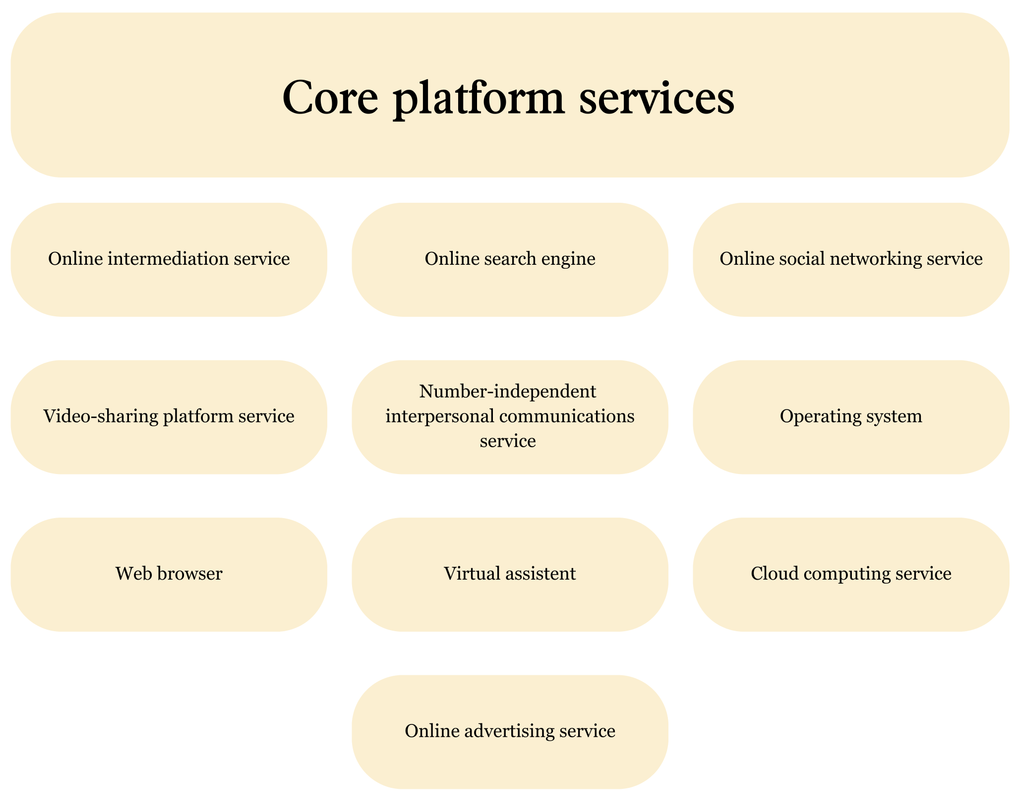
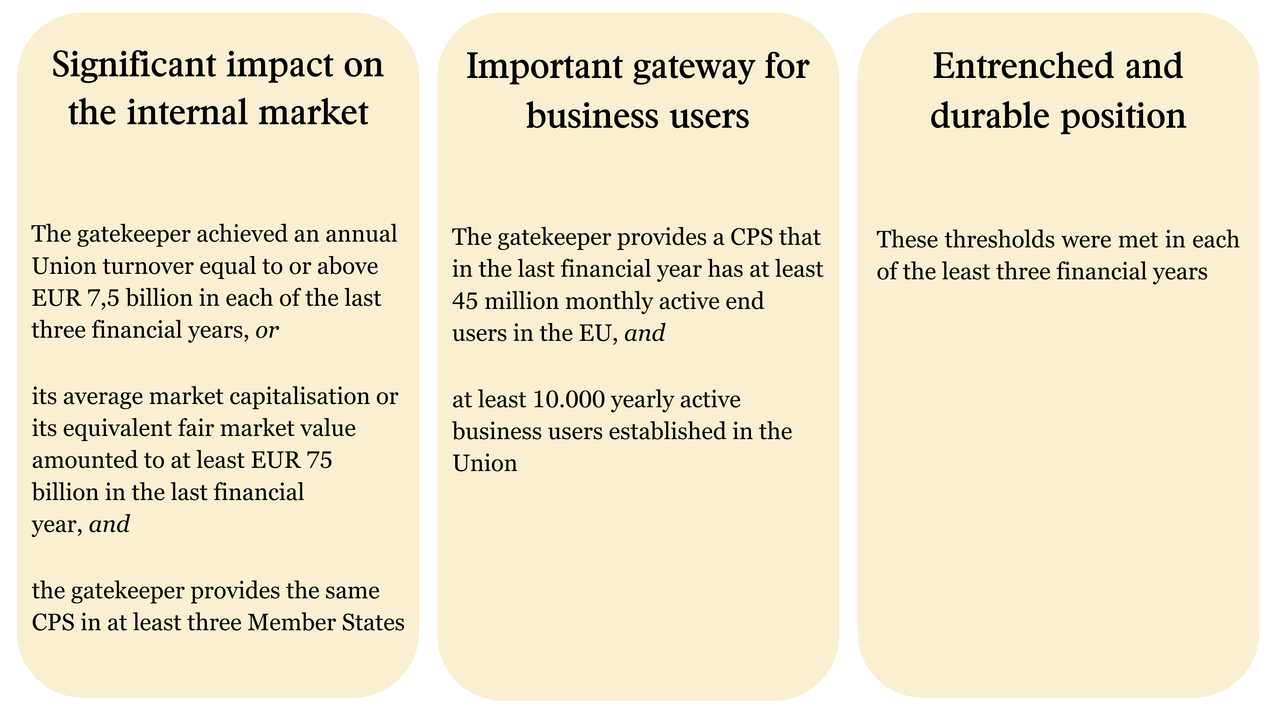
On 17 October 2024, tech giant and gatekeeper Microsoft informed the Commission of its hiring of a significant part of the staff of Inflection AI, a US-based technology company specialising in machine learning and generative artificial intelligence. Under the Digital Markets Act (“DMA”), gatekeepers like Microsoft are required to inform the Commission about all mergers related to core platform services, other digital services or those enabling data collection to the Commission.

Microsoft’s notification stands out for two reasons. First, Microsoft believes that the transaction does not constitute as a ‘concentration’ under European competition law, as it involves only the acquisition of key personnel and a non-exclusive licensing agreement – commonly referred to as an ‘acqui-hire’. Despite this position, Microsoft opted to inform the Commission. Second, this acquisition had previously been referred to the Commission by several Member States under Article 22 of the Merger Regulation (“EUMR”). However, following the Illumina/GRAIL judgment of the CJEU (see our Competition Flashback (“CF”) Q3 2024), these referral requests were withdrawn.

back to top


Appeal against approval of Vodafone’s takeover of Liberty Global dismissed

General Court of the European Union, judgment of 13 November 2024

On 13 November 2024, the General Court dismissed the appeals of Deutsche Telekom, Tele Columbus and NetCologne – three German telecom companies – against the Commission’s approval of Vodafone’s acquisition of certain Liberty Global activities in Germany, the Czech Republic, Hungary and Romania. The appellants argued that the Commission had made manifest errors in assessing the transaction’s impact on competition, particularly with regards to the German markets for the retail supply of TV signal transmission services, especially in view of Vodafone’s dominant position in those markets.

The General Court upheld the Commission’s decision, finding that the merging parties were neither actual (direct or indirect) nor potential competitors in the relevant markets before the transaction.  Consequently, the transaction did not weaken the competitive constraint exerted by their competitors. The Court stated that the mere fact that a concentration creates or strengthens a dominant position is not in itself sufficient to show that it is incompatible with the internal market. Although Vodafone was indeed dominant on the relevant markets, the Commission could rightly find that the acquisition did not result in a direct and significant impediment to effective competition.

back to top


Application Vifo Act extended to new sectors

Ministry of Economic Affairs and Ministry of Justice and Security, consultation document of 19 December 2024

Since mid-December 2024, a legislative proposal is pending to expand the scope of the Dutch Wet veiligheidstoets investeringen, fusies en overnames (“Vifo Act”) to include new sectors and technologies. The Vifo Act, which came into force on 1 June 2023, enables the government to assess investments and acquisitions involving vital providers and providers of sensitive technologies for potential risks to national security (see also our first and second Competition Newsflash on the Vifo Act). The proposal concerns an amendment to the Besluit toepassingsbereik sensitieve technologie, which regulates which sensitive technologies fall within the scope of the Vifo Act. The minister proposes to add biotechnology, artificial intelligence, advanced materials and nanotechnology, sensor and navigation technology, and nuclear technology with medical applications to this list. The public internet consultation on the proposal will take place from 19 December 2024 to 31 January 2025.

A legislative amendment is also pending at EU level, specifically regarding the European investment screening mechanism – the Regulation establishing a framework for the screening of foreign direct investment into the Union (“FDI Regulation”). Among other things, this proposal aims to harmonise national rules and ensure all Member States implement effective screening mechanisms. Key elements of the amendment include:

  1. Requiring Member States to adopt screening mechanisms that meet specific (procedural) standards.
  2. Introducing a minimum sectoral scope to ensure key industries are covered in all Member States.
  3. Extending the FDI Regulation to cover investments by investors based in EU ultimately controlled by individuals or entities outside the EU.

This proposal is currently under consideration by the European Parliament and national parliaments.

back to top


Overview highlights merger cases

On 16 October 2024, the Commission approved Eiffage’s, active in the construction and (energy) infrastructure sector, acquisition of EQOSU, an (energy) infrastructure company. The Commission’s investigation revealed that the acquisition, as initially notified, would significantly reduce competition in the Belgian market for the provision of installation and maintenance services of railway catenaries. The combined entity would hold high market shares, while entry by new players in this market is difficult due to a significant shortage of qualified personnel. To address the Commission’s competition concerns, Eiffage and EQOS committed to divesting EQOS Belgium in its entirety. On this basis, the Commission cleared the transaction.
On 22 October 2024, the Commission conditionally approved JD Sports’ acquisition of sportswear and footwear retailer Courir. The Commission’s initial investigation, following the June 2024 notification, found that the acquisition would lead to a high joint market share in the retail markets for (i) leisure and performance sports shoes in Portugal, and (ii) sports shoes in certain local markets in France. While the Commission noted that online and offline sales are part of the same market, it concluded that insufficient competition would remain in these specific markets after the acquisition. To address these concerns, JD Sports and Courir withdrew their initial notification and submitted a new notification in September 2024 in which they offered to divest all Courir stores in Portugal and the affected areas in France and sell them to Snipes. Based on these commitments and subject to approval of the terms of sale, the Commission cleared the transaction.
On 29 November 2024, the Commission announced that EasyJet, IAG and Air France-KLM (“AFKLM”) have been approved as suitable remedy takers in relation to the commitments offered by Lufthansa and the Italian Ministry of Economy and Finance (“MEF”) in their bid to acquire control of ITA. The Commission had approved the proposed transaction in July 2024 subject to three conditions (see CF Q3 2024). First, EasyJet will acquire the necessary assets to operate short-haul flights between Rome or Milan and certain airports in Central Europe. In addition, EasyJet will gain take-off and landing slots at Milan Linate airport. Meanwhile, IAG and AFKLM will enter into separate agreements with Lufthansa and MEF to strengthen their competitive position on long-haul routes between Italy and North America.
On 20 December 2024, the Commission approved NVIDIA’s proposed acquisition of Run:ai. While the transaction did not meet EU notification thresholds, it was reviewed following a referral by Italy under under Article 22(1) of the Merger Regulation to assess the transaction as yet. NVIDIA, a global U.S.-based company, supplies graphics processing units (“GPUs”) for data centre applications. Israel’s Run:ai provides GPU orchestration software. The proposed acquisition was notified in Italy at the request of the Italian competition authority (“AGCM”). In doing so, the AGCM used its ‘call-in’ powers, which allow it to examine transactions that do not meet relevant national turnover thresholds. The Commission initially expressed concerns that the transaction could significantly reduce competition in the relevant markets. However, after a detailed investigation, it concluded that the parties’ activities do not overlap and that the acquisition would not harm effective competition. With the Commission’s approval, NVIDIA is now free to complete the transaction. For more insights, see our blog on the interplay between artificial intelligence and competition law.

Heineken jointly liable for abuse subsidiary based on concept of undertaking

Amsterdam District Court, judgment of 23 October 2024

Pending the preliminary questions on the issue of jurisdiction, the Amsterdam District Court has handed down an interlocutory judgment on the merits regarding Heineken’s liability as the (grand)parent company of AB, which was fined by the Greek competition authority for abuse of dominance. The proceedings examine whether Heineken is jointly liable for the damage suffered by MTB as a result of AB’s infringement (see also CF Q1 2024, Q2 2023 and Q3 2022). The court answers this question in the affirmative on the basis of the concept of undertaking and in particular – as it concerns upward liability – on the basis of the ‘Akzo-presumption’ as was also elaborated by AG Kokott in her opinion in the preliminary reference proceedings.

First, the court clarifies that it is unnecessary to await the outcome of the preliminary proceedings on jurisdiction concerning Greek AB, as this issue only pertains to jurisdiction over the claim against AB. The court confirmed its jurisdiction over claims against Heineken, noting that Heineken is part of the same corporate group addressed in the infringement decision. It clarified that the Greek authority’s decision not to investigate Heineken’s role further does not preclude its liability.

Because Heineken (indirectly) owns almost all the shares in AB, the court finds that the Akzo presumption applies. The fact that it should be applied in a civil context in the same way as in a public law context is even an acte éclairé, according to the court. Heineken’s defence in which it claims not to have exercised decisive influence over AB’s abusive conduct is deemed irrelevant by the court. To rebut the presumption, Heineken needed to show it lacked decisive influence over AB in general, which it failed to do. The court highlighted factors such as Heineken’s ability to influence strategic decisions, the hierarchical reporting structure, and overlapping directors as evidence of its decisive influence. Consequently, Heineken was found jointly and severally liable for damages stemming from AB’s infringement. In the next step, Heineken (and AB if the court is found to have jurisdiction) must submit statements on the alleged damages.

Although upward liability is widely accepted in the public law sense, this judgment represents an important milestone for (Dutch civil) cartel damages law. It holds an unaddressed entity within a corporate group liable for damages arising from conduct committed by another group entity.

back to top


Amsterdam court clarifies damages calculation for air cargo cartel claims

Amsterdam District Court, judgment of 6 November 2024

In its interlocutory judgment of 6 November 2024, the Amsterdam District Court set out how to calculate the damages suffered by victims of the air cargo cartel. The court instructed economists hired by the parties to issue a Joint Expert Statement, outlining their points of agreement and disagreement. The claim foundations representing the victims, SCC and Equilib, proposed a ‘one-step’ model. This approach calculates damages directly using transaction data from shippers (the victims represented by SCC and Equilib). The airlines, on the other hand, proposed a ‘two-step’ model, first determining whether the airlines charged an overcharge to their customers, the freight forwarders, and then whether and to what extent these freight forwarders passed on any overcharge. The court stressed that both models are accepted in the Commission’s practical guide on quantifying harm.

The court concluded that the one-step model delivers sufficiently reliable results, while the airlines failed to convincingly demonstrate that the two-step model would produce more accurate or reliable outcomes. Damages will be calculated solely using transaction data from shippers. The analysis will focus on the total price paid by shippers, rather than only the surcharges, as the airlines had proposed. This decision streamlines the process of calculating damages in cartel claims, favouring simpler and more direct methods when they meet reliability standards. The ruling provides clarity for future cases and reinforces the practicality of the one-step model in similar claims.

back to top


FIFA transfer rules in violation of free movement and competition rules

Court of Justice of the European Union, judgment of 4 October 2024

The CJEU has issued another significant ruling on the intersection of sports and competition law, following its previous rulings on the International Skating Union and the European Super League. This latest case arose from a dispute initiated by footballer Lassana Diarra, who challenged various rules applied by FIFA regarding the international transfer system. Diarra complained that under FIFA rules, if a player terminates his employment contract without ‘just cause’ before the normal term, the new club is jointly and severally liable for any compensation due to the former club. Additionally, the new club may be prevented from registering new players in certain cases, and FIFA requires national associations to refuse to issue an International Transfer Certificate as long as the player and the former club are in dispute over the termination of the contract.

The CJEU ruled that these three rules are incompatible with EU law. First, these rules impede the free movement of workers (Article 45 TFEU), as they prevent professional football players from working for a new club in another Member State. The Court reasoned that the restrictions went beyond what is necessary to ensure the regularity of interclub football competitions or to maintain stability in the player rosters. Moreover, the CJEU finds that these rules violate the cartel prohibition laid down in Article 101(1) TFEU. The CJEU emphasises that the ability of football clubs to recruit professional players is an important parameter of competition. Restricting that possibility is similar to a non-compete or non-poach clause that has as its object the restriction of competition between clubs. Ultimately, the CJEU held that, subject to the final judgment of the Mons Court of Appeal (Belgium), these rules did also not appear to be necessary or indispensable for FIFA to achieve certain legitimate objectives.

back to top


Final ruling CBb in cold-storage cartel

Trade and Industry Appeals Tribunal, judgment of 5 November 2024

On 5 November 2024, the Trade and Industry Appeals Tribunal (College van Beroep voor het bedrijfsleven, “CBb”) has delivered its final ruling on Samskip’s appeal against the € 901,000 fine imposed on the company for its involvement in the cold-storage cartel. The case, which dates back to 2015, saw the Dutch competition authority (Autoriteit Consument & Markt, “ACM”) fine several companies (including Samskip, Eimskip, Van Bon (now: H&S Coldstores) and Kloosterboer) for coordinating tariffs and/or exchanging competitively sensitive information related to fish storage in cold stores. The fining decision for Kloosterboer IJmuiden B.V. (“KBIJ”, a wholly-owned subsidiary of Samskip throughout the infringement) and Daalimpex Logistics B.V. (a wholly-owned subsidiary of Eimskip throughout much of the infringement) was annulled by the Rotterdam District Court in 2018. However, with the CBb’s ruling in 2020, this judgment was overturned, the ACM’s decision ‘revived’ and the case was referred back to the Rotterdam District Court.

In the present judgment, the CBb addresses Samskip’s grounds of appeal with regard to the attribution of the infringement and the calculation of the fine. Samskip mostly argued, both in relation to the rebuttal of the Akzo presumption and relating to various principles of good governance, that it was not Samskip, but the Kloosterboer group (from whom it had acquired KBIJ), that was responsible for determining KBIJ’s commercial policy during the relevant period. According to Samskip, the fine cannot therefore be attributed to it, or at least the ACM wrongly failed to take into account the links between KBIJ’s director and the Kloosterboer group when calculating the fine.

The CBb dismissed all Samskip’s material grounds of appeal, affirming the ACM’s conclusion that Samskip exercised decisive influence over KBIJ and was aware of the anti-competitive agreements entered into by KBIJ and failed to take any corrective action. It also rejects Samskip’s arguments regarding the scope of the ACM’s investigation, access to the case file and the proportionality of the fine, including the severity factor applied by the ACM and the mitigating circumstances that were recognised for other parties.

Nevertheless, the CBb does agree with Samskip’s argument that the case’s handling time – nine years and eight months – exceeds the reasonable time limit. As a result, the CBb reduced Samskip’s fine by € 45.000, accounting for nine six-month delays at € 5.000 each. This final ruling concludes the cold storage cartel case after nearly a decade, marking the end of a protracted legal saga.

back to top


General Court confirms revised €12.1 million fine Pharol and Telefónica for market sharing

General Court of the European Union, judgment of 2 October 2024

On 2 October 2024, the General Court upheld the revised fine of € 12.1 million that the Commission imposed on Pharol (formerly Portugal Telecom) and Spanish company Telefónica in 2022 for engaging in a market-sharing agreement. The ruling stems from an earlier 2013 Commission fining decision, by which the two telecom companies were jointly fined € 79 million. That fine was based on a non-compete agreement between Pharol and Telefónica, which the Commission deemed an illegal market-sharing arrangement entered into during a merger between the companies. Although the 2013 decision was upheld on appeal, the General Court ordered the Commission to reassess the turnover figures and adjust the fines accordingly.

In its revised 2022 decision, the Commission reduced the fine on Pharol from € 12.3 million to € 12.1 million after correcting the turnover figures. In that decision, the Commission furthermore referred to “preparatory steps” the telecoms companies could take to enter each other’s markets, a point that was not explicitly mentioned in the original 2013 decision. According to Pharol, the Commission should therefore have adopted a supplementary Statement of Objections to allow the company to formally respond. Instead, Pharol was provided (only) with an accompanying letter of facts.

The General Court rejected this argument, stating that a supplementary Statement of Objections is only required when there are new charges or when there is substantially altered evidence, such as newly formulated grievances. In contrast, a letter of facts is sufficient when existing objections are corroborated by new evidence, as is the case here. The General Court underlines that merely the turnover values were recalculated and that the parties had the opportunity to comment on any new evidence mentioned in the letter of facts. This did not change the core nature of the original decision. With this judgment, the Court dismissed Pharol’s appeal and confirmed the revised fine of € 12.1 million.

back to top


Commission fines Czech and Austrian railway companies for collective boycott

European Commission, publication of 23 October 2024

On 23 October 2024, the Commission announced that it had imposed fines totalling € 48.7 million on the Czech and Austrian railway companies České dráhy (“CD”) and Österreichische Bundesbahnen (“OBB”) respectively, for violating the cartel prohibition laid down in Article 101 TFEU. The Commission found that, between 2012 and 2016, the two companies jointly obstructed competitor Regiojet from entering and expanding in the Czech rail market and on the international route between Prague and Vienna. Specifically, CD and OBB coordinated (or: falsified) the sales procedures of OBB’s used train wagons to prevent Regiojet from acquiring them, thereby hindering its ability to compete with the two incumbents. Additionally, CD and OBB exchanged confidential information regarding the bids of other interested parties.

As part of the leniency program, OBB received a 45% reduction in its fine, which ultimately amounted to € 16.7 million. CD, however, did not cooperate with the investigation and was fined nearly € 32 million. The Commission had previously investigated CD for potential predatory pricing but closed this investigation in September 2022. Read more about the recent developments regarding the Dutch rail network in our blog.

back to top


CJEU clarifies role of counterfactual in determining restriction of competition by effect

Court of Justice of the European Union, judgment of 5 December 2024

In response to preliminary questions from a Latvian court, on 5 December 2024, the CJEU once again clarified the difference between the analysis for a by object and by effect restriction under Article 101 TFEU, and the role of the counterfactual analysis in that regard.

In 2014, the Latvian competition authority fined the only authorised importer of KIA cars in Latvia for entering into anti-competitive agreements with dealers and authorised repairers. In particular, these agreements involved imposing certain warranty conditions on car owners. These conditions obliged them, during the warranty period, to have (i) any periodic maintenance and (ii) repairs not covered by the warranty carried out exclusively by these parties, always using KIA spare parts in order for the warranty to remain valid. This, according to the authority, had the effect of hindering the access of independent repairers and spare parts manufacturers to the Latvian market. At the same time, the Latvian authority stated that the negative effects on competition resulted from the nature of the restrictive clauses so that it was not necessary to demonstrate the actual effects. After a successful cassation appeal and a referral back to the first instance court, the Latvian court questioned this approach, prompting the CJEU’s clarification.

The CJEU reiterated that only when the conduct in question cannot be presumed to have an anti-competitive object is it necessary to examine whether it actually or potentially has the effect of restricting competition. To do so, it is necessary to examine competition within the factual framework in which it would occur in the absence of the agreement (the counterfactual). This scenario must be realistic and credible, but the Court stressed that potential effects can be considered, as long as they are appreciable. It is up to the national court to assess whether the authority has examined this correctly.

back to top


Fashion house Pierre Cardin and licensee Ahler fined for restricting cross-border sales

European Commission, press release dated 28 November 2024

The Commission has fined fashion house Pierre Cardin and its largest licensee, Ahler, for a total of € 5.7 million for restricting cross-border sales of clothing bearing the Pierre Cardin brand. Based on its investigation, the Commission concluded that, between 2008 and 2021, the two companies had entered into agreements in breach of Article 101 TFEU. These agreements were aimed at restricting sales of Pierre Cardin clothing by other Pierre Cardin licensees, both offline and online, outside their assigned licensing territories and/or to discount retailers. The ultimate aim of these agreements was to provide Ahler with complete territorial protection in the countries covered by its licence agreement. This prevented retailers from freely sourcing products in Member States with lower prices and thus artificially dividing the internal market. Remarkable is that apart from the supplier (licensor Pierre Cardin), the buyer (licensee Ahler) also received a heavy fine.

back to top


General Court dismisses appeal banks in bond cartel

General Court of the European Union, judgment of 6 November 2024

In its judgment of 6 November 2024, the General Court upheld the fines imposed on Crédit Agricole and Credit Suisse (now part of UBS), among others, for their participation in a cartel relating to the secondary market for US dollar-denominated supra-sovereign and sovereign bonds as well as bonds issued by government agencies. The two banks were fined a total of almost € 16 million. Deutsche Bank reported the cartel to the Commission and thus escaped a fine.

The banks argued on appeal that the Commission misunderstood the role of banks as ‘market makers’, claiming that exchanging information was necessary to cover certain trading risks. The General Court dismissed Credit Suisse’s appeal in its entirety. Crédit Agricole’s appeal was largely dismissed, but the General Court did annul the fine decision insofar as it concerned the duration of the infringement. According to the General Court, Crédit Agricole’s participation did not start on 10 January 2013, but one day later – on 11 January 2013. Nevertheless, the General Court upheld the amount of the fine.

back to top


Commission allowed to take over cartel investigation into metal packaging sector from Bka

General Court of the European Union, judgment of 2 October 2024

On 2 October 2024, the General Court ruled that the Commission had jurisdiction to take over the investigation into cartel behaviour in the German metal packaging sector from the German competition authority (the ‘Bundeskartellamt, “Bka”). The investigation, which started in 2015, involved several companies active in this sector, including Crown Holdings and Crown Cork & Seal Deutschland (collectively “Crown”). In 2018, the Bka requested the Commission to take over the investigation, a request that the Commission granted. Shortly thereafter, Crown submitted a leniency application, after which the Commission adopted the contested (settlement) decision in July 2022, imposing a fine of over € 7.6 million. Crown appealed this decision, arguing that the Commission did not have jurisdiction to take over the investigation in the first place, because the transfer was not made within the prescribed two-month period.

The General Court notes that the ‘Cooperation Notice (Commission Notice on cooperation within the Network of Competition Authorities), which outlines procedures for case referrals, merely prescribes that problems with a case referral are ‘usually’ resolved within two months. According to the Court, however, it is clear that this wording does not provide ‘precise certainty’ that these two months cannot be exceeded. Moreover, the principle of subsidiarity, which allows the Commission to act only when EU Member States cannot do so sufficiently themselves, had not been violated. The Court emphasises that the Commission acted at the express request of the Bka. This therefore does not infringe the rights of the Member States, the Court said.

back to top


General Court confirms € 31.7 million fine HSBC for participating in euro interest rate derivatives cartel

General Court of the European Union, judgment of 27 November 2024

On 27 November 2024, the General Court upheld the € 31.7 million fine imposed by the Commission on HSBC for its participation in a cartel in the euro interest rate derivatives sector, together with Crédit Agricole and JPMorgan Chase. This ruling follows an earlier fine decision by the Commission of 7 December 2016 where HSBC had been fined € 33.6 million for participating in the cartel. However, the General Court annulled that fine in September 2019 due to insufficient reasoning by the Commission.

Following the annulment, both HSBC and the Commission lodged an appeal. However, the Commission adopted a new fining decision in June 2021 to remedy the situation following the annulment of the previous decision. In this new decision, the amount of the fine was adjusted to € 31.7 million. The Commission subsequently withdrew its appeal against the 2019 General Court judgment. On 12 January 2023, the CJEU rejected HSBC’s appeal against the original decision, but upheld the General Court’s judgment insofar as it concerned the annulment of the € 33 million fine. The new 2021 fining decision provided precisely for that annulment to be remedied.

The General Court’s November 2024 judgment refers to the last decision of June 2021. The General Court again rejected HSBC’s grounds of appeal against this decision. HSBC argued that the Commission had not imposed the (new) 2021 fine in time. However, the General Court held that the appeal to the CJEU lodged by the Commission had suspensory effect. The fact that the Commission took a new decision to comply with the 2019 General Court judgment does not mean that the Commission’s interest in its appeal lapsed. The fact that the Commission subsequently withdrew its appeal does not alter this, according to the General Court.

back to top


Final annulment of Intel fine for abusive exclusivity rebates

Court of Justice of the European Union, judgment of 24 October 2024

On 24 October, the CJEU rejected the Commission’s appeal against the annulment of the € 1.06 billion fine it imposed on Intel. This puts a definitive end to the so-called Intel saga as regards the imposition of exclusivity discounts, after more than 20 years.

In the original 2009 fining decision, the Commission found that Intel abused its dominant position in the global market for microprocessors with an x86-architecture. Intel was accused of (i) offering exclusivity discounts to major computer manufacturers including Dell, HP, Lenovo, Acer, and IBM, and (ii) making payments to HP, Acer and Lenovo to delay or cancel the launch of products with processors manufactured by Intel’s competitor Advanced Micro Devices (“AMD”) (so-called ‘naked restrictions’).

The General Court upheld the fining decision in 2014. However, in 2017, the CJEU annulled the fine and referred the case back to the General Court. The General Court confirmed the annulment, against which the Commission appealed. Afterward, the Commission imposed a new fine of € 376 million in September 2023 for the ‘naked restrictions’ (see also CF Q3 2023). With this ruling, the CJEU now definitively rules that the Commission did not sufficiently prove that the exclusivity rebates applied by Intel could have anti-competitive effects and foreclosed competitor AMD.

The CJEU stresses several times in its judgment that it is for the Commission to prove that the exclusivity discounts could at least have had exclusionary effects, having regard to all the relevant factual circumstances. In doing so, the General Court is not required, despite any errors made by the Commission, to actively examine whether, on the basis of another reasoning, an infringement could possibly still be established when such reasoning as such is not part of the decision. All of the Commission’s grounds of appeal relating to the application of the ‘as efficient competitor’ test, standards of proof and infringement of defence rights are dismissed. Thereby, the fine imposed for applying exclusivity discounts is definitively off the table.

back to top


€ 800 million fine Meta for tying Facebook Marketplace and unfair trading conditions

European Commission, press release dated 14 November 2024

The Commission has imposed a fine of € 797 million on Meta, the parent company of Facebook, for tying Facebook Marketplace to the online social networking service Facebook, and for unilaterally imposing unfair trading conditions on other online advertising service providers that advertise on Meta’s platforms. In doing so, Meta abused its dominant position (Article 102 TFEU) in the European market for social networking services and national markets for online advertising on social networking services, according to the Commission.

By tying its online advertising service Facebook Marketplace to Facebook, all Facebook users automatically have access to and interact with Facebook Marketplace, regardless of whether they want to. The Commission concludes that this may exclude competitors of Facebook Marketplace from the market, as the tying gives Facebook Marketplace a significant distribution advantage. The Commission also concludes that Meta has unilaterally imposed unfair trading conditions on other online advertising service providers that advertise on Meta’s platforms, particularly in relation to Facebook and Instagram. This allows Meta to use data generated by other advertisers exclusively for the benefit of Facebook Marketplace.

back to top


‘Place order’ button insufficiently clear about consumer payment obligation

Supreme Court of the Netherlands, judgments of 4 October 2024

In October 2024, the Dutch Supreme Court (Hoge Raad, HR”) issued two significant rulings on the legal consequences of unclear texts on order buttons in online transactions. Consumer protection law requires the text on an order button to make clear that the consumer is entering into an obligation to pay (see Article 6:230v (3) of the Civil Code).

In the first case, a consumer had ordered a number of items on the Dutch webshop bol.com. The district court sought clarification from the HR regarding whether the button text ‘place order’ met the legal requirements regarding an order button. In light of the wording of the provision and the legislative history, the HR held that a distinction must be made between the act of ‘placing an order’ on the one hand and ‘entering into an obligation to pay’ on the other. Texts such as ‘place order’ or ‘order’ do not make it sufficiently clear that a consumer enters into an obligation to pay when clicking the button. As a result, the HR ruled that if the text on the order button is inadequate, the consumer can annul the contract. As the consumer had not appeared before the court in the case at hand, the district court had to partially annul the contract, meaning that the consumer gets to keep the product but does not have to pay the full price.

The second case involved a consumer who had registered online for a course by clicking on a button with the text ‘register now’. According to the court, the text did not meet the legal requirements regarding the order button (Article 6:230v (3) of the Civil Code). Here, another question was submitted to the HR: despite the fact that the contract must be annulled on the grounds of violation of the order button provision and the transaction must be reversed, can a trader claim compensation for services rendered? The HR ruled that in cases of delivered performance, such as education, the trader can claim reasonable compensation for the value of the delivered performance if the contract is annulled.

back to top


Enforcement Revised Payment Services Directive

Authority for Consumers & Markets, press release dated 11 October 2024

On 11 October 2024, the ACM took action against Rabobank for failing to comply with the Payment Service Directive II (“PSD2”, or the Revised Payment Services Directive). This legislation, which came into force in the Netherlands on 19 February 2019, was designed to enable payment institutions to access bank infrastructure, allowing them to offer payment services to both consumers and businesses. Specifically, under the PSD2, payment institutions are entitled to open business payment account and payment service providers are entitled to access payment systems. The ACM, as the designated supervisory authority, is responsible for enforcing the directive.

In 2022, the ACM requested that the legislature address a gap in the law, as it found that it could not effectively supervise Dutch banks that refused to offer payment accounts to payment institutions from other EU Member States. Since then, the ACM has enforced (publicly) only once against a bank that did not comply with the directive. Following the ACM’s intervention, Rabobank pledged not to impose barriers in the future when payment institutions want to open a bank account with Rabobank. Rabobank put such access applications ‘on hold’ or imposed unnecessary financial requirements (such as high turnover thresholds).

Although enforcement of the PSD2 has been limited in recent years, competition authorities have put the enforcement of a level playing field high on their agendas. For instance, the ACM championed a level playing field between Big Tech and other market participants and stressed the importance of access to NFC technology for the development of payment apps. Since March 2024, the DMA requires gatekeepers to give third parties access to hardware and software features, including NFC technology on mobile devices. Moreover, it enforced commitments from Apple in this area last summer.

back to top


ZuivelNL pledges to provide more insight into spending on contributions dairy farmers

Authority for Consumers & Markets, decision of 17 October 2024

On 17 October 2024, the ACM declared binding commitments made by ZuivelNL – the chain organisation of the dairy sector in the Netherlands – on the spending of contributions paid to it by dairy farmers. ZuivelNL collects contributions to carry out, among other things, research, animal welfare and sustainability, food safety, education, export and market information. Dairy farmers do not pay this contribution directly to ZuivelNL; instead, they pay a contribution to the milk processors, such as FrieslandCampina or Royal Lactalis Leerdammer, who purchase their milk. The milk processors then pay contribution to ZuivelNL. On 5 July 2022, the ACM received an enforcement request from a supplier association of dairy farmers, accusing ZuivelNL of using the received contribution for activities not related to the sale of milk. This allegedly violated the Unfair Trade Practices in Agriculture and Food Supply Chain Act (“Wet OHP”). Indeed, Article 2(1)(d) of that act prohibits a buyer from requiring the supplier to make payments unrelated to the sale of the supplier’s agricultural and food products.

The concern among dairy farmers was that they lacked transparency regarding how their contributions were being spent, leading to confusion about whether the funds were being used for activities tied to milk sales. To address this, ZuivelNL committed to making the link between the contributions and milk sales-related activities more visible in its budgets and annual accounts. The organisation also pledged to publicly disclose this information and have its annual accounts audited by an independent accountant. Furthermore, ZuivelNL agreed to review and adjust the contribution levels every three years. The ACM considered these commitments to be effective in ensuring that dairy farmers are only required to pay dues that are relevant to the milk supply chain. As a result, the ACM declared the commitments binding.

The Wet OHP, which came into force on 1 November 2021, aims to strengthen the bargaining power of farmers, growers and fishermen against larger and concentrated market players. Research by the ACM shows that many buyers and suppliers are not yet fully aware of the new law. This lack of awareness is a significant issue, as many parties are not yet reporting violations.

back to top


For all your questions regarding (EU) competition law, bureau Brandeis would be happy to assist.

Bas Braeken – Jade Versteeg – Lara Elzas – Timo Hieselaar – Demi van den BergJoost van Belois

Vision

Flash Forward Merger Control 2025

With the festive season approaching, we look ahead to what the new year will bring in the field of merger control. In this first edition of the Flash Forward Merger Control 2025, we take you through some of the key developments that await us in 2025 and that will potentially affect your practice and clients.

In this short newsletter, we provide insight into the potential consequences of the intended repeal of the Article 24(2) of the Dutch Competition Act (“Mw”) which stipulates that a merger cannot amount to an abuse of dominance, and the possible additions to the competition law toolbox of the Dutch competition authority (“ACM”). We also discuss the expected extension of the scope of application of the Act on security screening of investments, mergers and acquisitions (Vifo Act”), and the possible introduction of a sector specific investment screening test for the defence industry.


Acquisition by dominant undertaking may soon constitute abuse dominant position

An important intended amendment is the repeal of Article 24(2) Mw, which currently precludes the application of the national prohibition on abuse of a dominant position to mergers. This exemption to the abuse prohibition is at odds with the Towercast judgment of the Court of Justice of the European Union (“CJEU”). In that judgment, the CJEU ruled that Article 102 of the Treaty on the Functioning of the European Union (“TFEU”)- the European prohibition on abuse of a dominant position – can indeed apply to concentrations that fall below the notification thresholds. The Dutch Article 24(2) Mw is currently blocking the application of this principle in purely national situations. Repealing this section achieves harmonisation with European competition law and realigns the national and European frameworks.

The legislative amendment means that in the future, the ACM can also retrospectively investigate transactions that were not subject to any notification obligation based on the turnover thresholds applicable for merger control, but where the acquiring party may have abused its dominant position with the transaction. This gives the ACM an additional tool to assess mergers and acquisitions that potentially raise competition law concerns. For M&A lawyers, this means that the risk of ex post interventions increases, even for transactions that are not notifiable. In the future, it will therefore not only be important to check the notification thresholds, but also to determine whether the buyer might have a dominant position and analyse the risk of a potential review under Article 24 Mw and/or Article 102 TFEU.

Following a positive opinion from the Council of State on 5 June 2024, the proposal was submitted on 11 June 2024. The standing committee on Economic Affairs reported on the proposed legislative amendment on 7 October 2024. On 23 October 2024, the Minister of Economic Affairs (“Minister”) requested an postponement for his response to that report. Although no date has yet been set for the entry into force of the amendment, this is expected to happen in 2025.

back to top


Legislative proposal investment screening test suppliers defence industry

Another legislative proposal that is currently pending relates to the introduction of an investment screening test specifically aimed at the defence industry. This proposal aims to strengthen, protect and better position the strategic and vital standing of the Dutch defence industry on an international level. The proposed act inter alia concerns a new sectoral screening test focusing on investments, mergers and acquisitions in the armed forces’ supply chain, including suppliers of military goods and transport. By doing so, the government aims to prevent these investments, mergers and acquisitions from endangering national security by, among other things, establishing notification requirements and approval procedures for acquisition activities that could affect the continuity of defence capabilities.

This investment test is expected to replace the current test for military goods under the Vifo Act, while complementing it by focusing on a broader group of target undertakings, namely those suppliers that are essential to the vital process of ‘Deployment Defence’ – or, in other words, the “ability of the armed forces to perform its tasks while acting with a degree of autonomy.” Suppliers are currently only covered by the Vifo Act when it comes to highly sensitive technologies. This means that the test for the defence industry will be broadened and specifically tailored to the unique requirements of the sector. The act also contains a number of provisions similar to the Vifo Act, such as a notification requirement, a standstill obligation and the possibility of imposing approvals or nullity sanctions.

The internet consultation has been completed this fall. The proposal is expected to receive further consideration in 2025.

back to top


Extending scope of application Vifo Act to new sectors

The Vifo Act, which came into force on 1 June 2023, allows the government to review investments and acquisitions of vital companies and providers of sensitive technologies for risks to national security (see also our first and second Competition Newsflash on the Vifo Act). In light of the rapidly changing geopolitical situation, a legislative proposal is pending to further extend the scope of the Vifo Act to new sectors and technologies. The explanatory memorandum explains that this extension aims to further safeguard the national security of the Netherlands.

The proposed act concerns an amendment to the Decree on the Scope of Application of Sensitive Technology, which regulates which sensitive technologies fall within the scope of the Vifo Act. The proposal sees the addition to that decree of biotechnology, artificial intelligence, advanced materials and nanotechnology, sensor and navigation technology and nuclear technology with medical use. In February 2024 a motion was carried requesting that the Dutch vegetable and seed breeding sector be included in the scope of the Vifo Act, given its crucial role in food security and innovation. The vegetable and seed breeding sector was nevertheless not included in this proposal.

For M&A lawyers, this development means that mergers and acquisitions in an increasing number of sectors may be subject to national security tests. This requires an even sharper analysis of transaction risks, timelines and notification requirements when clients operate in or are involved in vital or strategic sectors.

The internet consultation on the proposal will take place from 19 December 2024 to 31 January 2025. The proposal will then be submitted to the Council of State to deliver its opinion. The Ministry of Economic Affairs considers it possible that the act could then enter into force in the second half of 2025.

back to top


Call-in power non-notifiable transactions

An expected extension of the ACM’s powers concerns the so-called call-in power. This addition to the ACM’s toolbox aims to deal with transactions that do not meet the current turnover thresholds but still (potentially) raise competition law concerns. The ACM refers to large companies that gain or increase their market power through successive small acquisitions (roll-up acquisitions), or so-called killer acquisitions, where companies with a strong market position acquire potential competitors to prevent (or: ‘kill’) future competition. These transactions now remain largely outside the ACM’s supervision, which in certain cases can be detrimental to competition. The introduction of a call-in power would allow the ACM to assess transactions falling below the turnover thresholds if they raise competition concerns.

The ACM has stated on several occasions that it considers the introduction of a call-in power necessary. On 4 September 2024, a motion on its introduction was carried in the House of Representatives. The Minister has promised to study the potential introduction of the call-in power and present the results as well as possible legislative proposals in 2025.

back to top


Introduction New Competition Tool

In addition to adjustments to traditional competition instruments, such as the prohibition on abuse of a dominant position, the New Competition Tool (“NCT”) is gaining ground as an addition to the ACM’s current toolbox. This tool allows competition authorities to intervene in case of market failure, without there having to be a breach of competition law. Market failures, for example caused by specific market characteristics or the behaviour of companies, can lead to a lack of effective competition and can disadvantage consumers. For example, the ACM recently brought out a report on the savings market and found that limited competition led to low savings rates. Other than finding that (in its view) there is market failure, the ACM cannot currently intervene in such situations. With the NCT, regulators can address the cause of such problems and actively reform the market structure to promote healthy competition.

Unlike existing competition rules, the NCT does not focus on individual breaches or “wrongdoing” of undertakings, but on structural problems in the market that impede competition. The tool enables preventive action and faster intervention in the face of impending competition concerns. In doing so, regulators can take drastic steps, such as opening up markets or limiting market power. The UK Competition & Markets Authority has had similar powers for some time. The ACM is now actively advocating the introduction of an NCT in the Netherlands. For M&A lawyers, this would mean that market investigations by the ACM could be more frequent and new intervention measures could impact markets in which their clients operate, even without any wrongdoing.

Currently, the introduction of an NCT in the Netherlands is mainly a desire expressed by the ACM. The minister has promised to study the possible introduction of an NCT. The results of this study, as well as any legislative proposals, are expected in 2025.

back to top


Thank you for reading this first edition of the Flash Forward Merger Control and we wish you happy holidays and a successful new year!

 Team Competition – bureau Brandeis

Bas Braeken – Jade Versteeg – Lara Elzas – Timo Hieselaar – Demi van den Berg –  Joost van Belois

Vision

AI turns the world of competition law on its head

Introduction

Artificial Intelligence (“AI”) is booming. In San Francisco, robot taxis from Waymo, a subsidiary of Google’s parent company Alphabet, are already driving with great success. Siri and Alexa have become part and parcel of our daily lives. The vast majority of companies have equipped their products with AI to create smart technologies and services. Such as robots putting together packages for Zalando, ChatGPT from OpenAI, chatbots as customer service and AI in cancer detection. Companies are investing heavily in AI. According to the Financial Times, the biggest tech companies alone (Microsoft, Alphabet, Amazon and Meta) have already invested over 100 billion in AI in the first half of 2024.

AI is turning the world of competition on its head. With the rise of AI, traditional companies are suddenly being rivalled by big tech companies. Waymo and Uber, for example, have announced they are teaming up. With this, Waymo’s parent company Alphabet is suddenly entering the taxi market, competing with local taxi companies.

Competition authorities have been closely monitoring the rise of AI for some time. The German Bundeskartellamt, the French Autorité de la concurrence and the Dutch Authority for Consumers an Markets (“ACM”), among others, have already published several position papers on monitoring the use of algorithms (see here, here and here). The US government issued a presidential action on 30 October 2023 on secure and reliable development and use of artificial intelligence, stressing the importance of healthy competition in the AI market. (Former) European Commissioner Margrethe Vestager also warns about the competition risks of AI. Vestager stresses that swift and strong enforcement is needed to prevent monopolisation by the big tech companies on AI. The European Commission, the UK Competition and Markets Authority (“CMA”) and the US Federal Trade Commission (“FTC”) and Department of Justice (“DoJ”) also recognise that competition problems in AI are not limited to country borders. In their Joint Statement on Competition in Generative AI Foundation Models and AI Products, they discuss the competition risks of AI and indicate that they seek cooperation and share knowledge. Thus, competition law aspects of the AI market are receiving broad attention in the world of competition.

In this blog, we discuss four relevant competition law aspects of AI:


AI and market power of tech companies

Big tech companies like Apple, Microsoft and Google have the resources to develop and implement AI technologies faster. This can lead to a situation where these companies dominate the market. This poses competition risks.

The first is the fear by several competition authorities that dominant companies may abuse their market power by tuning algorithmic functions so that their own products and services receive preferential treatment. These fears stand in light of the Google Shopping case, in which Google was fined EUR 2.42 billion for giving preferential treatment to its own online marketplace Google Shopping on Google’s search engine.

In addition, several competition authorities fear that large tech companies are using their existing market power in adjacent markets to keep new entrants out of the AI market. AI systems often need access to large data sets to function effectively. Companies with access to large amounts of data can therefore gain an unfair competitive advantage. This creates high barriers to entry for startups. They are often forced to partner with one of the big tech companies to gain access to that data. This collaboration can lead to a series of anti-competitive practices, including tying, where the sale of one product is made conditional on the purchase of another. This dynamic allows the AI market to consolidate rapidly, as each of these companies incorporates an AI model and bets on its success. As a result, the barriers to entry in the AI market may become higher and higher, reducing competition.

As part of this concern, the Commission is investigating, for example, the cooperation agreement between Microsoft and OpenAI (the developer of ChatGPT). The Commission has requested additional information on the exclusive cloud agreement that is part of the cooperation. Indeed, Microsoft Azure, Microsoft’s cloud computing service, is OpenAI’s exclusive cloud provider. The CMA, DoJ and FTC are also investigating the partnership between Microsoft and OpenAI. In the US, the partnership between OpenAI and Microsoft is also being challenged civilly. On 29 November 2024, Tesla boss Elon Musk launched an action alleging OpenAI engaged in anti-competitive conduct in violation of US antitrust laws

A deal between Google and Samsung has also led to further investigation by the Commission. Samsung has agreed to build Google’s Gemini Nano AI model into the Samsung Galaxy S24. The Commission investigates, among other things, whether this deal means that no other AI systems can be installed on the Samsung device, whether interoperability between other chatbots and apps on the Samsung device is limited by this collaboration, and how this collaboration was established.

At the same time, AI also offers great advantages in the investigative work of competition authorities. For instance, AI tools can quickly and effectively analyse large data sets in the context of an investigation into possible abuse of a dominant position. As competition authorities have more data at their disposal, the use of AI allows them to detect early developments in the market that indicate reduced competition. This allows them to efficiently deploy their investigative capacity and more smoothly anticipate rapidly changing (digital) markets.


AI and the cartel ban

AI can also lead to cartel violations. For example, AI can be used to facilitate collusion. Collusion, in short, is the explicit or tacit coordination of competition-relevant behaviour between market participants.

The use of AI can facilitate existing forms of collusion. For instance, algorithmic functions can be used to better monitor an existing price cartel and more easily sanction deviant behaviour. With the increasing availability of large amounts of data on specific markets, these markets are also becoming more transparent. This may result in companies behaving less independently. The more transparent a market is, the less uncertain companies are about competitors’ market behaviour.

The use of AI may also foster new forms of collusion. In particular, regulators point to the use of algorithmic functions to automate competitively sensitive aspects of business operations, such as price, output and production. Algorithms, for example, allow constant monitoring of prices and quick reaction to price changes. For instance, in its investigation into the use of algorithmic trading in the energy market, the ACM points to the possibility that price algorithms can arrive at a higher average price level than if these algorithms were not used. In that case, there is tacit price alignment through the use of algorithms.

Currently, many companies still use so-called rule-based algorithms, simple algorithms in which the variables can easily be set and adjusted in advance. However, there is an increased use of learning-based algorithms, which can create the strange situation of algorithms themselves tuning prices to achieve equilibrium, whether or not outside the science or desire of companies. AI systems, for example, can use other companies’’ pricing as input to set prices. If several companies in the same market use a particular AI system, the fear is that prices will at some point reach an equilibrium at which profitability is optimised. Firms in such a situation no longer have an incentive to price competitively and thereby generate lower sales in exchange for a competitive pricing proposition, as long as the other firms do not do the same. How this kind of behaviour should be qualified under competition law is unclear, but what is clear is that in such a situation firms no longer compete on price, ultimately to the detriment of consumer welfare..

Detecting this kind of collusion is challenging. Due to the large amount of data that algorithms need to function adequately; collusion can be difficult to detect. The recently adopted AI Regulation may facilitate the supervisory function of authorities through the obligation introduced in Article 53(1) for providers of certain AI models to prepare and disclose sufficiently detailed summaries of the content used to train the AI model. Moreover, under Article 74(2) of the AI Regulation, market surveillance authorities report to national competition authorities and the Commission any information obtained in the course of surveillance activities that may be relevant to the application of competition rules. AI developers thus have a far-reaching transparency obligation and national and European authorities cooperate intensively to prevent or detect anti-competitive behaviour.

On the other hand, competition authorities are increasingly using AI to detect cartels. For example, the CMA introduced a screening tool that allowed it to easily detect cartels in tenders. The algorithms in the tool mapped tenders where bidrigging agreements were more likely. The tool is now no longer in use but there is a good chance that other competition authorities are also developing and using such tools without making it public. One reason for secrecy is that possible information on the factors on which tenders are selected will not be revealed to cartel participants and they could therefore circumvent cartel detection.


Merger control and AI

The dynamics described above between big powerful companies and AI developers also affect merger control. Due to the need for big data and pre-existing ecosystems, almost all serious AI developers enter into partnership agreements with large companies. The Commission sees the value of these partnerships, as they are essential for the development of AI models, but also warns of the potentially anti-competitive consequences. For instance, collaborations can lead to entrenched market positions, for example by agreeing on exclusivity rights. For example, a tech company may stipulate that in exchange for providing access to data and capital, the AI developer will only use the tech company’s services and align its AI model with the tech company’s services. This does not enhance competition in the AI market and adjacent markets.

In this context, the above-described cooperation between Microsoft and OpenAI was considered under the European merger control regime in addition to the potential competition infringement. However, the Commission concluded that the form of cooperation did not qualify as a concentration, as no lasting change of control was created within the meaning of Article 3(1) of the EU Merger Regulation.

The CMA also recently announced it was launching a formal investigation into the collaboration between Alphabet, Google’s parent company, and AI startup Anthropic. However, the investigation was soon abandoned when it was found that the revenue thresholds were not met. The CMA is actively investigating collaborations between tech companies and AI startups under the merger control regime. It also already investigated Microsoft’s investment in Inflection AI and Amazon’s partnership in Anthropic.


AI and the DMA

Investigations into an antitrust or abuse-of-dominant position violation by large tech companies can take a very long time due to the complexity. For example, the Google Shopping case above took more than 14 years. That is very long in a dynamic and fast-changing market, increasing the risk of significant and irreparable competitive harm.

The Digital Market Act (“DMA”) is intended to ease the rigmarole of market surveillance in the digital sector. Since 7 March 2024, all gatekeepers appointed by the Commission must comply with the obligations of Articles 5, 6 and 7 of the DMA (see also our earlier blogs of 5 December 2023 on the content of the DMA and 7 March 2024 on gatekeepers’ compliance with these obligations). These rules include the collection, processing and combination of (personal) data, interoperability obligations and the prohibition of parity clauses. Because the DMA entails so-called ex ante supervision, in principle it prevents designated gatekeepers from engaging in anti-competitive behaviour for years before it is stopped by the Commission. The DMA also contains far-reaching transparency obligations for designated gatekeepers to detail in compliance reports how the gatekeeper complies with all obligations. This provides the Commission with a wealth of information on the behaviour of these gatekeepers and the inter-operability of their various services.

The DMA also plays a role in the regulation of AI. Admittedly, AI is not one of the included core platform services that the DMA looks at. Nevertheless, the European Parliament has called for certain AI models to be included in the DMA as a core platform service. In the meantime, AI is already partially regulated by the DMA. In a statement dated 22 May 2024, the high-level group for the DMA outlined how the DMA influences the use of AI by designated gatekeepers. Once an AI model is integrated into another core platform service, such as Google’s search engine, Apple’s operating system or Facebook’s social networking service, the DMA applies to the AI model used in the context of the core platform service. A gatekeeper’s compliance with the obligations under the DMA should therefore take into account how AI models used are part of the core platform service in question.

Moreover, the DMA regulates whether and how gatekeepers may process personal, and business data generated on the core platform service. This curbs the previously described data dominance of large tech companies. For example, under the DMA, gatekeepers are not allowed to collect personal data of end users from third parties without prior consent. In addition, gatekeepers may not use personal data derived from the core platform service in other services offered by the gatekeeper. This limits the amount of data that gatekeepers can use to train their AI models.

Finally, the DMA contains a merger information requirement. Gatekeepers must inform the Commission of any proposed concentration in the digital sector, regardless of whether the proposed concentration must be notified to the Commission under the EU Merger Regulation or to a national competition authority. This information requirement was used by the Commission, among other things, to establish a so-called Article 22 referral. Through such a referral, the Commission could still, at the request of one or more member states, examine and possibly prohibit, or only approve subject to conditions, a non-notifiable concentration. This could prevent large powerful companies from acquiring a smaller, innovative and start-up AI competitor with the aim or effect of weakening innovation and/or eliminating potential competition (so-called killer acquisitions). The Court of Justice, in its Illumina Grail ruling on 3 September 2024, drew a line under the scope of Article 22, severely limiting its scope. Incidentally, in Germany and Austria, it is already possible to assess killer acquisitions because the value of the transaction is also taken into account. In addition, national competition authorities in Denmark, Hungary, Ireland, Italy, Lithuania, Slovenia and Sweden have introduced call-in powers. This allows them to still investigate mergers below the notification thresholds. These countries can also still refer transactions to the Commission under Article 22 of the EU Merger Regulation.


Conclusion

The effective enforcement of competition infringements related to AI faces significant challenges. The widespread use of AI can lead both to coordinated behaviour between firms and abuse of market power by dominant firms. Communications from various competition authorities on AI and competition law show that these authorities have learnt from the emergence of digital markets at the beginning of this century, and are making efforts to avoid making the same mistakes when supervising AI as when supervising Big Tech. Moreover, consideration is being giving about sharpening competition tools to meet the new reality. The DMA plays an important role in this matter, but, as Vestager also noted in her speech on 28 June 2024, the basic principles of competition enforcement are still the same. Monopolies are monopolies and price fixing is price fixing, whether we are dealing with car manufacturing, cement production or machine learning.


Bas Braeken and Lara Elzas

Vision

Update railway law: the 4th European Railway Package and competition on European railway markets

Introduction

In our blog of 26 May 2023, we discussed some developments in the field of railway law. The focus was in particular on the then upcoming concession for the Dutch Main Railway network (in Dutch: Hoofdrailnet, “HRN concession”) in light of the 4th European Railway Package. The HRN concession for the period 2025 to 2033 has now been directly awarded to the Dutch Railways (in Dutch: Nederlandse Spoorwegen, NS”) on 21 December 2023. In this blog, we will discuss the background and relevant legal framework of the unconditional direct award of the HRN concession. In doing so, we will also examine the European Commission’s (“Commission”) objections to the procedure by which the concession was awarded. Finally, we highlight several other recent developments regarding Dutch and European railway regulation.

4th Railway Package and the HRN concession

Central to assessing the legality of the HRN concession, and the award to NS, is the 4th Railway Package. This package consists of European law aimed at liberalising European passenger railway transport and is divided into two pillars. The technical pillar deals with the safety and interoperability of the European railway system. The market pillar deals with opening up the railway market. This pillar includes the SERA Directive (Single European Railway Area) and the PSO Regulation (Public Service Obligation), most of this legislation is implemented in the Netherlands in the Passenger Transport Act 2000 (Wp2000) and the Railway Act.

Prior to the entry into force of the 4th Railway Package, the Dutch railway network was divided into two tiers: one central and multiple (smaller) decentralised concessions. The HRN concession is the primary concession. All rail lines and services not covered by the central HRN concession are granted as decentralised concessions to (alternative) transport operators. Currently, several railway companies operate on decentralised concessions including Arriva, Connexxion, Syntus/Keolis, Qbuzz, Abellio and Eurobahn. Apart from small overlaps between the concessions, the concessionaires have an exclusive right over the relevant rail lines and services. Whereas decentralised concessions are publicly tendered, thus allowing for competition between railway companies, the HRN concession has, to date, always been awarded directly and privately to NS.

HRN-concessie en decentrale concessies

Figure 1: railway companies & concessions on the Dutch railway network

The 4th Railway Package brought change to this system. In principle, the entire railway network should be served by normal market conditions on the basis of open access. Infrastructure managers (ProRail in the Netherlands) must grant all railway companies access to their railway networks (Article 13 SERA Directive). This ensures maximum competition between railway operators. Nonetheless, the 4th Railway Package foresees that not all railway services benefit from unbridled competition. This is particularly the case where certain services are unprofitable and, therefore, provide an insufficient impetus for railway companies to operate those services. To ensure that these services, although perhaps commercially uninteresting for the operator but important for passengers, are also provided for, a Member State can designate them as a public service obligation.

Article 2(e) of the PSO Regulation explains that a ‘public service obligation’ is an obligation imposed on an operator by the relevant competent authority to provide railway services that it would not provide under normal circumstances (i.e. without compensation). A public service obligation can be granted under Article 1 Wp2000 and Article 3 PSO Regulation as an exclusive right, for example in the form of a concession. However, to promote competition even in the case of public service obligations, Article 5(6) PSO Regulation stipulates that their direct award was only possible before 24 December 2023. Public service contracts must in principle be awarded through a public tender procedure after 24 December 2024. Only under strict conditions is the direct award of a concession still allowed after that date (see articles 8 paragraph 2 sub iii and 5 paragraph 4a PSO Regulation). The HRN concession for the period 2025-2033 was awarded directly to NS on 21 December 2023 (on the basis of Article 19a and 19b Wp2000).

Infringement procedure European Commission

On 14 July 2023, the Commission sent a letter of formal notice to the Dutch government explaining that it considers the proposed HRN concession to be unlawful. The Ministry of Infrastructure and Water Management (“Ministry”) had previously received a formal warning from the Commission in relation to the HRN concession. This second letter constituted the initiation of an infringement procedure. The opening of the infringement proceedings by the Commission did not go unnoticed in Dutch politics and led to several questions from the House of Representatives. In response, the Ministry reiterated several times, such as in a letter to the House of Representatives, that it was sticking to its plan to directly award the concession to NS. Following the direct award of the HRN concession to NS on 21 December 2023, the Commission sent a supplementary letter of formal notice to the Dutch government on 13 March 2024.

In its letters of formal notice, the Commission identifies two concerns based on which it opposes the direct award. First, the Commission criticises the fact that the Ministry has already awarded the HRN concession 2025-2033 a year before its commencement, on 21 December 2023. The reason for this was that directly awarding the HRN concession would no longer be possible after 24 December 2023 without justification under strict conditions. However, the Commission sees no objective justification for this long period of time between the date of award and the date of commencement of the concession, and even considers it a circumvention of the obligation to initiate a public tender procedure.

The Commission’s second objection concerns the scope of the HRN concession. The Commission questions whether (parts of) the HRN concession actually qualify as a public service obligation. As explained above, the award of a public service contract requires the existence of a public service obligation within the meaning of Article 2(e) PSO Regulation, and must thus be limited to services that are not commercially beneficial to the concessionaire. According to the Commission, the Ministry should have conducted a market analysis to test whether parts of the HRN concession could be operated under normal commercial conditions and on the basis of open access. The fact that NS pays a tariff for the concession suggests, according to the Commission, that parts of it could be fulfilled under regular market conditions.

Interestingly, in doing so, the Commission seems to break with the ruling of the Trade and Industry Appeals Tribunal (“CBb”) of 9 February 2017. In that case, the CBb ruled that the HRN concession 2015-2025 as a whole constituted a public service obligation. The fact that part of that concession, specifically the HSL-South (high-speed rail line), could be profitable did not alter that. In the CBb’s view, Article 2(e) of the PSO Regulation does not prevent a concession from being “a mix of profitable and loss-making lines”. By contrast, in the Commission’s view, the Ministry is required to examine whether parts of that “mix” could be operated as an open access service.

For the time being, it is unknown how the Ministry responded to the second letter of formal notice, for which the deadline to respond has now expired, and if so, whether this was enough for the Commission to refrain from further pursuing the infringement procedure. If the Commission is not satisfied with the response, it may choose to send a reasoned opinion. If the Dutch government then fails to comply with the Commission’s requirements within a specified period, the Commission may refer the case to the Court of Justice of the European Union (“CJEU”). Several scenarios are conceivable should the CJEU rule in favour of the Commission. In the most drastic scenario, the HRN concession will have to be awarded through a public tender procedure after all. It is also possible that the Dutch government will have to decentralise parts of the current concession. In both cases, alternative railway operators will have the opportunity to compete for services currently provided by NS.

Scope of the HRN concession and open access services

In addition to the Commission’s objections, the scope of the HRN concession also came under scrutiny at the national level. The scope of the HRN concession is of particular importance in the context of the old Dutch system of concessions for railway operators wishing to offer train services on the Dutch railway network alongside NS. Against that background, at the time of our previous blog, it was not yet established whether the Groningen-Zwolle and Leeuwarden-Zwolle sprinter routes would become part of the 2025-2033 HRN concession. Besides NS, Arriva was also interested in running train services on those routes. In the end, the Ministry chose not to decentralise these services. State Secretary Heijnen considered that these routes are of great importance to regional travellers and that they should be protected against austerity or discontinuation of train services by commercial parties as a result of disappointing revenues. Although these routes will continue to fall under the HRN concession for the time being, the Ministry may decide halfway through the course of the HRN concession, during the mid-term review, to still decentralise these services.

The 4th Railway Package allows for a railway operator to offer train services even without a concession, and even if a concession has already been granted to another undertaking for the same route. It follows from Article 11(2) SERA Directive that the right to open access may only be limited if new (open access) services threaten the economic equilibrium of a concession. In the Netherlands, this threat primarily concerns the HRN concession, but also all decentralised concessions. Upon notification of a new service based on open access, the grantor (the Ministry), the concessionaire (NS) or the infrastructure manager (ProRail) may ask the ACM to carry out an objective analysis to examine whether the economic equilibrium of the relevant public service contract is disrupted (Article 10 Implementing Regulation 2018/1795).

In 2023 and 2024, a relatively large number of transport operators indicated their intention to use the Dutch railway network on an open access basis, especially for long-distance services within the Netherlands and internationally. For instance, Arriva has notified 26 new domestic train services and an international service between Groningen and Paris. Qbuzz has also notified new (international) train services, for example between Amsterdam and Berlin. In addition to these transport operators already operating in the Netherlands, Flixtrain has notified a new service between Rotterdam and Oberhausen, and new entrants Heuro and Flywise plan to offer international train services.

In response to each of these notifications, the Ministry and NS requested the ACM to conduct an economic equilibrium test (“EET”). The ACM declared those requests inadmissible in all cases. The ACM’s position is that it can only conduct an EET in respect of an existing public service contract (section 19a(2) Wp200), while the HRN concession 2025-2033 had not yet been granted at the time of the notifications. As an exception to that rule, the ACM can conduct an EET when a competitive tender procedure is initiated (Article 5(2) Implementing Regulation 2018/1795). However, as no competitive tender procedure has been carried out for the award of the upcoming HRN concession, this exception is not applicable. Without an EET, the ACM cannot prohibit the train services of alternative operators.

Competition in the European railway market

The 4th Railway Package is (also) stimulating increased competition on railway networks throughout the rest of Europe. Thanks to liberalisation of the European railway network, previously nationalised, incumbent railway operators are facing increasing competition from alternative operators on an open access basis.

Most developments are taking place in the area of European high-speed routes. The increase in competition among high-speed train service providers is partly driven by a growing desire among consumers to travel more environmentally conscious. Train travel is more likely to be seen as an alternative to low-cost flights than it was 20 years ago. In response, national railway operators Renfe (Spain), Trenitalia (Italy) and SNCF (France) are expanding their open-access high-speed services to neighbouring countries. In addition, several new high-speed service providers have become operational on the basis of open access, such as Nuovo Trasporto Viaggiatori in Italy and Iryo in Spain. To date, Eurostar has had a monopoly on the high-speed route connecting the UK to continental Europe via the Channel Tunnel, but this may change in the future. Several established railway operators as well as start-ups Evolyn and Dutch firm Heuro have announced plans to offer services between London, Amsterdam and Paris.

In contrast to the trend of international expansion by French, Spanish and Italian national railway operators, NS and Deutsche Bahn (“DB”) have in fact divested their foreign operations in recent years. DB received Commission approval for the sale of Arriva to I Squared Capital on 5 January 2024. In the Netherlands, the Ministry of Finance publicly announced on 23 April 2024 that NS will sell its subsidiary Abellio Germany to BeNEX. The primary consideration is that Abellio Germany plays no role in cross-border railway transport or international services between the Netherlands and Germany. For this reason, the subsidiary provides insufficient added value for Dutch travellers. Combined with the fact that Abellio Germany is loss-making, the Ministry of Finance, in its capacity as shareholder, approved the sale.


Are your business operations affected by developments regarding the HRN concession? Are you coming into contact with the ACM in a regulatory matter or dispute? Or are you curious about the impact of new regulations? If so, contact one of our specialists.

Bas BraekenJade VersteegJoost van Belois

Vision

Competition Flashback Q3 2024 – EU and Dutch competition law developments

This is the Competition Flashback Q3 2024 by bureau Brandeis, featuring a selection of the key EU and Dutch competition law developments of the past quarter (see the original version here).

Would you like to receive Competition Flashback by email in the future? You can subscribe to our mailing list here.


Overview Q3 2024


Merger control

Regulating digital markets (DMA)

Cartels and vertical restraints

Abuse of a dominant position

Damages claims for competition law infringements

Aviation

State aid and FSR

Consumer law


Overview highlights merger cases

On 3 July 2024, the Commission cleared the proposed acquisition of ITA Airways by Lufthansa and the Italian Ministry of Economy and Finance subject to conditions. In its statement of objections, the Commission expressed its concerns that competition for short-haul flights between Italy and Central Europe (where ITA’s and Lufthansa’s hubs are located) would be reduced (see also CF Q1 2024). In addition, the Commission considered it possible that competition on long-haul flights between Italy, on the one hand, and the United States and Canada, on the other, would be reduced as a result of the transaction. Finally, the acquisition would strengthen ITA’s dominance at Milan airport, the Commission said. To address these concerns, ITA and Lufthansa offered to divest logistical resources for long- and short-haul flights between Italy, Central Europe and North America as well as landing and take-off slots at certain airports. Under these conditions, the Commission approved the acquisition.

In another airline merger, the Commission announced that International Airlines Group (“IAG”) has withdrawn its proposed acquisition to acquire Air Europa. IAG owns several airlines, including Iberia and Vueling, making it the largest airline operator in Spain (see also CF Q1 2024). Air Europa is the third largest airline in Spain. On 24 January 2024, the Commission had announced the opening of a second phase investigation into the proposed acquisition. On 26 April 2024, IAG received a statement of objections. The Commission was concerned that the proposed acquisition would impede competition on domestic routes in Spain, short routes between Spain and countries in Europe and the Middle East, and long routes between Spain and the Americas. IAG subsequently offered remedies, but these were insufficient for the Commission to address the concerns. Thereupon, IAG withdrew its notification of the proposed acquisition.

Bunge’s acquisition of Viterra has been conditionally approved by the Commission. Both parties are vertically integrated agricultural companies active in the sourcing, trading and processing of agricultural products. Specifically, there is significant overlap between the parties’ activities in oilseeds (such as sunflower seeds, soybean or rapeseed). Based on its investigation, the Commission concludes that the proposed transaction would reduce competition in the markets for oilseeds. In particular, the acquisition would result in a concentration of processing facilities in Central Europe, with potential adverse consequences for both farmers and customers. To address the Commission’s competition concerns, both parties offered to divest Viterra’s oilseed business in Hungary and Poland including some logistical assets. Under these conditions, the Commission approved the acquisition.

The Commission announced on 24 September 2024 its conditional approval of e&’s acquisition of PFF Telecom under the Foreign Subsidies Regulation (“FSR”).  This is the first time a merger notification under the FSR has been approved after an in-depth investigation by the Commission. In June 2024, the Commission launched its investigation into this acquisition due to indications that e& (based in the United Arab Emirates) had received foreign subsidies distorting the internal market (see also our CF Q2 2024). The Commission found that e& had indeed received foreign subsidies in the form of an unlimited guarantee, loans, grants and other debt instruments. While these subsidies did not lead to reduced competition in the acquisition, as e& itself had the funds to do so and there were no other bidders, the subsidies could lead to a distortion of competition in the market after the acquisition. The subsidies could potentially artificially strengthen the position of e& and PPF Telecom in the telecoms market relative to their competitors. e& has offered to waive the unlimited guarantee and not to use e&’s funding for PPF’s EU operations, despite PPF Telecom not being active in the whole of the EU. Moreover, e& has agreed to notify future acquisitions not falling under the FSR notification obligation to the Commission.

back to top


Greater legal certainty in M&A transactions: Court of Justice strikes down Article 22 referrals in Illumina v Grail

Court of Justice of the European Union, judgment of 3 September 2024

On 3 September 2024, the Court of Justice of the European Union (“CJEU”) ruled that the European Commission (“Commission”) is not authorised to encourage or accept referrals of proposed concentrations without a European dimension from national competition authorities where those authorities are not competent to examine those proposed concentrations under their own national laws. This judgment once and for all brings an end to the long saga of Illumina/Grail (see also our Competition Flashbacks (“CF”) of Q3 2022, Q3 2023 and Q4 2023). As a result of this judgment, national competition authorities have withdrawn their pending referral requests to the Commission to investigate certain acquisitions.

On 21 September 2020, Illumina, a US company specialising in genetic analysis solutions, announced its intention to acquire Grail, a US company developing blood tests for the early detection of cancer. As the concentration had no European dimension, in particular because Grail did not generate any revenue yet in the European Union or elsewhere in the world, the transaction was not notified to the Commission nor to any national competition authority within the EU. After receiving a complaint about this concentration, the Commission requested the Member States to submit to it requests to examine this proposed concentration under Article 22 of the Merger Regulation nevertheless. The competition authorities of several Member States, including the ACM, subsequently filed such a request and the Commission launched an investigation and ordered the parties to await the Commission’s approval before implementing the transaction. When Illumina and Grail implemented the proposed merger nonetheless, the Commission imposed a record fine of € 432 million and decided that Illumina should unwind it.

Illumina and Grail unsuccessfully appealed to the General Court of the European Union (“General Court”). The CJEU now sets aside the General Court’s judgment and the Commission’s decisions. The CJEU finds that the General Court erred in concluding that a literal, historical, contextual and teleological interpretation of the Merger Regulation allows national competition authorities to ask the Commission to examine a concentration that not only lacks a European dimension but also falls outside their own national jurisdiction. In particular, the CJEU held that the Merger Regulation does not provide for a “corrective mechanism” under which such concentrations – which do not meet either the European or national notification thresholds – can still be investigated. In particular, this would run counter to the principles of foreseeability and legal certainty: undertakings should be able to easily determine in advance when and to which authority they will have to notify a concentration. The turnover thresholds are an important guarantee of that foreseeability and legal certainty. This cannot be circumvented through referral requests under Article 22 of the Merger Regulation, the CJEU held.

back to top


General Court dismisses ByteDance’s appeal against Commission decision to designate TikTok as gatekeeper under DMA

General Court of the European Union, judgment of 17 July 2024

On 17 July 2024, the General Court dismissed ByteDance’s appeal against the Commission’s decision of 5 September 2023 to designate TikTok as a gatekeeper. ByteDance, the parent company of social networking service TikTok, argued in its appeal that, despite TikTok meeting the quantitative thresholds of section 3(2) Digital Markets Act (“DMA”), TikTok did not meet the qualitative thresholds of section 3(1) DMA.

First, ByteDance argued that TikTok does not have a significant impact on the internal market (Article 3(1)(a) DMA) because most of its turnover derives from China. The Court stated that this does not preclude the conclusion that ByteDance’s high annual turnover, combined with the number of TikTok users in the EU, reflects its financial strength and its potential to monetise TikTok users.

Second, ByteDance argued that TikTok does not constitute an important gateway for business users to reach end-users (Article 3(1)(b) DMA) because it has no ecosystem and does not benefit from so-called network effects or lock-in effects. Again, the Court rejects the argument. Despite these circumstances, ByteDance has been able to grow the number of TikTok users exponentially since 2018 and TikTok already reached half the size of Facebook and Instagram by 2022, without such an ecosystem.

Finally, ByteDance argued that it does not hold a firmly entrenched and durable position (section 3(1)(c) DMA), but is a challenger contesting the position of Meta and Alphabet. The Court noted that TikTok was indeed a challenger in 2018, but that it rapidly consolidated its market position, and in recent years has continued to build on that position, well exceeding the quantitative thresholds of section 3(2)(b) DMA. For these reasons, the General Court upholds the Commission’s decision to designate ByteDance as a gatekeeper under the DMA in respect of the social networking service TikTok.

back to top


Apple’s ecosystem under fire: third-party access to contactless payments on iPhone devices

European Commission, press release of 11 July 2024

The Commission made commitments by Apple regarding mobile wallets legally binding on 11 July 2024. Apple offered the commitments after the Commission raised concerns that Apple was not making available to third parties the technology that enables contactless payments through iPhone devices (aka: the “tap-and-go” technology). Based on its investigation, which started in 2020, the Commission provisionally concluded that Apple was abusing its dominant position in the mobile wallet market on iPhone devices. Apple has created a closed ecosystem on its iPhone devices and can reserve markets for different services within that ecosystem for itself, such as the market for mobile wallets, it said.

Apple now pledges to open up this market by allowing third parties to access mobile wallets on iPhone devices. The Commission tested the proposed commitments and invited third-party market participants to submit their responses. In response to the outcome of that inquiry, Apple amended the commitments. Third parties can now not only offer mobile wallets, but will also have access, for example, to functionalities on iPhone devices that facilitate the payment process, such as facial recognition to validate the payment. The modified commitments have been made binding by the Commission.

Moreover, following a Commission investigation into compliance with the DMA, Apple says it is in the process of improving its pricing and terms and conditions for the use of its App Store. Lately it also announced that it had given Epic Games’ new app store access to its iOS and iPadOS system.

back to top


CJEU clarifies framework object restrictions in case of information exchanges

Court of Justice of the European Union, judgment of 29 July 2024

In a preliminary reference in the Portuguese banks case, the CJEU further elaborated on when an information exchange between competitors has the object of restricting competition. In 2019, the Portuguese Competition Authority (“AdC”) fined Banco BPN, BPI, Santander, Barclays, Caixa and several other Portuguese banks for exchanging information on commercial conditions on a large-scale and on a monthly basis. In particular, the banks exchanged information on current and future credit spreads and risk variables, on the basis of which the banks set the indicative interest rate eventually offered to customers. In addition, there was a ‘stand-alone’ information exchange on past sales volumes between the banks.

The CJEU first reiterates its established case law that information exchanges between competitors result in a restriction of competition by object if the information exchange leads to coordination whereby competitors no longer compete in the same way as they would without coordination. In order for a market to operate under normal conditions, each operator must (i) be obliged to determine its market behaviour independently, and furthermore (ii) be uncertain at least as to the timing, extent and details of any future changes in the conduct of its competitors on the market. Removing this uncertainty may cause market participants to tacitly follow the same course of conduct, the CJEU repeats.

The CJEU subsequently finds that both the information on credit spreads and future changes in risk variables qualify as strategic information, so that their exchange has the object of restricting competition. Although it is unlikely that information relating to past sales volumes can reveal the future intentions of the banks by itself, its strategic nature can be inferred when considered in conjunction with the other types of information exchanges. Therefore, it is also irrelevant that the exchanges occurred only very sporadically or concerned only one of the components of the final interest rate. What matters, according to the CJEU, is that the information exchange was able to reduce uncertainty about the (future) behaviour of the other banks. The fact that none of the banks actually changed its rate after receiving the information does not alter this conclusion, as the concrete effects need not to be examined in case of a restriction of competition by object.

back to top


Price parity clauses Booking.com violate EU competition law

Court of Justice of the European Union, judgment of 19 September 2024

On 19 September 2024, the CJEU answered in the negative the preliminary question whether price parity clauses qualify as ancillary restraints and are therefore compatible with European competition law. The District Court of Amsterdam referred these questions in the context of a dispute between Booking.com and 63 German hotels on the validity of price parity clauses used by Booking.com in its agreements with these hotels. These clauses prohibited accommodations from offering rooms on their own sales channel at a price lower than offered on Booking.com (‘narrow parity clauses’), or even on third-party sales channels (‘wide parity clauses’).

Under the ancillary restraints doctrine, a clause – which, taken in isolation, may potentially infringe competition law – may fall outside the scope of Article 101 TFEU, provided that the restrictive clause is objectively necessary for the achievement of the (primary) agreement in which it is included and proportionate to its objective. While stressing that Booking.com’s provision of online hotel reservation services (the primary activity) appears to have had a neutral or even positive effect for consumers, as it increases and facilitates consumer choice, the CJEU held that price parity clauses do not qualify as ancillary restrictions.

According to the CJEU, the clauses were not shown to be objectively necessary for the achievement of Booking.com’s online hotel reservation services and proportionate to the objective pursued thereby. Thus, the CJEU finds that broad price parity clauses may restrict competition between hotel reservation platforms. Moreover, there is a risk that small and new platforms could be forced out of the market as a result of parity clauses. The same applies to narrow parity clauses. While these clauses are prima facie less restrictive of competition and are intended to mitigate the risk of free-riding behaviour, they too are not objectively necessary to ensure the economic viability of hotel reservation platforms. The case is now back at the national court to rule on Booking.com’s parity clauses, taking into account the CJEU’s judgment.

back to top


CJEU confirms abuse of Google by favouring its own product comparison service

Court of Justice of the European Union, judgment of 10 September 2024

Seven years after the Commission imposed a record fine on Google for abusing its dominant position by positioning Google Shopping more prominently and attractively on Google’s search results pages than competing services, the fining decision became final on 10 September 2024.

The CJEU confirms the General Court’s judgment of 10 July 2019 in which it held that the Commission was right to find that Google’s behaviour (self-preferencing) in the context of this particular market (Google Search infrastructure and data traffic as an indispensable input for product comparison services) constituted an abuse. The CJEU stressed that all relevant facts must be considered in the analysis, as it cannot be generally assumed that a dominant company’s more favourable treatment of its own products or services is always abusive.

Google’s argument that the Commission should have applied the Bronner criteria is (also) rejected by the CJEU. Indeed, this case does not involve a refusal to supply and does not force a company that has developed its own infrastructure to enter into an agreement with a competitor. The behaviour in this case concerns an independent form of abuse through ‘leveraging’ in a market with high barriers to entry in which competition has already been weakened by the presence of a dominant party, the CJEU said. The fact that Google could potentially eliminate the abuse by granting competing product comparison services access to the special ‘boxes’ (in which Google Shopping is displayed) does not change this. There is no automatic link between the criteria for the legal classification of the abuse and the corrective measures enabling it to be remedied.

The CJEU does not use the terms ‘abnormality of the conduct’ and ‘superdominance’ as the General Court did, but nevertheless finds that such elements are not necessary to reach a finding (these terms were also not part of the disputed fining decision). In order to establish abuse it is sufficient that the unjustified difference in treatment, given the characteristics of the market, meant that Google did not compete on the merits. The Commission proved this conclusively.

back to top


General Court confirms Qualcomm’s predatory pricing strategy of UMTS chipsets for Huawei and ZTE

General Court of the European Union, judgment of 18 September 2024

On 18 September 2024, the General Court largely upheld the € 242 million fine imposed on chip manufacturer Qualcomm. Following a 2009 complaint by Icera – later acquired by Nvidia – the Commission found in 2019 that Qualcomm abused its dominant position in the global UMTS chipset market between 1 July 2009 and 30 June 2011 by maintaining predatory prices for three types of chips to customers Huawei and ZTE. These chips are mainly used to connect phones, tablets and other devices to mobile telecommunications networks. The Commission found that such low prices (below the so-called long-run average incremental costs per unit) were intended to drive the then less powerful competitor Icera out of the market, in violation of Article 102 TFEU.

In the wide-ranging judgment, the General Court discusses all 15 of Qualcomm’s grounds of appeal, which concern, inter alia, the long duration of and flaws in the Commission’s investigation, the definition of the relevant market and Qualcomm’s position thereon, (the interpretation of) the evidence regarding the analysis of Qualcomm’s cost-price structure and the cost benchmark used by the Commission to establish that Qualcomm’s prices were of a predatory nature.

Whereas Qualcomm was successful before the General Court in 2022 with regard to exclusivity payments for its LTE chipsets (see CF Q2 2022), the General Court now finds that Qualcomm has not demonstrated that its defence rights were infringed by the Commission’s failure to record or document (in full) certain interviews with third parties. All grounds of appeal relating to the procedure, Qualcomm’s dominance and abuse are rejected. However, the Court does follow Qualcomm’s argument that the Commission when setting the amount of the fine wrongly departed from its 2006 Fining Guidelines without stating reasons. According to the General Court, the Commission had to justify why, in this case, it used the turnover during the entire infringement period instead of the general practice of using the turnover for the previous calendar year and multiplying it by the number of years of participation in the infringement. For that reason, the General Court reduces the fine to € 238.7 million.

back to top


General Court overturns Google AdSense decision due to inadequate investigation Commission

General Court of the European Union, judgment of 18 September 2024

Google’s appeal against the Commission’s fine decision on AdSense was upheld by the General Court on 18 September 2024. In March 2019, the Commission found that Google and parent company Alphabet (collectively: “Google”) had abused its dominant position in the advertising market and imposed on Google a fine of € 1.5 billion. With this judgment, the General Court annuls the Commission’s fining decision. The case revolves around Google’s online advertising intermediary service – AdSense for Search (“AFS”). Websites with integrated search engines (“Direct Partners”) can use this service to serve ads on results pages related to the end user’s search query. An end-user on a website such as Tripadvisor, for example, after entering a search query, will not only see results generated by the website, but also ads in the form of a search result matching the search query.

In that context, Google entered into agreements with Direct Partners containing exclusivity clauses from 2006 onwards that prevented Direct Partners from buying search advertising services from Google’s competitors. From 2009 on, Google began replacing these exclusivity clauses with ‘placement clauses’ and/or ‘authorisation clauses’. The placement clauses stipulated that the main (highest featured) ad space on a website had to be reserved for the ads delivered by AFS. The authorisation clauses required the Direct Partners to first seek permission from Google if they wanted to change the design and layout of their ads, this applied to ads supplied by Google but also its competitors. By way of these three clauses, Google could control the placement and form of both AFS and competitor ads. The Commission concluded that the imposition of these three clauses together constituted a single and continuous infringement of Article 102 TFEU.

The General Court first held that there is no overall market for all forms of online advertising, as Google argued. The Commission had rightly defined a separate market for search-related ads. As for the three clauses that Google imposed on Direct Partners, the Commission stated that competitors of AFS were excluded from the online advertising market by preventing Direct Partners from doing business with competitors, given in particular the exclusivity clause. According to the Commission, this resulted in a discouragement of innovation and a strengthening of Google’s dominant position. The General Court finds that, in doing so, the Commission erred in taking into account the cumulative period of the agreements (from 2006-2016) without assessing whether there were opportunities for the Direct Partners to renegotiate or terminate the agreements in the meantime, allowing them to choose a competitor of AFS. In addition, the Commission failed to prove that the three clauses actually covered a significant part of the market in 2016. The General Court therefore fully annuls the Commission’s decision.

back to top


Gazprom commitments upheld on appeal

Court of Justice of the European Union, judgment of 26 September 2024

On 26 September 2024, the CJEU dismissed appeals by Orlen, Poland’s largest gas and oil company, against the General Court’s judgment on the Gazprom commitments. Orlen had appealed to the General Court against a Commission decision declaring commitments by Gazprom to be binding. Those commitments were made by Gazprom in 2018 after the Commission carried out an investigation into the functioning of the gas markets in Central and Eastern Europe between 2011 and 2015. Based on that investigation, the Commission came to the preliminary conclusion that Gazprom was abusing its dominant position on national markets for upstream wholesale gas supply in some Central and Eastern European countries in violation of Article 102 TFEU.

According to Orlen, the commitments, which the Commission declared binding by decision on 24 May 2018, are insufficient to address the competition concerns identified by the Commission. The General Court had identified some shortcomings in the commitments but ultimately upheld the decision on the basis of a holistic assessment. The CJEU now confirms that the Commission is allowed a margin of error and that only a manifest error of assessment, casting doubt on the correctness of the analysis carried out, can lead to the annulment of the contested decision. Moreover, contrary to Orlen’s argument, the CJEU held that there was no breach of Orlen’s legitimate expectations by the Commission. The content of a statement of objections is only preliminary and provisional in nature and cannot give rise to any legitimate expectations about future action by the Commission. For these reasons, the CJEU dismisses Orlen’s appeal.

back to top


Concept of undertaking cannot be used for service of summons on subsidiary entities that are not sued

Court of Justice of the European Union, judgment of 11 July 2024

On 11 July 2024, the CJEU answered the question of whether a parent company which is the subject of a claim for damage caused by a competition law infringement is validly served with a summons where the service was effected at the address of its subsidiary, which is domiciled in the Member State in which the action was brought and with which it forms an economic unit. The CJEU answers this question in the negative.

Swedish Volvo AB was sued before a Spanish court by Transsaqui, a Spanish company that purchased two trucks from Volvo during the infringement period of the trucks cartel and that subsequently requested compensation. However, Transsaqui served the summons on Volvo España, Volvo AB’s Spanish subsidiary, because, according to Transsaqui, they belong to the same undertaking.

The CJEU points out that an ‘undertaking’ does not have autonomous legal personality, which means that the legal entities that comprise it must be sued separately. Moreover, even if a subsidiary would form an economic unit with its parent entity, this does not imply that the subsidiary has been expressly authorised or designated by the parent company as a person empowered to receive on its behalf judicial documents intended for it. Nor does such a presumption arise from the concept of undertaking; this would prejudice the defendant’s rights of defence, according to the CJEU. The principles effectiveness of Article 101 TFEU and the right to an effective remedy under Article 47 of the Charter do not alter this conclusion, nor do the costs and time involved in foreign service allow for a different conclusion, according to the CJEU.

Finally, the CJEU notes that – in line with the Sumal judgment – a victim of a competition law infringement could also simply sue Volvo España itself and hold it jointly and severally liable for the damages suffered. This CJEU notes that, this way, time and costs of the service process would be saved.

back to top


Concept of undertaking cannot be used on victim’s side in jurisdiction assessment based on Erfolgsort

Court of Justice of the European Union, judgment of 4 July 2024

In another judgment on the concept of undertaking, delivered on 4 July, the CJEU addressed the question of whether the concept can be used to allow a parent company to claim damages in its place of domicile for all its subsidiaries (which are located elsewhere). The case also concerned a damages claim following the trucks cartel, this time against Mercedes. The Hungarian company MOL claimed damages on behalf of all its subsidiaries that had purchased trucks during the cartel period. According to MOL, the Hungarian court had jurisdiction to rule on the claims pursuant to the Erfolgsort, as the place where the damages were suffered was in Hungary, MOL’s place of business.

The CJEU held that Article 7(2) Brussels I-bis cannot be interpreted that way. That jurisdictional ground relates to the place where the direct damages are suffered. However, not MOL itself but rather its subsidiaries bought trucks during the cartel period. The parent company therefore suffered at most indirect (financial) damage, according to the CJEU. The CJEU held that a mirror (or reverse) interpretation of the concept of undertaking – according to which a victim is considered an economic unit and it can act as such, as opposed to the infringing undertaking – cannot be used when assessing jurisdiction under Article 7(2) Brussels I-bis.

back to top


Amsterdam court assumes jurisdiction over US pharmaceutical AbbVie due to existence of economic unity with Dutch anchor defendant

Amsterdam District Court, judgment of 17 July 2024

On 17 July 2024, the Amsterdam District Court assumed jurisdiction over US pharmaceutical AbbVie Inc (“AbbVie US”) because it forms an economic unit together with AbbVie B.V. (“AbbVie NL”). As a result, the claims against them are related within the meaning of Section 7(1) Dutch Code of Civil Procedure, the court said. The case concerned a class action (WAMCA) in which the claim vehicle Stichting Farma Ter Verantwoording (“FTV”) claimed a declaratory judgment that drug manufacturer AbbVie had acted unlawfully and abused its dominant position by overpricing Humira, a drug for rheumatoid arthritis. The ACM also investigated AbbVie’s prices for Humira in 2020, but this investigation was eventually closed after informal commitments were accepted.

FTV filed (identical) claims against AbbVie US, AbbVie NL and German AbbVie GmbH (“AbbVie Germany”). As AbbVie NL is domiciled in the Netherlands (Amsterdam), the court has jurisdiction over the claims against AbbVie NL. As for AbbVie US, the court emphasises that the conduct of a subsidiary (AbbVie NL) can be imputed to its parent company (AbbVie US). With AbbVie US holding 100% of the share capital in AbbVie NL, the court assumes the existence of decisive influence over AbbVie NL. AbbVie has not succeeded in rebutting the presumption of decisive influence. Moreover, it has not been refuted that AbbVie US is responsible for the pricing policy or that there is a specific link between the alleged infringement and AbbVie NL’s activities. As AbbVie US and AbbVie NL consequently form an economic unit, the court held that the claims are closely connected within the meaning of Article 7(1) Dutch Code of Civil Procedure. The similar basis for the claims also makes it foreseeable that AbbVie US will be sued in the Netherlands over a dispute relating to the Dutch market, according to the court.

However, the court did not assume jurisdiction over AbbVie Germany because FTV had not sufficiently argued the specific link between AbbVie Germany’s activities and the subject matter of the alleged infringement in the Netherlands.

back to top


Supreme Court overrules Amsterdam Court of Appeal and Minister I&W; flight reduction at Schiphol should first past Brussels

Supreme Court, judgment of 12 July 2024

In the proceedings of IATA, KLM and several other airlines against the Dutch State and Royal Schiphol Group, the Supreme Court recently ruled that the Minister of Infrastructure and Water Management (“Minister”) could not decide (on an experimental basis) to reduce the amount of flights at Schiphol without following the prescribed (European) procedure.

In 2023, the Minister published a so-called ‘Experimental Regulation’ with the aim of reducing noise pollution around Schiphol Airport. In the Experimental Regulation, the Minister no longer uses the ‘New Standards and Enforcement System’ (NNHS) – which has been in used since 2010 on the basis of the use of those runaways that cause the least amount of noise – but reverts to the old enforcement system with specific ‘enforcement points’ around and near the runways. As a result, under the Experimental Scheme, the maximum number of aircraft movements at Schiphol would be reduced to 460,000 per year instead of 500,000.

On appeal, the airlines argued that the Minister was not entitled to simply limit the number of aircraft movements at Schiphol without following the correct procedure. Instead, in light of legal certainty and proportionality, the European consultation process described in the Noise Regulation – the so-called balanced approach procedure – should be followed first. The preliminary relief judge of the North Holland District Court ruled in their favour in April 2023, but was later knocked back by the Amsterdam Court of Appeal. In short, the Court of Appeal ruled that the Minister’s measures were only a clearly defined and time-limited experiment, for which the European procedure need not be followed.

Upon cassation, the Supreme Court took a more pragmatic approach, just like the court in preliminary relief proceedings, and ruled that the Experimental Regulation does (de facto) prescribe a limitation in the number of aircraft movements, or at least has that effect. As the term ‘operating restriction’ in the Noise Regulation is broadly defined, the Minister should therefore also go through the balanced approach procedure for the (perhaps not even so) temporary measures provided for in the Experimental Regulation. According to the Supreme Court, there cannot be a reasonable doubt in that regard. The Supreme Court therefore set aside the judgment of the Amsterdam Court of Appeal and referred the case back to the Hague Court of Appeal for further consideration and decision.

back to top


Commission approves six Dutch aid measures for innovation, pharma and energy transition of several billion euros

European Commission, publications of July 2024

In July 2024, the Commission approved six State aid measures of the Dutch state. On 29 July, the Commission decided on two Dutch aid measures supporting renewable hydrogen production. The first measure concerns € 998 million in aid – granted through a competitive bidding procedure – to increase electrolysis capacity and support the construction of at least 200MW of electrolysis capacity. The second support measure is a direct grant of € 80 million to Djewels B.V. for the construction and operation of a ‘demonstration project’. The project aims at demonstrating the feasibility of producing renewable hydrogen with an alkaline electrolyser. According to the Commission, this project concerns the latest innovation and is deemed one of a kind. Both measures are considered by the Commission to be necessary, appropriate and proportionate whilst only having a limited effect on competition. These measures contribute to achieving the objectives set out in the EU Hydrogen Strategy and the European Green Deal.

On 26 July, the Commission approved another Dutch aid measure worth € 2 billion. This scheme supports the Pallas project for the production of medical radioisotopes for the diagnosis and treatment of cancer. The project involves the construction of a reactor and a nuclear health centre in Petten. The Pallas project will produce radiopharmaceuticals that can then be administered to patients for amongst others the diagnosis and treatment of cancer. It contributes to ensuring security of supply of essential and life-saving medicines, in line with the Pharmaceutical strategy for Europe.

In addition, the Commission approved a Dutch aid measure worth € 750 million on 25 July. This aid measure focuses on the decarbonisation of industrial processes in line with the Temporary crisis and transition framework for State aid. Through direct subsidies, the aid measure aims to encourage companies in the Netherlands to reduce greenhouse gas emissions from industrial production processes by at least 40% compared to the current situation. The Commission also approved a Dutch aid measure of € 700 million aimed at small and medium-sized farmers who voluntarily close their livestock farm sites in order to reduce nitrogen emissions.

Finally, the Commission approved more than € 10 billion in Dutch and French aid to Air France-KLM after its initial decisions were overturned by the General Court on 20 December 2023 and 7 February 2024. In these judgments, the General Court ruled that the Commission had wrongly considered Air France and KLM as the sole beneficiaries of the French and Dutch measures respectively, without looking at the whole group. The Commission has now reassessed the French and Dutch measures with the Air France-KLM group as beneficiary, concluding that the measures still comply with the Temporary Framework for the COVID-crisis.

back to top


Nuctech may not hide behind Chinese servers in Commission dawnraid

President of the General Court, order of 12 August 2024

Recently, the President of the General Court (“President”) dismissed the application by Nuctech Netherlands and Nuctech Warsaw (hereinafter collectively “Nuctech”) for suspension of the Commission decision pursuant to which raids were carried out at Nuctech’s premises. Between 23 and 26 April 2024, the Commission carried out unannounced company visits at Nuctech, a company active in the production and sale of scanning equipment for (air)ports. The Commission suspected that Nuctech may have obtained anti-competitive subsidies in violation of the FSR (see also our earlier CF Q2 2024) and therefore carried out raids requesting, among other things, access to mailboxes of some employees.

Nuctech argued, inter alia, that it could not comply with these requests because the employees in question were Chinese nationals and their emails were not stored on local (European) servers, but on the Chinese servers of parent company Nuctech Hong Kong, and that the Commission was violating international and European public law by requesting it nonetheless. The President ruled that the Commission is free to investigate and request information from companies operating in the EU, such as Nuctech; indeed, otherwise the Commission could never hold non-European companies liable for conduct that disrupts the internal market. Furthermore, according to the President, Nuctech had substantiated in an “extremely laconic” manner why releasing the e-mails would violate Chinese law. Therefore, that plea also failed.

Regarding the urgency of the request, the President ruled that Nuctech had only alleged financial losses. Financial consequences do not qualify as serious and irreparable harm, so the required urgency was not considered proven. The President continued that, moreover, the freedom for an EU company to store information wherever it so wishes, cannot preclude an investigation into a possible violation of EU law. Nuctech’s requests were therefore rejected.

back to top


CJEU upholds Commission decision and orders Ireland to recover € 13 billion from Apple

Court of Justice of the European Union, judgment of 10 September 2024

In its judgment of 10 September 2024, the CJEU ruled that Ireland must recover around € 13 billion in illegal State aid from Apple. In 2016, the Commission decided that two companies belonging to the Apple group had enjoyed tax benefits from 1991 to 2014 that constituted illegal State aid. This aid concerned tax benefits enjoyed by Apple through two tax rulings issued by Ireland in 1991 and 2007 in favour of two companies of the Apple group: Apple Sales International (“ASI”) and Apple Operations Europe (“AOE”). These entities were incorporated in Ireland but were not tax resident in Ireland. With the tax rulings, profits from the use of intellectual property licences by ASI and AOE were attributed to the parent company in the United States, although ASI and AOE were actually the only ones able to conduct the commercial activities concerning those licences. This unfairly excluded those profits from Irish taxes, which the Commission concluded to be State aid.

In 2020, the General Court annulled the Commission’s decision, ruling that the Commission had not sufficiently demonstrated the existence of a selective advantage that followed from the tax rulings. The CJEU in turn set aside the General Court’s judgment and upheld the Commission’s decision. The CJEU held – contrary to the General Court – that the Commission had sufficiently proved that the profits from ASI’s and AOE’s intellectual property licences were to be allocated to these Irish branches for tax purposes, given their activities regarding those licences. The CJEU thus confirmed the Commission decision and ordered Ireland to recover the unlawfully granted aid from Apple, which is estimated to be around € 13 billion.

back to top


Tied up cash? ACM investigates Dutch savings market

Authority for Consumers & Markets, publication of 16 July 2024

On 16 July 2024, the ACM published an investigation into competition in the Dutch savings market. The investigation was prompted by a public debate that arose in 2023, following which the Dutch Minister of Finance asked the ACM to investigate the relationship between (the lack of) competition in the Dutch savings market and lagging savings rates. The perception was that customers were receiving little to no benefits while banks were making historically high profits. In particular, saving interest rates of the largest banks remained quite low compared to ECB policy rates.

The ACM concludes that there is a high degree of concentration in the savings market: indeed, the combined market share of the four largest banks (ABN AMRO, ING, Rabobank and Volksbank) – in a market where 23 individual banks operate – has remained the same at 90-95% since 2014. The ACM therefore qualifies the market as an oligopolistic market, characterised by the presence of a few large providers on the supply side, with possibly a group of smaller providers who have no influence on the policies of these providers.

According to the ACM, the fact that the market is oligopolistic explains the discrepancy between the lagging savings rates of the major banks compared to the higher savings rates offered by the other banks in response to ECB policy rates, which rose 10 times during the period 2022-2024. According to the ACM, the major banks keep their savings rates the same by only reacting to each other, without explicitly agreeing to do so. Internal documents, which the ACM requested as part of this investigation, show that the major banks mainly focus on the other major banks in their decision-making. The ACM’s conclusion is therefore that the oligopoly of the dominant banks has led to anti-competitive outcomes, namely that consumers have not been able to benefit from competition on savings rates.

Finally, the ACM examined why major banks experience little competitive pressure from other banks. It found, for instance, that consumers experience switching barriers that prevent them from switching to more favourable offers. Switching barriers include, for example, the cost and time associated with opening a new savings account, or not being able to carry over their IBAN number to a new account. Moreover, many consumers inform the ACM that they are satisfied with their current bank’s offer. However, according to the ACM, the majority of consumers are not adequately informed about alternative offers. The ACM therefore makes recommendations to remove these switching barriers with the aim of improving competition in the savings market.

back to top


Volkswagen guilty of unfair and deceptive business practices in diesel scandal

Rotterdam District Court, judgment of 9 July 2024

Volkswagen is guilty of unfair and misleading business practices for manipulating mandatory emissions tests, the Rotterdam District Court confirmed on 9 July 2024 in the appeal against the €450,000 fine that the ACM imposed on Volkswagen in 2017. The case concerns the so-called diesel scandal; between 2009 and 2015, Volkswagen installed software in diesel cars that could recognise when the car was in a test situation and then caused it to emit less nitrogen than it normally did. At the request of Consumers Association, the ACM launched an investigation into the diesel scandal in 2017 and imposed the (then maximum) fine on Volkswagen. This was incidentally also the first case in which the ACM found that false sustainability claims were misleading.

Volkswagen appealed against that fine. Volkswagen argued, among other things, that the fine violated the ne bis in idem principle because it had also been fined in Germany for the diesel scandal. Since the German case, in which Volkswagen also invoked the ne bis in idem principle, was now before the CJEU, the court decided to await that judgment first. After, taking into account the CJEU judgment, the court ruled that, although the actual conduct of Volkswagen for which the ACM imposed the fine was described in the German fine, that conduct did not underlie the German fine. Thus, the German fine decision was not based on the same factual conduct as the Dutch fine decision. Thus, the ne bis in idem principle had not been violated.

The Rotterdam District Court then assessed whether Volkswagen’s business practices were actually misleading and unfair. The court upheld all three grounds on which the ACM fined Volkswagen. First, Volkswagen unlawfully claimed that its products had received approval from a public body (in violation of Article 6:193g(d) of the Dutch Civil Code), whereas it had obtained the approval only by manipulating the mandatory emissions tests. Secondly, by using, installing and concealing the manipulative software, Volkswagen violated the requirements of professional diligence (in violation of Article 6:193b(2) of the Dutch Civil Code). Finally, the green claims about the diesel vehicles were based on the manipulated emissions tests and were therefore misleading (in violation of Article 6:193c(1)(b) of the Dutch Civil Code).

back to top


CJEU shines light on conditions for price indication of products

Court of Justice of the European Union, judgment of 26 September 2024

Responding to preliminary questions, the CJEU answered on 26 September 2024 that a price reduction, or discount price, must actually be lower than the lowest price at which the relevant product was offered in the previous 30 days and that it is not enough for the seller to merely mention that previous lowest price. The preliminary questions were raised in the context of a dispute between a German regional consumer protection association and Aldi Süd over two price reductions for bananas and pineapples in a weekly advertising brochure. A discount price was listed for both products, along with another (crossed-out) price indication in smaller figures. Under both offers, the previous lowest price at which the products were sold in the previous 30 days was also listed. However, the so-called “discount price” in these cases was not lower than the lowest price used in the previous 30 days.

In particular, the case revolves around the interpretation of Article 6a of Directive 98/6, which states that when announcing price reductions, traders must indicate the lowest price applied during the previous 30 days. The referring German court questioned whether this article also implies that the new price must actually be lower than that lowest price, or whether it is sufficient to clearly display the price indications. The CJEU held that although the directive does not explicitly require the new price to be lower than the lowest price from the last 30 days, this does follow from the objectives of the directive. These objectives include improving consumer information and ensuring a high level of consumer protection. The CJEU stressed that the term “price reduction” in its colloquial meaning refers to an actual reduction of a previous price. By requiring that the new price must be lower than the lowest price of the previous 30 days, consumers are prevented from being misled. This safeguards the aims of the directive, the CJEU said.

back to top


Judge suspends charges for travel agents to curb price jumps*

Rotterdam District Court, judgment of 24 September 2024

The preliminary relief judge of the Rotterdam District Court recently suspended three orders subject to penalty payments (and publication decisions) imposed by the ACM on three travel agents. The ACM’s decision concerned ‘price jumps’ that may occur when searching for a package holiday online. The ACM reproached the travel agents that the starting price on the search page is not always bookable, but can change (higher or lower) after a price check. The ACM qualified this as a misleading omission.

The court agreed with the ACM that the ads on the search page constituted an invitation to purchase and the price was essential information, but casted its doubts as to whether the applicants actually engaged in an unfair commercial practice. This is because the ACM’s interpretation differs from that of the European Commission in the Unfair Commercial Practices Guidelines, and from the opinion of the Advertising Code Committee (Reclame Code Commissie) and the Board of Appeal which recognise that the travel industry is subject to sudden price changes. The travel agents explained that the starting price shown was correct and current, but may be outdated at the time of booking due to price fluctuations by suppliers of the travel elements. Other than the ACM stated in the orders, the travel agents have substantiated with reports that consumers are not (negatively) affected by the practice of price checks and that competition is not distorted. Accordingly, the court ruled that it is doubtful whether this practice causes consumers to make a commercial decision they otherwise would not have made, and thus whether there is a violation at all. Moreover, the court questions whether enforcement in this situation is proportionate and expedient. For this reason, the orders and publication decisions are suspended.

* bureau Brandeis assisted the applicants in these proceedings

back to top


For all your questions regarding (EU) competition law, bureau Brandeis would be happy to assist.

Bas Braeken – Jade Versteeg – Lara Elzas – Timo Hieselaar – Demi van den Berg – Coen VermeijJoost van Belois

Vision

Untangling the DMA in seven questions and answers: a new phase in Big Tech regulation

On 6 September 2023, the European Commission (“Commission”) designated Alphabet, Amazon, Apple, Meta, Microsoft, and ByteDance (the parent company of TikTok) as gatekeepers under the Digital Markets Act (“DMA”). The DMA imposes additional obligations on online platforms that enjoy significant economic power and act as an important gateway for business users to reach end users (see also our earlier blog on the DMA). The substantive obligations of the DMA will enter into force in March 2024, subjecting the undertakings designated as ‘gatekeepers’ to a stricter regulatory regime.

In the meantime, Apple, Meta, and ByteDance have already appealed their designation decisions to the General Court of the European Union (“General Court”), and the Commission is conducting market investigations into possible additional designations. ByteDance has also filed an application for the suspension of its designation with the President of the General Court. In this blog, we discuss the scope and obligations of the DMA through seven questions and answers. We also cover recent developments regarding the designations, enforcement issues, and the role of third parties.

  1. What is the DMA?
  2. To whom does the DMA apply?
  3. Which undertakings have been designated as gatekeepers so far?
  4. What obligations does the DMA impose on gatekeepers?
  5. When does the obligation to inform the Commission about concentrations apply?
  6. How is the DMA enforced?
  7. Does the DMA facilitate private damages claims?

1. What is the DMA?

The DMA is an EU regulation that seeks to safeguard competition on digital markets by ensuring that digital markets remain ‘fair’ and ‘contestable’. The previous years, several online platforms have become so sizeable and powerful that new entrants face significant challenges when competing with these incumbents. Moreover, large online platforms typically possess such a vast and all-encompassing ecosystem that provides them with a significant advantage in reaching end users and enables them to effectively exclude other market participants. Furthermore, the vast amounts of data the gatekeepers generate further reinforce the competitive advantage gatekeepers typically enjoy over their competitors. As a result of the foregoing, innovation and quality in digital markets are diminished as existing competitors are unable to keep up, and new entrants are discouraged from entering the market.

The use of Articles 101 and/or 102 TFEU has not always proven to be effective in tackling these structural issues. Although both the Commission and national competition authorities (“NCAs”) have pursued several investigations in digital markets in recent years (for the Commission, think about the Amazon Buy Box and three investigations into Google), these investigations are often complex and time-consuming. The Commission’s investigations into Apple Pay and Apple’s App Store (music services), launched in 2020, are for example still ongoing. Ex post enforcement action based on Articles 101 and/or 102 TFEU may thus – in the view of the European legislator – in some cases come too late to repair the harm to the competitive playfield. The DMA seeks to close this enforcement gap by providing an ex ante regulatory framework for large online platforms (see also our earlier blog on this subject).


2. To whom does the DMA apply?

The DMA applies to gatekeepers. A gatekeeper provides one or more so-called core platform services (“CPSs”) The DMA distinguishes the following CPSs:

A CPS provider qualifies as a gatekeeper if a number of qualitative requirements are met. A gatekeeper is not necessarily dominant within the meaning of EU competition law. Instead, an undertaking is qualified as a gatekeeper if it (i) has a significant impact on the internal market, (ii) it provides a CPS which is an important gateway for business users to reach end users, and (iii) has or is expected to have an entrenched and durable position. An undertaking is subsequently presumed to satisfy the abovementioned requirements if it meets the following quantitative criteria:

If an undertaking meets the quantitative criteria, it is obliged to notify the Commission within two months after those thresholds are met. Upon notification, undertakings that qualify as gatekeepers can try to rebut this presumption. So far, Alphabet, Microsoft, and Samsung have successfully argued that they should not be designated as gatekeepers as regards their Gmail, Outlook, and Samsung Internet Browser, despite meeting the DMA’s quantitative thresholds. The Commission conceded to the objections and refrained from designating Alphabet, Microsoft and Samsung as gatekeepers with respect to these services.

Where the arguments challenging a designation fall short of outright refuting the designation, but do cast sufficient doubt, the Commission may conduct a market investigation. The Commission is currently conducting investigations in order to establish whether Microsoft Bing, Microsoft Edge, Microsoft Advertising, and Apple’s iMessage ought to be designated under the DMA. In the reverse, the Commission can also designate an undertaking as a gatekeeper on the basis of a market investigation if the undertaking does not meet the DMA’s quantitative thresholds.

A designation by the Commission is not temporally limited. The Commission can, upon request or on its own initiative, reconsider, amend, or repeal a designation if there has been a substantial change in any of the facts underlying the designation, or where it is found that the designation was founded on incomplete, incorrect, or misleading information. The Commission may later also designate new gatekeepers. There is for example already some talk about the potential designation of Booking.com in the near future. So far, Booking eluded the DMA’s quantitative thresholds – in large part due to the COVID-19 pandemic – but is already considered to be a prime candidate for a gatekeeper designation in the media.


3. Which undertakings have been designated as gatekeepers so far?

On 6 September 2023, the Commission designated six undertakings as gatekeepers in respect of twenty-two CPSs. The image below provides an overview.

Source: https://ec.europa.eu/commission/presscorner/detail/nl/qanda_20_2349

The Commission’s gatekeeper designations could be appealed until 16 November 2023. Microsoft, Amazon, and Alphabet (Google) expressed that they will not appeal their designations. Apple, ByteDance, and Meta did appeal their designation decisions. In its appeal, ByteDance essentially argues that TikTok does not enjoy an entrenched and durable position and that it does not meet both the DMA’s turnover and capitalisation thresholds (unlike all other gatekeepers so far designated). Meta specifically appealed the designation of ‘Facebook Marketplace’ and ‘Facebook Messenger’. Apple, in its turn, appealed all gatekeeper designations and also filed a complaint against the Commission’s decision to initiate a market investigation into whether Apple’s iMessage should be included in the designation decision. These appeals will probably be decided on next year.

Third parties may join the appeal proceedings before the General Court if they can establish an interest in the General Court’s decision. The ongoing proceedings will reveal whether competitors, customers or other third parties have a sufficient interest already in the stage of the gatekeeper’s designation, or whether this interest only arises in the event of a gatekeeper’s non-compliance with the DMA.


4. What obligations does the DMA impose on gatekeepers?

Articles 5, 6 and 7 of the DMA introduce a wide range of obligations for gatekeepers. Many of the obligations relate to the collection, processing, and combining of (personal) data. Without the express consent of the end user, a gatekeeper is for example prohibited to collect the personal data of end-users using services of third parties for advertising purposes. Additionally, a gatekeeper is prohibited from cross-using personal data generated by a CPS in other services provided separately by the gatekeeper and vice versa. The gatekeeper is furthermore precluded from (re)directing end-users that access a specific service of the gatekeeper into signing on to other services of the gatekeeper with the aim of combining the user’s personal data. Gatekeepers must furthermore provide end users with effective data portability.

The DMA also contains obligations to provide business users, advertisers and publishers insight into the data generated by and/or for them. The gatekeeper may not use the non-public data generated by business users in competition with these users, for example on a downstream market. With regard to advertisers and publishers, there is also an obligation to provide daily information on the ads placed upon their request, free of charge. For online search engines (i.e. for the time being only Google Search), there is an additional obligation to grant third-party search engines, upon their request, access to anonymised ranking, query, click and view data under fair, reasonable and non-discriminatory conditions (also: “FRAND”-conditions).

In addition to these rules on the processing and accessing of data, gatekeepers must abide by many different obligations that, at their core, concern the interaction between different services and the application of fair trading conditions. To this end, the DMA contains both certain do’s – for example, in the context of interoperability of certain hardware and communication services – and don’ts (think of the express prohibition of self-preferencing and the mandatory use of certain identification or (in-app) payment systems). Gatekeepers are also barred from engaging in tying and bundling practices, for example by making the use of one CPS contingent upon the registration or subscription to another. A gatekeeper should enable end users to easily install and uninstall software applications (including third-party app stores) and allow end-users to easily change the default settings. End users should not be (technically) prevented from switching to or additionally using other software applications or services, and should be able to terminate their service with the gatekeeper without undue difficulty.

Furthermore, the gatekeeper should not prevent business users from offering the same products or services to end users through their own direct sales channel and/or third-party services at prices or conditions that are different from those offered through the online intermediation services of the gatekeeper. More generally, the gatekeeper should not prevent business users and end users from going around the gatekeeper and contracting with other parties (e.g. also indirectly by denying access to certain content or features upon doing so). Specifically with regard to app stores, online search engines and online social networking services, the DMA includes the obligation to apply general FRAND access conditions for business users, which should also contain an alternative dispute settlement mechanism.

Finally, to encourage effective enforcement, the DMA explicitly prescribes that the gatekeeper may not restrict or prevent business users and end users from reporting breaches of the DMA or other EU law rules to a competent authority. A full overview of the obligations the DMA imposes can be found in Articles 5 – 7 of the DMA. The designated gatekeepers must bring their operations into compliance with the DMA by March 2024. Gatekeepers must also submit a compliance report to the Commission and establish an independent compliance function.


5. When does the obligation to inform the Commission about concentrations apply?

Another unique feature of the DMA that has so far received rather little attention is the obligation for gatekeepers to inform the Commission of any proposed concentration in the digital sector, regardless of whether the proposed concentration must be notified to the Commission under the EU Merger Regulation (“EUMR”) or to a national competition authority. This duty to inform reflects the increasing emphasis of the Commission on preventing so-called killer acquisitions. It complements the Commission’s use of Article 22 EUMR to examine mergers that do not meet EU and/or national merger thresholds (read more here), and the CJEU’s recent Towercast-judgment, where the CJEU ruled that certain non-notifiable mergers may qualify as an abuse of dominance under Article 102 TFEU.

As the DMA merely introduces a duty to inform the Commission, it does not provide the Commission with additional powers to investigate these concentrations, and hence, to potentially veto them. Upon ‘notification’, the gatekeeper is required to provide a description of the concentration and the activities of the undertakings involved, as well as the annual EU turnover, the value and rationale of the transaction, the number of annual active users and the number of monthly end users. This will allow the Commission to monitor whether new CPSs need to be designated. The DMA also explicitly states that this information could potentially be used for a subsequent Article 22-referral.


6. How is the DMA enforced?

The primary responsibility for enforcement of the DMA lies with the Commission. In addition to the market investigation mentioned above, the DMA provides the Commission with various investigative powers, such as the possibility to request information and conduct inspections (similar to those under Regulation 1/2003). In doing so, the Commission can also impose interim measures. In case of an infringement of the DMA, the Commission, after issuing its preliminary findings, can impose substantial fines and periodic penalty payments, as well as behavioural remedies. These fines can amount to 10% of an undertaking’s annual turnover and may be doubled to up to 20% for repeat offenders. In case of systemic non-compliance (more than three infringement decisions in eight years), the Commission may also impose structural measures (including, for example, a temporary ban on new acquisitions), following a market investigation.

NCAs only play a supporting role in the enforcement of the DMA by monitoring compliance. In the Netherlands, the Digital Markets Regulation Implementation Act (“Implementation Act”) designates the Dutch Competition Authority (Autoriteit Consument en Markt, “ACM”) as the competent national authority responsible for overseeing compliance with the DMA. The ACM possesses various supervisory powers and may initiate investigations into possible breaches of the DMA on its own initiative. Yet ultimately, the ACM reports back to the Commission, and only the Commission can initiate enforcement proceedings under the DMA.

The ACM’s supervisory powers end where the Commission’s investigation begins. It might nevertheless be difficult to establish clear boundaries as these supervisory and investigative powers could overlap. In its recent advice on the Implementation Act, the Dutch Council of State already indicated that the powers of the Commission, the ACM, and the Dutch Data Protection Authority’s (Autoriteit Persoonsgegevens, AP”) potentially overlap with one another (for example regarding the enforcement of the Platform-to-Business Regulation and the Data Protection Regulation). Also, many obligations from the DMA bear close similarities to (or even: mirror) previous cases that were addressed under ‘regular’ competition law (think of the specific ban on self-preferencing in the DMA following the Google Shopping case). At the same time, the DMA prevents national authorities from taking decisions contrary to a decision adopted by the Commission on the basis of the DMA. In light of these ambiguities, the Dutch Council of State has advised the (Dutch) legislator to complement the explanatory memorandum of the Implementation Act on these points.

Public enforcement of the DMA may also be initiated on the basis of complaints and signals from third parties, including competitors, business users, and end users. Under Article 27 of the DMA, third parties may directly report possible breaches of the DMA to both the competent national authorities and the Commission. The DMA also encourages whistleblowers to report infringements by gatekeepers to the competent authorities. The Commission stresses that whistleblowers can play a crucial role in the enforcement of the DMA as they alert the competent authorities of potential infringements. To encourage employees to ‘blow the whistle’, the Commission has asserted that whistleblowers need to be protected from retaliation. Consequently, the EU Whistleblower Directive is also applicable to the DMA.


7. Does the DMA facilitate private damages claims?

As of now, still little is known about private enforcement of the DMA. On the basis of Article 288 TFEU, all EU Regulations, hence including the DMA, enjoy direct effect throughout the Member States. Individuals can invoke the rights enshrined in an regulation in civil proceedings where the rights granted to the individual are sufficiently clear, precise, and relevant to the individual’s situation. Given that most obligations in the DMA are formulated in a rather specific and precise fashion, it can be assumed that such is the case (also confirmed by the Commission), although Article 6 of the DMA contains obligations that may “be further specified”.

If a third party suffers damages as a result of a gatekeeper’s infringement of the DMA, it may initiate civil proceedings before a national court. Article 39 of the DMA provides for cooperation between the national competition authorities and the Commission in the national application of the DMA. A national court may request the Commission to provide information and issue guidance when applying the DMA in national proceedings. The Commission can also intervene on its own initiative if the coherent application of the DMA so requires. Additionally, Member States must forward to the Commission a copy of any written judgment of national courts deciding on the application of the DMA.

Throughout the legislative process, it has been stressed that the DMA is not a competition law instrument. Also considering the legal basis of the DMA, the procedural guarantees and (material) presumptions that Regulation 1/2003 and the Cartel Damages Directive provide, are inapplicable. The DMA therefore explicitly stipulates that national courts shall not give a decision which runs counter to a decision adopted by the Commission under the DMA. It can thus be inferred that the unlawful conduct (as one of the elements for establishing a tort action under the Dutch Civil Code) is irrefutably established before a national court after a DMA- infringement decision by the Commission (just as it is on the basis of Article 16 of Regulation 1/2003). This will facilitate a follow-on damages claim following a non-compliance decision based on the DMA.


Conclusion

After many years of negotiations, the practical entry into force of the DMA is nearly in sight. Six undertakings have so far been designated as gatekeepers and the first legal proceedings challenging these designations are already pending before the General Court. In the meantime, the Commission is conducting market investigations to determine whether other services provided by these gatekeepers should be designated under the DMA. Given the thin dividing line between the DMA on the one hand and European and national competition rules on the other, national authorities will need to consider how to most effectively shape cooperation among themselves and with the Commission. Third parties such as the gatekeepers’ competitors and customers may also want to prepare for the new rules that are set to apply to their competitors/business partners in March 2024. During the legislative process of the DMA, the legislator strengthened their role in the enforcement of the DMA by providing for an explicit complaint option as well as by implementing several additional rules on how the DMA is to be applied in national civil proceedings. Third parties are therefore expected to play a crucial role in overseeing the enforcement of the DMA.


More questions about the DMA? Please contact one of our competition law specialists.

Vision

Competition Flashback Q3 2021

This is the Competition Flashback by bureau Brandeis, featuring a selection of some of the key competition law developments of the past quarter (see the original version here).

If you would like to receive the next Competition Flashback by e-mail you can subscribe to our mailing list here.


Overview Q3 2021

  • Altice’s appeal against gunjumping fine dismissed by General Court
  • Commission launches two investigations into Google and Apple after preliminary report Internet of Things
  • ACM makes (long-awaited) turn and fines vertical price fixing agreements
  • Genuine or non-genuine agency? New interlocutory judgment in Prijsvrij/Corendon is not yet conclusive
  • ACM gives second green light for merger of Sanoma and Iddink
  • Prestressing steel cartel and elevators cartel: far-reaching duty to allege cartel damage and causality
  • Truck cartel damages: broad interpretation jurisdiction of national courts based on Erfolgsort
  • Automobile manufacturers fined € 975 million by European Commission for illegal technological discussions
  • Aircargo damage: flexible approach to the question of applicable law
  • Fine of € 19.5 million imposed on pharmaceutical company for charging excessive prices
  • ACM allowed to extend scope of investigation with accidentally obtained evidence


Altice’s appeal against gunjumping fine dismissed by General Court

General Court, judgement of 22 September 2021

In 2018, French telecom company Altice was fined twice € 62.25 million (a total of € 124.5 million) by the European Commission for its premature acquisition of PT Portugal. According to the Commission, Altice already had – and actually exercised – decisive influence over the day-to-day operations of PT Portugal before it obtained the necessary approval from the Commission. For example, it had the power to influence the (structure of the) senior management as well as the pricing policy of PT Portugal. You can read more about the case and the Commission decision in our blog on gunjumping.

Altice appealed the fine decision to no avail. On 22 September 2021, the General Court ruled in favour of the Commission. It held that the Commission had sufficiently established that Altice had effective control over PT Portugal and, moreover, that it actually exercised its control. The fine for the breach of the notification requirement, however, was reduced by 10% by the General Court, because Altice had notified the concentration to the Commission.


Commission launches two investigations into Google and Apple after preliminary report Internet of Things

European Commission, press releases of 22 and 20 September 2021

The European Commission has already launched two investigations relating to the Internet of Things investigations since the publication of its preliminary sector-wide report on June 9, 2021. The investigations concern Google and Apple. You can read more about the preliminary inquiry sector-wide report of the Commission in our blog on the Internet of Things.

The investigation into Google relates to the use of Google Assistant, the tech giant’s voice assistant. Google allegedly (ab)uses its Android operating system to exclude competing voice assistants. The Commission suspects that manufacturers of smart TVs and cars, for example, are being forced to (pre-)install Google Assistant as a standard service. This will give Google easy access to the user data of consumers of those products, which it can then use for its other services. The Commission is furthermore curious to know whether Google requires manufacturers to exclusively use Google Assistant, whether multiple voice assistants from different providers can be used simultaneously, and whether manufacturers receive a portion of the advertising revenue generated on the device from Google.

With respect to Apple, the Commission’s investigation focuses on how Apple’s iPhones and iPads interact with wearable devices (“wearables”). These include smartwatches, fitness bands and wireless headphones. The Commission is concerned that there may have been technical and/or contractual restrictions placed by Apple regarding the interoperability of iPhones/iPads with such wearables. This would entail that it is more difficult for wearables of other manufacturers to compete with Apple’s wearables, such as Apple Watch or AirPods. The Commission has now asked manufacturers of wearables whether Apple raises obstacles with regard to accessing features on iPhones and iPads, such as reading and replying to messages via the wearable or location services thereof. Both investigations are still ongoing.


ACM makes (long-awaited) turn and fines vertical price fixing agreements

ACM, decision of 14 September 2021

On 14 September 2021, the Netherlands Authority for Consumers and Markets (“ACM“) imposed a fine of over € 39 million on Samsung for influencing the online selling prices of its television sets. In its decision, the ACM finds that Samsung infringed the cartel prohibition by exercising undue pressure on seven of its retailers in the period between 2013 and 2018.

Samsung monitored the online retail prices of its television sets through so-called spider software and analysed their price movements. If it was alerted (through complaints of competing retailers) on a retail price lower than its desired market price, it contacted the retailer and urged it to increase its prices. Although Samsung only maintains ‘price recommendations’ and the agreements between Samsung and retailers stipulate that they are free to determine their own retail prices, the ACM concluded that these ‘recommendations’ in practice lead to illegal price-fixing.

The ACM held that Samsung’s monitoring, internal coordination and external communication are aimed at controlling and minimising price deviations. By frequently and individually contacting retailers about retail prices and informing them of the price intentions of their competitors, the ACM speaks of a systematic practice of price coordination between Samsung and its retailers. As retailers are consequently discouraged from lowering their prices and consumers are confronted with a higher price, the ACM held that Samsung’s behaviour had the object of restricting competition.

It is the first time in twenty years that the ACM has showed interest in vertical price agreements. In doing so, it appears to abandon its effects-based approach to vertical restraints and to align with the strict approach of the European Commission and other national competition authorities. In 2018, the Commission imposed four fines of in total € 111 million on Asus, Denon & Marantz and Philips for monitoring and pushing retailers’ prices. German authorities also maintain a strict approach. The Bundeskartellamt has for example been very active in fining resale price maintenance practices in recent years, and in 2018 the German Bundesgerichtshof confirmed that Asics may not prohibit its retailers from participating in price comparison websites.

For more insights into competition law in vertical relationships read our blog.


Genuine or non-genuine agents agency? New interlocutory judgment in Prijsvrij/Corendon is not yet conclusive

Amsterdam Court of Appeal, (interlocutory) judgment of 31 August 2021

A long-running dispute is ongoing between Prijsvrij and Corendon regarding the termination of an agency agreement by Corendon. In a recently published interlocutory judgment (in Dutch) of 3 December 2019, the Amsterdam Court of Appeal formulated a number of evidentiary assignments. Subsequently, on 31 August 2021, the Court of Appeal issued a new interlocutory judgment (also in Dutch) in the context of those evidentiary assignments.

The case between Prijsvrij and Corendon is of essential importance for sectors where resellers are frequently used, such as the travel sector. The main question is under which circumstances these agents can be qualified as ‘genuine’ agents within the meaning of competition law. This requires that the agent bears no or minimal commercial risks, so that the principal and its agent form a single economic unit. Only in that case is the cartel prohibition, including the prohibition on resale price maintenance, not applicable. In the case of genuine agency the principal may compel its agents to apply certain prices.

In the past, Prijsvrij was active as a reseller of Corendon’s package holidays until Corendon terminated its agreement with Prijsvrij in 2013. The Court of Appeal considered it (provisionally) proven that the reason for the termination could be found in the discounts offered by Prijsvrij to consumers. Such termination can be an instrument to achieve resale price maintenance and is therefore prohibited, unless Prijsvrij was a genuine agent of Corendon. In the interlocutory judgment the Court of Appeal gave Corendon the evidentiary assignment to prove that Prijsvrij qualified as an genuine agent.

In the context of these principal points of contention, Prijsvrij and Corendon have submitted documentary evidence and Corendon has called a number of witnesses. In doing so, a discussion has arisen as to whether the Court may include all of this evidence in its assessment of the evidence.

In its recent interlocutory judgment of 31 August 2021, the Amsterdam Court of Appeal decided to include all evidence submitted earlier and to reopen the examination of witnesses. Thereafter, the Court of Appeal will rule and is expected to provide clarity on the application of the doctrine of genuine agency.

*Bas Braeken and Jade Versteeg represent Prijsvrij in these proceedings.


ACM gives second green light for merger of Sanoma and Iddink

ACM, decision of 26 August 2021

Sanoma may take over Iddink according to a recent second decision of the ACM on the matter. Sanoma is a publisher of both traditional and digital educational materials through its subsidiary Malmberg. Iddink is a distributer of educational materials and owns Magister – a student information system (“SIS”) and electronic learning environment (“ELO”).

The licence application for the concentration of Sanoma and Iddink was submitted to the ACM in January 2019. After the ACM had conditionally approved this merger mid-2019, rival publisher Noordhoff filed an appeal against this decision with the Rotterdam District Court. In its ruling (in Dutch) of 4 March 2021 the District Court annulled the contested decision of the ACM due to a failure to sufficiently state reasons. The Court held that the ACM should have conducted more research into the possible need of schools for ‘bundling’ the digital teaching materials and the electronic learning environment. If there were such a need, the concentration between Sanoma and Iddink could lead to market foreclosure.

In its recent decision, dated 26 August 2021, the ACM again approved the concentration under the same conditions as before. The ACM provided additional reasoning as to why it is not plausible that the concentration would lead to market foreclosure through anticompetitive bundling. The ACM argued that there are different procurement procedures for teaching materials and the ELO/SIS, with different timeframes.

Consequently, schools do not have the need to purchase teaching materials and an ELO/SIS at the same time. In addition, the ACM maintains that prices are of little importance for a school’s selection of educational materials. Schools are primarily focused on quality, which limits the possibility for Sanoma/Iddink to apply a bundling strategy. The ACM also considers it implausible that there is an incentive for Sanoma/Iddink to bundle products.

In a press release (in Dutch) of 27 August 2021, the ACM announced that it will appeal the ruling of the Rotterdam District Court since it believes that its original decision did not contain a lack of reasoning.


Prestressing steel cartel and elevators cartel: far-reaching duty to allege cartel damage and causality

‘s-Hertogenbosch Court of appeal, judgement of 27 July 2021 | Rotterdam District Court, judgement of 23 June 2021

Recently, two judgments were published that are relevant for the duty of an injured party (‘plaintiff’) to allege damages and causality in cartel damage cases. In cartel damages proceedings the plaintiff must allege and prove that his or her damages were caused by the cartel in order to be awarded compensation. An important aspect in that regard concerns the data that is necessary to further substantiate such claims.

On 27 July 2021, the Court of Appeal of ‘s-Hertogenbosch ruled (in Dutch) that Deutsche Bahn, who is the plaintiff in this case, must bring forward sufficient factual evidence to make it plausible that it suffered damage as a result of the prestressing steel cartel. Such factual evidence concerns information that specifies which cartel products were purchased, when, from whom and at what price. The submission of a few examples is considered insufficient by the Court of Appeal.

When providing concrete evidence a plaintiff must prove the identity of the cartel participants and provide insight into its transactions with them (on the basis of contracts, invoices, packing slips, administrative data, annual documents, etc.). Although the substantiation of a claim should normally take place in the early stages of proceedings, the Court of Appeal gave Deutsche Bahn the opportunity to provide the required evidence at a later stage.

In a judgment (in Dutch) of 23 June 2021 (published on 12 July 2021) the Rotterdam District Court provided other relevant guidance regarding the duty to furnish facts in relation to damages and causality. In the elevators cartel damage case, the District Court assessed whether Stichting De Glazen Lift (a claim foundation representing housing associations) had fulfilled its obligation in that regard.

The District Court ruled that in the event of concrete indications that an agreement was concluded between a housing association and one (or more) cartel participant(s) during the infringement period it is plausible that damages were suffered and caused by the cartel.

The District Court then examined for each housing association whether the foundation submitted sufficient documents to make the damage plausible. For each individual (underlying) claimant, it must be shown that the party claiming damages contracted with or paid a cartel participant during the infringement period.

Lastly, the District Court ruled that, in view of rental price regulation, it is unlikely that the housing associations could have passed on their damages to their tenants by raising rent. Therefore, it is plausible that the installation of a elevators and escalators is at the expense of the housing associations. The District Court concluded that all the housing associations sufficiently alleged damages and causality and referred the proceedings for the determination of damages.


Truck cartel damages: broad interpretation jurisdiction of national courts based on Erfolgsort

CJEU, judgment of 15 July 2021

On 15 July 2021, the Court of Justice of the European Union (“CJEU”) ruled in RH v Volvo on how national courts should interpret article 7(2) of the Brussels I-bis Regulation, after preliminary questions were asked by a Spanish national court. The CJEU ruled on an interpretation for jurisdiction based on the place where the damage occurs, also referred to as ‘Erfolgsort’. The CJEU held that article 7(2) does not only relate to international jurisdiction (which Member State has jurisdiction), but also to territorial jurisdiction (which court within a Member State has jurisdiction).

Firstly, the CJEU holds that, in the case of damage resulting from a cartel that concerned the whole of the European Economic Area (“EEA”), the place where the damage occurred is considered to be within that entire market. This includes Spain, so the Spanish national courts have international jurisdiction.

Subsequently, the CJEU addresses the question on territorial jurisdiction. It observes that it is clear from the wording of article 7(2) that this provision directly and immediately aims to regulate both international and territorial jurisdiction. Nevertheless, Member States are free to designate a specific court to deal with certain specific types of disputes. In the absence of such national centralisation of competence/jurisdiction, territorial jurisdiction must comply with the principles of proximity, foreseeability and the proper administration of justice.

According to the CJEU, the court of the place where the goods of the cartel participants were purchased – possibly indirectly – has primary territorial jurisdiction. If the plaintiff has purchased goods in several jurisdictions, the seat of the plaintiff should determine the territorial jurisdiction. This reasoning is in line with the aforementioned principles, inter alia because cartel participants are deemed to be aware of the fact that the customers are located in the (entire) market affected by the anti-competitive conduct.


Automobile manufacturers to be fined € 975 million by Commission for illegal technological discussions

European Commission, decision of 8 July 2021

In a recent decision the European Commission has determined that DaimlerBMW and the Volkswagen group (VolkswagenAudi and Porsche) violated competition law by jointly agreeing on technological development in the field of emissions cleaning. Daimler avoided a fine of € 727 million because it reported the conduct to the Commission.

The infringement is notable because this is the first time that a cartel decision has targeted agreements and contacts that took place as part of technological discussions related to innovation, rather than classic price or customer allocation agreements. For this reason, the fines were reduced by 20%.

Although the investigation started as a full-fledged cartel investigation, it was concluded with a voluntary settlement procedure. In addition, Daimler applied for leniency. BMW submitted a comprehensive statement after which the Commission dropped some of its allegations against the German car manufacturer.


Air cargo damages: flexible approach to the question of applicable law

Amsterdam Court of Appeal, (interlocutory) judgement of 6 July 2021

In its judgment (in Dutch) of 6 July 2021, the Amsterdam Court of Appeal ruled on the question of applicable law in the Air cargo damages proceedings. Many plaintiffs suffered damages as a result of paying excessive fees for the shipments of air cargo. Their claims are bundled in foundations Equilib and SCC.

As a preliminary matter, the Court of Appeal rules that it can rely on the facts determined by the European Commission in the cartel decision, even though that decision is still under appeal before the European Courts.

The Court of Appeal then ruled on the question of whether article 4 of the Dutch Tort Conflict of Law Act (“WCOD”) offers the relevant legal framework to answer the question of applicable law. The Court of Appeal finds that, in principle, for each separate claim of each individual plaintiff the damage resulting from a specific flight, the applicable law is that of the State in which the airport of departure is located.

The Court of Appeal subsequently observed that this outcome leads to a strong fragmentation of applicable laws. Strict application of article 4 WCOD would lead to dozens of different applicable legal systems. To avoid this fragmentation, the Court of Appeal first rules that the separate claims of each plaintiff should be considered as one single claim, in analogy with the concept of a single continuous infringement as applied by the Commission in its cartel decisions. Second, the Court of Appeal considers that not only the airport of departure is relevant for determining the applicable law, but also the airport of arrival. Article 4 WCOD does not limit its scope to the place in which competition is directly affected by the anticompetitive behaviour, but also the place that is indirectly affected (e.g. in case of umbrella damages).

The international nature of airline services results in the distortion of competition in multiple places, as is also confirmed by the Commission in its decision. As a result, the Court of Appeal considers that the claim of a plaintiff is governed by several national jurisdictions. The WCOD does not provide for a solution in such instances, however. To fill this legislative gap, the Court of Appeal relies on broadly shared EU principles, such as legal certainty and effectiveness. It notes that the EU legislator has addressed this issue in article 6(3) sub b of Regulation (EC) No 864/2007 (‘Rome II’), in which claimants may choose the applicable law, albeit under strict conditions.

Given that Equilib and SCC requested that Dutch law is applicable, the Court of Appeal concludes that the follow-on damages claims of the foundations are governed by Dutch law. This applies to all claims relating to flights falling within the scope of the cartel decision (flights departing and/or arriving in the EEA and Switzerland).


Fine of € 19.5 million imposed on pharmaceutical company for charging excessive prices

ACM, decision of 1 July 2021

In a decision of 1 July 2021 the ACM imposed a fine of € 19.5 million on the Italian pharmaceutical company Leadiant, manufacturer of chenodeoxycholic acid (“CDCA”). The ACM ruled that Leadiant had abused its dominant position by charging an excessive price for the medicine. It is the first decision imposing a fine that concerns medicine prices after the ACM announced that it will conduct more investigations into medicines in 2018.

Leadiant acquired the right to produce CDCA from another pharmaceutical company and has been selling it on the Dutch market since 2008. In 2008, the price for a package of CDCA in the Netherlands was € 46. After that, Leadiant increased the price of CDCA, which it sold under changing brand names, several times until it finally reached a maximum of € 14,000 per package in June 2017.

The ACM ruled that Leadiant abused its dominance in the period from June 2017 to December 2019. According to the ACM Leadiant had a special responsibility in the context of its dominant position to abstain from charging excessive prices. The ACM accuses Leadiant of failing to fulfil its responsibilities in this respect and that the (excessively high) prices charged were out of proportion to its costs.


ACM allowed to extend scope of investigation with accidentally obtained evidence

District Court of The Hague, judgement of 3 June 2021 (published on 12 July 2021)

On 3 June 2021, the District Court of The Hague rendered an anonymised judgment in instituted by a number of undertakings whose premises had been raided by the ACM. The investigation of the ACM initially focused on possible prohibited purchasing price agreements. However, during the Dawn Raid the ACM also found indications of possible agreements on the selling price. Based on this information the ACM expanded the scope of its investigation. You can read more about Dawn Raids in this blog.

An important question was whether the ACM had not merely cursorily examined this information and whether the ACM was allowed to use the information for the purpose of extending the scope of its investigation. The Court ruled that the ACM, on the basis of the Deutsche Bahn judgment of the CJEU, is allowed to take a cursory look at evidence (in the present case: chat messages and e-mail conversations) in order to assess whether something falls within or outside the scope of the investigation. The ACM does not have to limit itself to viewing the most recent message while keeping the scope of the investigation in mind. In view of the interwovenness between the new evidence and the original scope of the investigation, the Court did not find it remarkable that the ACM stumbled upon the evidence by chance.

In addition, the Court was asked whether the ACM is allowed to select relevant chats by entering the names of persons in the chat program when inspecting mobile phones. The Court ruled that the search on names of persons is proportionate and thus permitted.


For all your questions regarding (EU) competition law, bureau Brandeis would be happy to assist you. You can reach us via the links below.

Bas BraekenJade VersteegLara ElzasTimo Hieselaar, Demi van den Berg and Berend Verweij

Vision

Competition Flashback Q2 2021

This is the first Competition Flashback by bureau Brandeis, featuring a selection of some of the key competition law developments of the past quarter (see the original version here).

If you would like to receive the next Competition Flashback by e-mail you can subscribe to our mailing list here.


Overview Q2 2021

  • Notarial deed paper cartel; fine reduced from €2 million to €10,000
  • CJEU Recyclex: antitrust immunity only in the case of an extended infringement
  • Fine of €40 million for Dutch railway company NS struck down by Court
  • Private equity firm can recover cartel fine for incorrect information during due diligence
  • State Aid to KLM and Condor called into question as a result of inadequate reasoning
  • New ACM merger decision Sanoma/Iddink on the way after appeal by Noordhoff
  • Preliminary findings in the truck cartel damages case: claimants may go ahead
  • European Commission takes on Apple after Spotify complaint


ACM publishes notarial deed paper cartel four years later; fine reduced from €2 million to €10,000

ACM, press release of 1 July 2021 | Rotterdam District Court, judgment of 11 May 2021

Almost four years after the first fine decision, a long-running cartel case has been made public with the publication of a news release and a number of decisions by the Dutch Competition Authority (“ACM”). At the same time, the Rotterdam District Court also published two judgments in this cartel case (Rotterdam District Court judgments of 6 December 2018 and 11 May 2021, as published on 30 June and 1 July 2021).

At the centre of this case were (alleged) price and market sharing agreements on the market for notarial deed paper. This case revolved around agreements between one producer (of which the subsidiary that implemented the cartel agreements was separated from the parent company during the infringement period) and two distributors. All three parties supplied notary’s offices with notarial deed paper.

For the agreements concerning these sales the ACM imposed a fine of almost €2.8 million on the producer in a decision dated 17 February 2017 (whereby the parent company was held jointly and severally liable for the entire sum and the subsidiary for €2.06 million). One natural person, the de facto manager of the producer, was (initially) fined €200,000 (reduced to €80,000 after an objection). One distributor was fined €3,000 and the third distributor received full immunity from fines under the 2006 Notice on immunity from fines and reduction of fines in cartel cases (“Leniency Notice“).

Initially, the interim relief judge of the Rotterdam District Court suspended the decision of the ACM to publish the fine decision (judgment not yet published). The interim relief judge considered that the contentious agreements were vertical in nature and not horizontal. The Rotterdam District Court saw this differently and ruled that Article 2 (4) (a) of the Block Exemption for Vertical Agreements is not applicable. Based on this provision, agreements between competing companies (i.e. agreements of a horizontal nature) can also fall under the Block Exemption if there is a “non-reciprocal vertical agreement”, whereby the supplier is both a manufacturer and a distributor and the buyer is only a distributor. According to the Court, however, the agreements are (purely) horizontal in nature.

The Court also considered that in the case of object restrictions, no analysis of the counterfactual is required. The counterfactual refers to the market situation as it would have been without the alleged agreements. The producer had argued that without the distribution agreements it had entered into there would have been no competition at all. Indeed, until recently, the market for notarial deed paper was strictly regulated on the basis of rules of the Royal Dutch Association of Civil-law Notaries.

The District Court did not follow this line of reasoning. The Court, however, did rule that the ACM had set the gravity factor too high and lowered it from 2.75 to 1, and set the fine for the producer at €1 million and for the de facto manager at €60,000. A previously published judgment by the Trade and Industry Appeals Tribunal (“CBb“) shows that the producer’s fine was eventually reduced to €10,000. The difficult financial situation in which the company found itself as a result of the Covid 19 crisis was partly the basis for this reduction.


CJEU Recyclex: (partial) immunity from cartel infringement only if the scope of the infringement is extended

Court of Justice, judgment of 3 June 2021

On 3 June 2021, the Court of Justice (“CJEU”) delivered a judgment on the interpretation and application of the conditions set out in the third paragraph of point 26 of the Leniency Notice.

Recyclex had relied on the third paragraph of point 26 of the Leniency Notice when it provided the European Commission (“Commission“) with information about a particular meeting within the Car battery recycling cartel in which it participated. Recyclex submits that the Commission would have been unable to provide sufficient evidence of this particular meeting and therefore claims to be entitled to partial immunity. In this respect, according to Recyclex, it is irrelevant that the Commission was already aware of the fact that the meeting had taken place.

The CJEU does not share this view and holds that undertakings concerned can claim partial immunity only if they provide the Commission with evidence which “complement or supplement those of which the Commission is already aware and which alter the material or temporal scope of the infringement, as found by the Commission.

Therefore, in order to successfully claim (partial) immunity on the basis of the third paragraph of point 26 of the Leniency Notice a cartel participant must provide the Commission with information on new facts which alter the original scope of the infringement.


Fine for Dutch railway company NS struck down by Court because dominance was not proven

CBb, judgment of 1 June 2021

In its judgment of 1 June, the CBb struck down a fine of more than €40 million that the ACM had imposed on Dutch railway company NS. The ACM had adopted this fine in a decision of 22 May 2017 alleging that NS had abused its dominant economic position.

According to the ACM, NS used its economic dominance on the main rail network (“HRN“) of the Netherlands to hinder its competitors Arriva and Veolia in the province Limburg. Specifically, in 2016 NS had submitted what the ACM considered to be a loss-making bid in the tender for a 15-year public transport concession in Limburg.

The Rotterdam District Court ruled in its judgment of 27 June 2019 that the ACM had not convincingly proven that NS actually had a dominant economic position. In addition, according to the District Court, the link between NS’ position on the HRN and the concession in Limburg was uncertain after 2024 (the concession for the HRN expires in 2024).

The CBb largely confirmed the ruling of the Rotterdam District Court. The ACM did not prove that NS has a position of economic dominance. According to the CBb, there is (potential) competition as the barriers for entering the HRN market is not too high. The fine of more than €40 million that the ACM had imposed on NS has therefore been permanently struck down.


Private equity can recover cartel fine in case of incorrect information during due diligence

Rotterdam District Court, judgment of 26 May 2021

Between November 2004 and July 2011 private equity firm Bencis held 92% of the shares in flour producer Meneba (now acquired by Dossche Mills). During this period Meneba was fined by the ACM for its participation in the flour cartel. This decision was confirmed by the ACM after administrative objection, by the Rotterdam District Court on appeal and by the CBb on further appeal.

Almost four years after the first decision and under the influence of European developments, the ACM (also) imposed a cartel fine of over €1,2 million on Bencis because of Meneba’s participation in the flour cartel. The basis of Bencis’ liability was that it had decisive influence on Meneba due to their close economic, organisational and legal ties. Therefore, according to the ACM, the infringement could also be attributed to Bencis.

Bencis is later seeking to recover this fine from Meneba in a case heard by the Rotterdam District Court. To this end, Bencis primarily argued that only Meneba factually participated in the cartel agreements. In its judgement of 26 may the Rotterdam District Court did not uphold Bencis’ claim. It considered that there is no room for recourse on the basis of a joint obligation (Article 6:10 Dutch Civil Code (“BW”)) since Bencis and Meneba were not fined jointly and severally. It also considered that there is no room for a claim based on tort (Article 6:162 BW). The tort claim failed on the basis of the relativity requirement, since the right to compensation for cartel violations does not extend to the protection of other cartel participants (see Courage/Crehan).

However, the judgement of the Rotterdam District Court is unlikely to be the end of this matter. At the hearing, Bencis argued that Meneba, within the context of a due diligence investigation prior to the acquisition of the shares by Bencis, had allegedly stated that no infringements, including infringements of competition law, had taken place. If Bencis succeeds in proving this with documents, this could, according to the Court, constitute an unlawful act by Meneba towards Bencis.


State aid to KLM and Condor called into question as a result of inadequate reasoning

General Court, judgments of 19 May 2021 and 9 June 2021

On 19 May 2021, the General Court in Luxembourg held that the Commission wrongly approved the €3.4 billion state aid granted to KLM on the basis of Article 107(3)(b) TFEU. This article provides for the possibility to grant aid to remedy a serious disturbance in the economy of a Member State, such as caused by the COVID-19 crisis. In its decision, the Commission did not provide sufficient reasoning by failing to adequately take into account the fact that KLM and Air France, both part of the same group, have been the recipient of two aid measures.

In its decision the Commission states that the Dutch authorities ‘confirmed’ that the financing granted to KLM would not be used by Air France. However, in the General Court’s view, the Commission failed to provide sufficient reasons as to how this would be guaranteed. In that regard, the relationship between KLM and Air France within the group – and the aid granted to them – was not sufficiently taken into account. Although the decision has been annulled, the aid granted does not have to be recovered immediately. KLM may keep the aid at least until the Commission has adopted a new decision.

The decision in which the Commission approved the German aid to airline Condor was also annulled by the General Court on the ground that it contained insufficient reasoning. The aid, based on Article 107(2)(b) TFEU, was intended to compensate Condor for the damage caused directly by the COVID-19 pandemic.

However, the German authorities included approx. €17 million in additional costs in the aid for Condor, because the latter was under an insolvency procedure following the liquidation of its parent company (Thomas Cook). This procedure started well before the outbreak of the COVID-19 pandemic, though. The Commission did not explain how (the costs surrounding) the failed sale of Condor in the insolvency procedure were related to the COVID-19 pandemic.

In this case, too, the aid granted will not be recovered immediately. In order to avoid direct damage to the German economy, Condor is allowed to keep the amount until the Commission has taken a new decision.


New ACM merger decision in Sanoma/Iddink coming after successful appeal by Noordhoff

ACM, announcement of 17 May 2021

On 28 August 2019, the ACM decided that Sanoma Learning (publisher of Malmberg schoolbooks) may acquire Iddink Group, distributor of educational material, conditional upon commitments. Iddink Group owns Magister, an electronic learning management system that many secondary schools in the Netherlands use. The commitments ensure that competitors have equal access to Magister and data from Magister after the merger. In addition, the merging parties must guarantee that no commercially sensitive information from competing publishers will be shared with Malmberg via Iddink.

Noordhoff, a competitor of Malmberg, did not agree with the ACM and appealed the decision. In its ruling of 4 March 2021, the Rotterdam District Court annulled the ACM’s decision.

According to the Court, the ACM had not sufficiently substantiated that post-merger Sanoma/Iddink has no possibility to foreclose competitors by means of bundling and that therefore no conglomerate effects existed. The ACM has announced that it will take a new decision and has also appealed against the District Court’s ruling.


Interim position truck cartel damages case: green light for the time being

Amsterdam District Court, judgment of 12 May 2021

On 12 May 2021, the Amsterdam District Court rendered an interlocutory judgment in the damages claim proceedings instituted by, among others, CDC against participants in the Truck Cartel. This judgment is limited to (i) an assessment of the scope of the Commission’s penalty decision, and (ii) the truck manufacturers’ defence that the exchange of information did not have a price-increasing effect and that the infringement therefore did not result in any damage.

With regard to the first point, the Court finds that it is bound by (the operative part of) the Commission’s decision regarding (the temporal and geographical scope of) the infringing behaviour as well as the persons liable for it. However, this does not exclude plaintiffs from providing further factual interpretation of the infringing behaviour.

With regard to the second point, the Court considered that the truck manufacturers must demonstrate that it is generally impossible that the infringement could have resulted in damage. Based on the expert reports, the Court finds that this has not been established. It is therefore up to the plaintiffs – for the remainder of the proceedings – to make it plausible that they have possibly suffered damage as a result of the unlawful actions of the truck manufacturers. This is needed to meet the threshold for referral to the damages assessment procedure.


Commission takes on Apple after Spotify complaint – national authorities follow

European Commission, press release of 30 April 2021

In March 2019 Spotify lodged a complaint with the Commission accusing Apple of distorting competition on the market for music streaming services offered through the App Store. Spotify claims that Apple is abusing its full control over the iOS mobile operating system and the App Store to impose unfair terms on competitors, such as Spotify, and to favour its own music streaming service Apple Music.

On 16 June 2020, the Commission launched an investigation into Apple’s policies on the App Store. In its press release of 30 April 2021, the Commission stated that in the Statement of Objections it had reached the preliminary view that Apple was abusing its dominant position. The Commission accuses Apple of forcing competing music streaming services to use the App Store’s ‘in-app’ purchase mechanism and charging a 30% commission in return.

In addition, the Commission’s objections relate to so-called ‘anti-steering provisions’ that restrict app developers in their ability to inform customers of alternative purchasing options. National authorities such as the ACM and the British CMA have also started investigations into these practices by Apple.


For all your questions regarding (EU) competition law, bureau Brandeis would be happy to assist you. You can reach us via the links below.

Bas BraekenJade VersteegLara ElzasTimo Hieselaar en Berend Verweij

Vision

An overview of Big Tech cases leading up to the Digital Markets Act (DMA)

The rise of Tech Giants such as Google, Amazon, Facebook, Apple and Microsoft (“Big Tech”) and their integration into people’s lives has been interesting on many levels. Particularly in the context of fair and contestable digital markets, it raises many questions. The most pressing of these is whether ex-post enforcement of EU competition law is effective enough to keep up with rapidly evolving (digital) markets and Big Tech companies.

To expand its enforcement toolkit, the European Commission (“Commission”) published a proposal for a Digital Markets Act (“DMA”) in December 2020. Its overall objective is to complement antitrust intervention in digital markets with ex-ante regulation in the form of a set of obligations that platforms identified as “gatekeepers” should abide by.

This blog covers recent developments in the fight against Big Tech, followed by a more detailed analysis of the DMA and its implications for gatekeepers.

Ex-post enforcement of Big Tech companies

The fight against anti-competitive behaviour by Big Tech companies has kept both the Commission and national competition authorities (“NCAs”) quite busy over the last years.

Although the Commission was initially relatively passive towards Big Tech, its Google Android decision from 2018 seems to have been an important starting point for (EU) competition law enforcement towards Big Tech. In this case, the Commission concluded that Google had abused its dominant position by tying the Google Search app to the Android appstore. Not only did the Commission impose a massive fine on Google of €4.3 billion (the highest fine ever imposed), it also established guidelines for assessing dominance in the mobile ecosystem.

Margrethe Verstager, European Commissioner for Competition, indicated that it became her mission to counter the rise of increasingly powerful digital platforms. Subsequently, it did not take long for the Commission to launch two formal investigations into Amazon.

The first investigation concerned Amazon’s use of marketplace seller data. In the Commission’s assessment, by using such non-public data, Amazon is able to avoid the normal risks of retail competition and to leverage its dominance on the market. The second antitrust probe assesses Amazon’s practices regarding its “Buy Box” and “Prime” label, which enables it to favour its own retail offers and offers of marketplace sellers that use Amazon’s logistics and delivery services over the ones of third-party sellers. When digital platform providers play a dual role – in which they act both as platform provider for business users and as retailer in competition with business users – they are incentivised to engage in self-preferencing.

In June 2020, after Spotify filed a complaint, the Commission launched a formal antitrust investigation into Apple’s rules for app developers on the distribution of apps via the App Store. On 30 April 2021, the Commission published its preliminary finding that Apple was indeed abusing its dominant position by requiring app developers to use Apple’s own in-app purchase system.

The Commission also launched a parallel investigation into Apple Pay, Apple’s mobile payment app. The Commission has expressed concerns that Apple’s terms related to the integration of Apple Pay for purchases of goods and services may distort competition and reduce choice and innovation, because no other payment solution than Apple Pay can access the payment chip technology embedded on iOS mobile devices for payments.

Lastly, Epic Games, the creator of the global hit game Fortnite, has officially filed a complaint with the Commission earlier this year. Epic Games accuses Apple of foreclosing the market for app distribution as well as the market for iOS in-app payment processing, allowing Apple to charge a higher commission. Previously, Epic Games has initiated proceedings against Apple in the US, Australia and the UK.

Also on the national level digital platforms have been subject to numerous competition law investigations. The Bundeskartellamt (“BKartA”) has been very active in this regard. In 2015, for instance, the BKartA issued a decision in which it prohibited Booking.com from continuing to apply its ‘best price’ clauses (for further information on APPAs and MFNs and the BKartA’s decision see our previous blog “On APPAs, MFNs and a tenacious German competition authority”).

Another significant case brought forward by the BKartA, regarding Facebook, dates back to 2019. In this decision, the German competition authority concluded that Facebook abused its dominant position in the social networking market by excessively collecting and combining user data without the consent of its users.

In April 2021, the BKartA has received an antitrust complaint about Apple from nine associations representing German media, Internet and advertising industries. They claim that the iPhone maker is abusing its dominant position with its recently introduced App Tracking Transparency program. This feature on iOS requires apps to ask users for permission to collect their data. However, the complainants submit that Apple itself can still collect significant amounts of user data.

In addition, the Netherlands Authority for Consumers & Markets (“ACM”) has conducted an in-depth market study into the mobile app store market and its implications for competition. This study shows that the lack of realistic alternatives to Apple’s App Store and Google’s Play Store puts them in a position – at least in theory – to set unfair conditions. The ACM is now investigating specifically whether Apple is abusing its dominant position through its App Store by imposing certain conditions on app providers that do not compete with Apple’s apps.

Need for ex-ante intervention?

Competition authorities in the EU thus appear to be willing to act against distortions of competition caused by Big Tech. However, given the (legal and factual) complexity and length of investigations, it often takes a long time before a sanction can be imposed. By then, the (perceived) damage has often already been done. The question therefore arises whether these measures can restore competition in a timely and effective manner. In light of ‘prevention is better than curing’, the DMA was proposed in December 2020. With this Act, the Commission aims to prevent the manifestation of anti-competitive effects in the digital market.

Definition of “Gatekeepers”

The DMA is focused at gatekeeper platforms. A gatekeeper is a provider of a core platform service with a significant impact on the internal market, including, among others, online intermediation services (e.g. app stores, Amazon), online search services (e.g. Google), online social networking services (e.g. Facebook), video-sharing platform services (e.g. TikTok), number-independent interpersonal communication services (e.g. WhatsApp), operating systems (iOS, Android, Microsoft).

The DMA only applies to gatekeepers that meet the following thresholds:

  • An annual EEA turnover equal or above €6.5 billion in the last three financial years or an average market capitalisation that amounted to at least €65 billion in the last financial year.
  • To serve as an important gateway for business users to reach their respective end users the core platform service must have more than 45 million monthly active end users in the EU and more than 10 000 yearly active business users in the EU over the course of the last financial year.

A platform has to notify the Commission if it meets these thresholds and therefore potentially constitutes a gatekeeper (duty to notify). The Commission reserves the right to proactively designate a core platform provider as a gatekeeper when they meet the thresholds, even – or especially – in cases where it did not receive a formal notification.

Obligations for gatekeepers

Once a core platform provider qualifies as a gatekeeper (whether or not designated as such by the Commission), it has to comply with certain obligations as set out in Articles 5 and 6 of the DMA. Some of these obligations relate to (similar) conduct that has given rise to many Big Tech competition cases in recent years. The DMA also includes a provision that creates the power for the Commission to update the list of obligations as a result of market investigations (Article 10 DMA). This makes the DMA flexible in its application and suitable to account for the highly dynamic and innovation driven markets.

Some of the proposed obligations concern:

  • Third-party personal data: Gatekeepers must refrain from combining personal data sourced from their own services with personal data from other services offered by the gatekeeper or third-party services without the consent of the user pursuant to the GDPR (Art. 5(a) DMA). The Bundeskartellamt reached the same conclusion in 2019 in its case against Facebook.
  • MFN/parity clauses: Gatekeepers must allow business users to offer the same products or services to end users through third-party online platforms under different terms and conditions than those of the gatekeeper’s platform (Section 5(b) DMA). The cases of Amazon e-books and Booking.com involved this type of conduct.
  • Anti-steering prohibition: Gatekeepers must allow business users to promote their products in apps purchased through the platform’s core service, such as Apple’s App Store (Article 5(c) DMA). Business users will thus be able to conclude contracts with their end-users outside the core platform. This will, for example, allow Epic Games to offer and sell their in-app products through their own channel, rather than exclusively through Apple’s in-app purchase system.
  • Opening of the operating systems to third-parties: Gatekeepers must allow third-party apps and app stores within the operating system of the device (i.e. iOS and Android). Such practices also lie at the heart of the Commission’s Apple App Store case. This obligation will have far-reaching implication for Apple’s App Store and Google’s Play Store. At the same time, the DMA acknowledges that the gatekeepers can take proportionate measures to ensure that third-party software applications do not endanger the integrity of the operating system provided by the gatekeeper.
  • Bundling prohibition: Gatekeepers are no longer allowed to bundle several of their core platform services, such as Google did with the pre-installation of Google Chrome on Android devices (Art. 5(f) DMA).
  • Non-public data: Gatekeepers have to refrain from using, in competition with business users, any data not publicly available, which is generated through activities by those business users (Art. 6(a) DMA). Such practices are currently under investigation with regard to the Amazon Marketplace.
  • Self-preferencing: Gatekeepers will have to refrain from treating their own services or products more favourably than those of third parties (Art. 6(d) DMA). The ongoing investigation of Amazon’s “’Buy Box” option is an example of this.

If gatekeepers fail to comply with these obligations, the Commission may impose fines of up to 10% of the gatekeeper’s worldwide annual turnover. It may also impose periodic penalty payments of 5% of the gatekeeper’s average daily turnover. Finally, the Commission has the power to take structural and behavioural measures when, following a market investigation, it finds that a gatekeeper is systematically violating its obligations under the DMA. An example of a structural remedy is the mandatory divestiture of (part of) a business.

Powers for national competition authorities

In principle, the enforcement of the DMA will lie with the Commission. However, the presidents of the NCAs in the EU have stated in their view that they should be given a complementary enforcement role under the DMA. They argue that their knowledge and expertise will make the DMA’s enforcement more effective and faster. Whether the NCAs will eventually be assigned a role in the enforcement of the DMA is unclear at this time.

Conclusion

Once in place, the DMA will embody the shift from ex-post enforcement to an ex-ante regulatory approach. In doing so, the Commission aims to improve competition in the Big Tech landscape. This could have a significant impact on the operations of gatekeepers within the EU.

However, the DMA is currently only a legislative proposal. Given the scope and expected impact of the DMA, it will be subject to much debate. Thus, it is still uncertain what the DMA will ultimately look like upon its enactment.

For further questions, you may contact Bas Braeken, Jade Versteeg, or Timo Hieselaar.

Vision

Competition law and M&A: navigating through a minefield

The (European) supervision of concentrations is in full development. Most notably, the European Commission (“Commission”) has been cracking down on violations of the Merger Regulation in recent years.

If concentrations meet certain turnover thresholds, the companies involved have a notification obligation (Article 4 Merger Regulation). The companies involved may then not implement the concentration until the competent authority has approved the concentration. This is the standstill obligation (Article 7 Merger Regulation).

There is strict enforcement of violations of the notification and standstill obligation – so-called ‘gun-jumping’. It is therefore important to know what is and what is not permitted under competition law in the case of (the preparation of) a concentration. This blog provides an overview of recent legal developments and clarifies what merging parties can do prior to the approval of a transaction to avoid gun-jumping.

Unexpected decisive control?

If a company intends to acquire decisive control of another company, the acquiring party must notify this, provided that the turnover thresholds are met. However, it is not always clear when decisive control exists. For example, in 2012, Norwegian fish farmer Marine Harvest (now Mowi) acquired 48.5% of the shares in its competitor Morpol. This was notified to the Commission with a notice that the voting rights would not be exercised by Marine Harvest until approval was granted by the Commission. Prior to the notification, Marine Harvest made a public offer for the remaining shares in Morpol. This transaction was notified to the Commission, which subsequently found that the notification and standstill obligations had been violated because Marine Harvest had already acquired de facto decisive control in the acquisition of 48.5% of the shares in Morpol. The Commission reached this conclusion by checking the usual attendance of shareholders at previous shareholder meetings. On that basis, the Commission found that Marine Harvest, with 48.5%, constituted a majority among shareholders and could therefore exercise decisive control.

Marine Harvest was subsequently fined €10 million for violating the notification obligation and another €10 million for violating the standstill obligation. Although these appear to be two sides of the same coin, they are two distinguishable obligations for which the Commission can impose separate fines. Thus, there is no violation of the ne bis in idem principle. The Court of Justice of the European Union (“CJEU”) upheld the fines, ruling that in this case it did not matter that Marine Harvest had not exercised the voting rights because de facto sole decisive control had already been acquired prior to the public offer.

Decisive control or customary protection rights?

In February 2015, the telecom company Altice notified a proposed acquisition of PT Portugal, which received conditional approval from the Commission in April 2015. However, it later turned out that Altice could already exercise decisive influence before the acquisition was approved. In fact, the acquisition agreement already gave the telecom company veto rights over the appointment of senior management, pricing policy and several important contracts.

While the acquiring company may protect the value of the (shares in the) target company, it may not exercise decisive control beyond the ordinary course of business before the concentration approval is granted. Factors that are relevant in assessing whether there is a normal course of business are (i) the degree of involvement of the acquiring party in the day-to-day operation of the business, (ii) the nature of the measures in the agreement in favour of the acquiring company, and (iii) the monetary thresholds for exercising a veto with respect to the value of the target or purchase price. When these thresholds are very low, the exercise of decisive control is more likely to occur.

In this case, Altice already exercised decisive control prior to the notification through its involvement in PT Portugal’s negotiation strategy and choice of suppliers and certain TV channels. On that basis, in April 2018 the Commission imposed a fine of €124.5 million on Altice for gun-jumping, whereof €62.25 million for violating the notification obligation of Article 4 Merger Regulation and €62.25 million for violating the standstill obligation of Article 7 Merger Regulation.

On 8 November 2016, Altice was again fined €80 million for gun-jumping, this time by the French competition authority. In 2014, Altice notified the proposed acquisition of two telecom companies, SFR and OTL, by its subsidiary Numericable. The French competition authority had launched an investigation into gun-jumping, which revealed that Altice already had access to strategic information from and could exercise decisive influence over both companies before the concentration was approved. Altice had thus already acquired decisive control prior to any approval of the concentration, thereby engaging in gun-jumping.

Inseparable step for transaction does not necessarily lead to decisive control

An example of a situation where no decisive control was acquired by the purchasing company concerned the proposed concentration of KPMG Denmark and EY. The consultancy firms entered into a merger agreement on 18 November 2013. Since the Danish branch of KMPG still had a cooperation agreement with the KPMG group, this agreement was terminated on the very same day. The Danish competition authority approved the concentration at the end of May 2014, but stated (in December 2014) that unconditionally and irrevocably terminating the cooperation agreement with the KPMG Group before the concentration was approved could be regarded as an act in breach of the standstill obligation. The CJEU disagreed, concluding that the termination of the cooperation agreement does not lead to a change in decisive control of KPMG Denmark, even if this termination is inextricably linked to the concentration and may constitute a preparatory or side transaction of this concentration. According to the CJEU, transactions that do not lead to a change in decisive control do not fall within Article 7 Merger Regulation.

Transactions consisting of multiple steps

The Commission decision on Canon‘s acquisition of Toshiba Medical Systems Corporation (“TMSC”) shows that the notification and standstill obligation also applies to so-called ‘special purpose vehicles’. Canon intended to acquire TMSC by means of a ‘warehouse construction’. A special purpose vehicle was established which acquired 95% of the shares in TMSC for €800. Canon then acquired 5% of the shares for €5.28 billion and obtained a stock option on the remaining shares. The proposed acquisition was then notified to the Commission on 12 August 2016. After the Commission’s approval, the remaining 95% of the shares were acquired. The Commission launched an investigation into this construction in July 2017. It concluded that a transaction in which an interim buyer – the special purpose vehicle – acquires decisive control until the company will be sold to the ultimate seller, can be seen as the first step of the (final) transaction. After all, the preparatory step as such contributed to Canon’s acquisition of decisive control over TMSC, so that prior to this first step, notification was already required. As this was not done, the Commission imposed a fine of €28 million on Canon.

Another type of two-stage rocket was used by the French company Veolia. Veolia, active in the water, waste treatment and energy sectors, wanted to acquire decisive control of Suez through two steps. First, it obtained 29.9% of the shares in Suez from energy company ENGIE on 6 October 2020. The second step involved making a public offer for the remaining shares in Suez. Suez believed that these two steps should be considered as one transaction and that therefore Veolia should have notified the transaction before acquiring the shares. The Commission agreed that this was one transaction and that the two steps were interdependent; the public offer would never have happened without the previous acquisition of ENGIE shares. However, the Commission argued that both steps fell within the exception Article 7(2) Merger Regulation.

Article 7(2) Merger Regulation provides an exception to this standstill obligation for two types of transactions: a public bid and a series of share transactions where decisive control is acquired from multiple selling parties. However, the concentration must then be notified directly to the Commission and the acquirer may not exercise the voting rights. The Commission considered that the exception of Article 7(2) Merger Regulation regarding the public bid was also applicable to the first step of the concentration – the acquisition of 29.9% of the shares in Suez.

The Commission’s decision is in line with the General Court’s judgment in Marine Harvest. Indeed, the General Court concluded that it is possible for the acquisition of a minority stake, not yet acquiring decisive control of the target company, followed by a public takeover bid, to form part of one concentration falling within the scope of Article 7(2) Merger Regulation.

The difference between Marine Harvest and Veolia/Suez is that in the first situation, de facto decisive control was already obtained at the first step, namely through the acquisition of 48.5% of the shares in Morpol. This was not the case with Veolia with a 29.9% stake. Therefore, the standstill obligation is only violated if the first step already leads to an acquisition of decisive control. Although Suez has filed an appeal against the Commission’s decision, it does not appear to be going forward now that Veolia and Suez have reached a merger agreement on 12 April.

Lessons for the future

The aforementioned case law shows that the following points are important in the preparation of mergers:

  • De facto acquisition of decisive control also triggers a notification and standstill obligation.
  • This also applies to special purpose vehicles that acquire (temporary) decisive control.
  • Always notify preparatory steps to a concentration if they as such contribute to the change of decisive control.
  • Do not exercise decisive control prior to the approval of a concentration, insofar it is not necessary to protect the value of the target company.
  • Decisive control may not relate to the day-to-day operations.
  • In the case of a pre-closing veto right, the monetary threshold for exercising it must not be too low with respect to the transaction values.

Clean Teams

In addition to the notification and standstill obligation for concentrations, the cartel prohibition also still applies in full. In particular, the exchange of competitively sensitive information plays a role in the preparation of mergers. In that context, it is advisable under certain circumstances to set up Clean Teams in order to limit the risk of violating the cartel prohibition. Clean Teams are particularly advisable in transactions between two competitors.

  • The exchange of information should not lead to the situation where the commercial market behaviour of parties could be influenced.
  • Assemble the Clean Team, if possible, from a closed group of individuals who are not (as of that moment) involved (anymore) in the day-to-day operations of the parties.
    • For example, independent consultants or specially appointed employees.
  • Treat information within the Clean Team as strictly confidential.
    • Establish (internal) protocols regarding what information is accessible and to whom.
  • Seek legal advice when in doubt.
  • Have individuals on the Clean Team sign a confidentiality agreement and monitor its compliance.

Finally, it is worth noting that the Commission has introduced a new policy expanding its supervisory role with respect to concentrations. In this regard, please read our blog on Article 22 Merger Regulation.

For all your questions regarding merger control, bureau Brandeis is happy to help. You can reach us through the links below.

Bas Braeken, Jade Versteeg and Timo Hieselaar

Vision

Competitor and buyer can now arm themselves against ‘killer acquisitions’

What to do when a dominant competitor takes over a promising start-up

Until recently, competitors and customers were left empty-handed in the case of a so-called ‘killer acquisition’. These are takeovers where a large, established company takes over a smaller, innovative and start-up competitor with the aim or effect of stifling innovation and/or eliminating potential competition. The reason for this was that many of these acquisitions do not have to be notified to a competition authority because the turnover thresholds are not met. Killer acquisitions could therefore not be assessed by the national competition authority or the European Commission. This has now changed.

On 26 March 2021, the Commission published new guidance on the application of the referral mechanism of Article 22 of the European Merger Regulation (“EU Regulation”). In addition to concentrations which are subject to notification to the national authorities, Article 22 of the EU Regulation also allows concentrations which are not subject to notification to be referred to the Commission for assessment.

The Commission is particularly interested in referrals of concentrations where the turnover of the parties does not accurately reflect their current or future potential. In practice, this will especially concern mergers involving new competitors and innovative companies. This will occur, inter alia, in digital, pharmaceutical, biotechnology and certain industrial sectors. The new policy is expected to have less impact on acquisitions in more traditional markets.

Background

On 26 March 2021, the Commission announced a major reform of the EU regulation. One of these major changes is a new policy on the application of Article 22 of the EU Regulation.

Old and new policy Article 22 EU Regulation

Article 22 of the EU Regulation allows one or more national competition authorities to refer a concentration to the Commission for examination when it may significantly affect competition in the internal market. The article dates back to 1989 when many Member States did not yet have a national merger control regime and therefore still had the possibility to have potentially anti-competitive concentrations examined by the Commission. Article 22 is also called the ‘Dutch clause‘ because it was introduced at the request of the Netherlands, which did not have merger control at that time. The article explicitly refers to concentrations that do not require notification. However, after almost all Member States had introduced a merger control regime, the importance of Article 22 significantly declined. It was even the Commission’s policy to discourage referrals of non-notifiable concentrations on the grounds that the concentrations would generally not significantly affect competition in the internal market.

The Commission’s new policy constitutes a major shift in the application of Article 22 of the EU regulation. The Commission now encourages Member States to refer certain concentrations to the Commission, even in cases where the referring Member State does not have jurisdiction to assess the concentration under the turnover thresholds. The Commission is free to decide whether to accept a referral request.

The new policy did not just come out of thin air. There had been a desire for some time by competition authorities to be able to assess killer acquisitions. The discussion was sparked in 2014 by Facebook’s acquisition of Whatsapp. The acquisition was not subject to notification in many member states because of Whatsapp’s low turnover. However, the acquisition was ultimately assessed by the European Commission because the acquisition was notifiable in three member states and was therefore qualified for a referral under Article 4(5) of the EU Regulation. The Commission approved the merger. This case was one of the reasons for Germany and Austria to adopt new laws introducing an additional notification threshold based on the value of the transaction. The Dutch Consumer and Market Authority (“ACM”), the Luxembourg Conseil de la Conucurrence and the Belgian Competition Authority (“BMA”) wrote a Benelux memorandum on the supervision of competition in the digital sector. This memorandum argued for a change in the notification thresholds, for example by introducing an additional threshold based on market power and/or the value of the transaction.

Test case: Illumina-Grail

Shortly after the Commission’s communication on the reforms of the EU merger control regime, it became known that the acquisition of Grail by Illumina was a test case for the application of the Commission’s new policy. For the first time since 1999, an Article 22 request was made without any of the expanding Member States having jurisdiction to assess the merger.

Illumina is one of the largest players in the world in the field of gene sequencing. Grail is a young company developing a blood test to detect about 50 types of cancer at an early stage by DNA sequencing. The company has no turnover in the EU, which means that, in principle, the concentration does not need to be notified to the Commission or the national authorities of the EU Member States. However, the acquisition had to be notified to the US Federal Trade Commission and is under attack there.

In February, the Commission expressed concerns about the potentially anti-competitive effects of the proposed merger in the field of cancer tests and encouraged national competition authorities to file a referral request in line with the new policy. The French Autorité de la concurrence has responded to the call and the ACM, BMA, and Greece Competition Commission supported the request. The acquisition was not subject to notification in any of those Member States. The Commission has accepted the request and will assess the proposed acquisition.

The referral request has caused quite a stir. Illumina brought lawsuits against the request in the Netherlands and France, but lost both cases. The case will undoubtedly be contested before the Court of Justice of the European Union. The new policy leads to much legal uncertainty in mergers and acquisitions in which a dominant competitor takes over a promising start-up. It is therefore important to take this into account during the (contract)negotiations of the acquisition. For example, when drafting the suspensive conditions in the contract, one should take into account the possibility of a referral to the Commission, even if the competition authorities in the Member States concerned do not have the power to assess the concentration themselves. On the other hand, the new policy also provides more opportunities for third-party stakeholders, such as competitors and purchasers, to complain.

What to do in case of a killer acquisition

Is a dominant competitor or supplier of yours taking over a promising start-up? Then take the following actions.

  1. Consider whether the turnover of the start-up gives an accurate view of its current or future potential. It may be that a start-up has little or no turnover yet, but is of great importance to the competition in the market or will become so in the near future. This can, among others, occur in the following situations:
    • the target is an important innovator or conducts potentially important research
    • the target is an important (potential) competitor
    • the target has access to important assets (such as raw materials, infrastructure, data or intellectual property rights)
  1. Contact as soon as possible the ACM and/or other Member States where the dominant competitor is active. The competition authority has a period of 15 working days to refer a concentration to the European Commission after the transaction has been ‘made known to the Member State concerned’. The period only begins to run when sufficient information is provided tot he Member State to make a preliminary assessment as to whether the criteria of Article 22 of the EU Regulation are met. Member States seem to have a fairly wide discretion in determining when the deadline starts running.
  1. Explain why the concentration affects trade between Member States. This is, for instance, the case if the dominant competitor is active in several Member States and/or (potential) customers are located in different Member States.
  1. Explain also why there is a real risk that the concentration will significantly impede competition within the territory of the Member State(s) concerned. A real risk exists where, as a result of the acquisition:
    • an important (potential) competitor is eliminated;
    • there is a merger between two important innovative companies;
    • competitors have fewer incentives or opportunities to compete because, among other things, market entry or expansion becomes difficult or even impossible;
    • there is an incentive or possibility for a strong market position in one market to be leveraged into another market through tying, bundling or other exclusionary practices.
  1. Contact the Commission. The Commission may encourage Member States to refer the acquisition.

Bas Braeken, Lara Elzas and Jade Versteeg

Vision

Competition law in vertical relationships: killjoy or life preserver?

In almost every supply chain, agreements are concluded between suppliers and buyers to make the cooperation more efficient. Although vertical agreements are in many cases exempted by the Vertical Block Exemption Regulation (“VBER”) from the cartel prohibition under Article 101 of the Treaty on the Functioning of the European Union (“TFEU”) and Article 6 of the Dutch Competition Act (“Mw”), not every restriction is permitted. After all, the VBER does not apply to a number of hardcore restrictions of competition, or where market shares exceed 30%. The distinction between permitted and prohibited restrictions is not always clear to companies. This is evident, for example, from a survey conducted by the Benelux Secretariat in which at least 89% of the companies questioned indicated that they had been confronted with prohibited territorial restrictions. This blog provides an overview of enforcement and case law from 2019 and 2020, and discusses the most recent developments.

Enforcement by ACM

In September 2020, the Authority for Consumers and Markets (“ACM”) announced that it had completed its investigation into drug manufacturer AbbVie. From the end of 2018, AbbVie offered significant discounts to hospitals for the rheumatology drug Humira. The patent on the active substance in Humira expired in October 2018, allowing other manufacturers to market a generic product. To prevent its market position from declining as a result thereof, Abbvie gave discounts to hospitals if they purchased Humira for all their patients. ACM considered that AbbVie thereby factually imposed an exclusive purchasing obligation on hospitals which limited competition for new products. AbbVie agreed not to include exclusive purchasing clauses in its agreements with hospitals anymore.

Case law on vertical agreements

In March 2019, the Court of Appeal of Arnhem-Leeuwarden ruled on the legality of an exit scheme of Avebe. The articles of association of Avebe, a cooperative of farmers, stipulated that if members wished to transfer the shares to Avebe upon termination of their membership, they had to pay an amount of €681 per share to the cooperative. Six arable farmers did not agree with this withdrawal arrangement. The Court of Appeal agreed with the lower court and ruled that although the exit scheme was a restriction of competition, the scheme did not divide the market or impose price restrictions or other hardcore restrictions and was therefore allowed.

At the end of 2019, the Amsterdam Court of Appeal ruled in an (as yet unpublished) interlocutory judgment in the case between Prijsvrij and Corendon that the termination of an agreement can be an instrument to achieve resale price maintenance. Customers could book trips of Corendon through Prijsvrij, which used discounts on its website on trips of Corendon. The tour operator did not want Prijsvrij to apply such discounts and eventually terminated the agency agreement. Prijsvrij held that this termination should be regarded as a form of prohibited resale price maintenance. The Court of Appeal agreed and considered it proven (for the moment) that the termination of the agreement with Prijsvrij was particularly caused by the discounts offered by Prijsvrij to consumers.*

On 12 June 2020, Advocate General Drijber concluded – with reference to the appeal in cassation against a judgment of the Court of Appeal of The Hague – that a settlement agreement regarding a patent did not violate competition law. Jet Set and Brielle Industrie Services (“BIS“) in this case, both active in the field of cleaning techniques for oil tanks, had reached a settlement which, according to BIS, included a non-compete and non-challenge clause. BIS considered this to be a licence agreement with hardcore restrictions within the meaning of the Technology Transfer Block Exemption Regulation (“TTBER“). However, Advocate General Drijber concluded that it was neither a licence agreement nor a non-compete clause. A prohibition to use Jet Set’s technology follows directly from the patent on that technology. There was therefore no need to review the TTBER or Article 6(3) Mw. Although a non-challenge clause does not generally fall under the TTBER, there was no such clause in this case either. BIS had in fact (successfully) contested the patent. The Supreme Court did not reach a substantive judgment.

A case that did involve vertical licensing agreements concerned a dispute between Dromenjager, the company behind the well-known Woezel & Pip children’s figures, and toy manufacturer International Bon Ton Toys (“IBTT“). IBTT produces and sells toys for which it is allowed to use the Woezel & Pip (figurative) trademark. The licence agreement included a provision requiring approval from Dromenjager for sales by the licensees to a certain number of retailers, including Kruidvat. IBTT wanted to sell its remaining stock of Woezel & Pip products to Kruidvat and complained that the required approval was contrary to competition law. The President of the court reached the provisional conclusion that the approval provision in the licence agreement is a hardcore restriction of competition law. The judgment in summary proceedings has been appealed.**

Vertical agreements also often play an important role in the pharmaceutical market. In its judgment of 8 June 2020, the district court of Midden-Nederland ruled that health insurer Zilveren Kruis was allowed to use a ‘discount policy’ to encourage hospitals to purchase medicines from a manufacturer that was cheaper for Zilveren Kruis. Together with other health insurers, Zilveren Kruis entered into an agreement with Janssen-Cilag, the producer of a medicine for leukaemia (named Imbruvica). On the basis of this agreement, Janssen-Cilag supplied Imbruvica to the hospitals, after which the health insurers received discounts (based on subsequent calculation). Zilveren Kruis applied a mark-up of 49% if hospitals purchased Imbruvica from suppliers other than Janssen-Cilag. Eureco-Pharma, a competitor of Janssen-Cilag, argued that Zilveren Kruis was channelling the Imbruvica offer to Janssen-Cilag through its discount policy. The judge, however, concluded that Zilveren Kruis’ policy is aimed at always paying the lowest price. A competitive company is able to pursue this aim. Moreover, Eureco-Pharma was able to conclude a similar agreement with Zilveren Kruis. Therefore, there was no prohibited vertical restraint.

Finally, at the end of 2020, the Amsterdam District Court ruled that Trek Benelux – supplier of fast, lightweight bicycles – had to continue an agreement with its distributor. Trek Benelux terminated the agreement when the distributor applied a discount on top of the recommended retail price. According to Trek Benelux, such discounts harmed its brand image. The agreement also included an obligation to deliver assembled bicycles to customers. The distributor argued that the recommended retail price is in fact a minimum price and that the obligation to deliver assembled bicycles limits its passive (online) sales. The judge in preliminary relief proceedings ruled in line with the VBER that forcing distributors to adhere to the recommended retail price constitutes a hardcore restriction of competition law. Moreover, no justification had been put forward by Trek Benelux. Therefore, the agreement had to be continued. Trek Benelux was, however, able to demonstrate that the obligation to deliver assembled bicycles was necessary to protect the quality of the bicycles, which requires accurate assembly and adjustment. This provision was not contrary to competition law.

Evaluation of the VBER

The current Regulation, which has been in force since 2010, expires on 31 May 2022. The European Commission (“Commission“) intends to amend the Regulation. In this context, the Commission conducted a review, the findings of which were published on 8 September 2020.

The review shows that the VBER, albeit still relevant, is no longer adequate for application to online sales. After all, the retail sector has changed tremendously in recent years, particularly as a result of digitalisation and the subsequent increase in e-commerce (e-tailing). Entirely new types of restrictions on online sales have been imposed on buyers the past few years, such as a ban on the use of Google AdWords by Guess or the (re)sale of products on online marketplaces by Coty. The Commission has also imposed fines on, amongst others, Asus, Philips and Pioneer for imposing resale price maintenance on their online retailers. The interpretation of the rules on online sales restrictions varies widely in Europe. The new VBER will have to provide clarification. According to the Commission, there is still too much uncertainty about the use and lawfulness of ‘across-platforms parity agreements‘ (APPAs) as well. For the background and recent developments regarding APPAs, please read our earlier blog.

In addition, the collection and use of data has become crucial to the business operations of (online) companies in recent years. In this context, the Commission has also launched an investigation into Amazon. The American company is said to use data of sellers on Amazon – which it obtained in its capacity as a platform – to benefit its sales channel on the same platform. For this ‘self-preferencing’, the Commission previously imposed a fine of more than €2.4 billion on Google, which put its own services above those of competitors in Google’s search results.

Conclusion

Vertical agreements can often benefit from the exemption from the cartel prohibition, but not every restriction can be imposed. Dutch and European case law over the past two years confirms this. It is therefore essential to know what may and may not be included in a vertical relationship. It is, in this regard, of great importance what the new VBER will entail, especially with regard to online sales. However, the clarifications that the Commission seems to have in mind will only apply after May 2022. In any case, both civil and administrative enforcement of competition law in respect of vertical relationships has increased dramatically in recent years. It is likely that this trend will continue in the coming years.

* Bas Braeken and Jade Versteeg assist Prijsvrij in these proceedings.

** Bas Braeken and Timo Hieselaar have (first) become involved on appeal as Dromenjager’s lawyers.


To
top